


The global B2B ecommerce market reached $32.1 trillion in 2025 and is projected to hit $36 trillion by 2026, growing at a 14.5% compound annual rate (International Trade Administration). That market is six times larger than all of B2C ecommerce combined.
For suppliers running wholesale operations on legacy ERP portals, phone orders, or spreadsheet-managed price lists, this growth is happening around them, not for them.
Shopify B2B gives wholesale suppliers a modern commerce infrastructure: self-service buyer portals, customer-specific pricing, net payment terms, gated catalogs, and real-time ERP integration, without rebuilding your entire operation from scratch. This guide covers how it works, what it costs, when you need Shopify Plus, and how to implement it without overengineering.
What Is B2B Wholesale on Shopify?
B2B wholesale commerce refers to selling products in bulk to other businesses, typically retailers, resellers, distributors, or procurement departments, rather than to individual consumers. Transactions are characterized by large order volumes, negotiated pricing, payment terms rather than immediate checkout payment, and long-term account relationships. In fashion and apparel, seasonal drops and size runs add another layer, shaping the supplier portal from the first release.
Shopify B2B is Shopify's native infrastructure for running wholesale operations on the platform. It includes company account management, customer-specific price lists, gated product catalogs, net payment terms, purchase order support, and a dedicated buyer checkout experience, all managed from your existing Shopify admin.
As of 2026, Shopify has expanded foundational B2B features including basic company profiles, up to three custom catalogs, and volume discounts to merchants on the Basic, Grow, and Advanced plans. Advanced capabilities including unlimited catalogs, direct catalog-to-company assignment, partial payments, deposits, and full buyer permission management remain Shopify Plus exclusive features.
For suppliers where wholesale is the primary or a significant revenue channel, Shopify Plus is the correct foundation.
Can Shopify Do Wholesale?
Yes. Shopify fully supports wholesale operations. You can run both B2C retail and B2B wholesale from the same platform, managing one inventory, one product catalog, and one back-end while presenting each buyer type with a completely different pricing, catalog, and checkout experience.
Shopify's B2B capabilities have expanded materially in each recent release cycle. What required third-party apps two years ago, such as company-level pricing and multi-contact account management, is now native Shopify Plus functionality. What required Shopify Plus one year ago, such as basic catalog visibility and volume discounts, is now available on the Basic, Grow, and Advanced plans.
The relevant question for suppliers is not whether Shopify can do wholesale, but which tier of Shopify is appropriate for your operation's complexity, and what you will need to build or configure beyond the platform's native capabilities.
Shopify B2B Without Plus vs. Shopify Plus: What Suppliers Need to Know
This is among the most searched questions in the wholesale Shopify ecosystem, and it has a clear answer in 2026.
Shopify B2B on Standard Plans
Merchants on Basic, Shopify, and Advanced plans can access:
- Basic company profiles (limited number)
- Up to three custom catalogs with product and pricing visibility rules
- Volume discounts and quantity-based pricing
- B2B registration forms using third-party apps
- Customer-tagged segmentation for wholesale vs. retail pricing (app-dependent)
Standard plan B2B functionality is adequate for suppliers with a small, stable wholesale customer base and simple pricing structures. It is a cost-effective way to test whether B2B is a viable channel before committing to a larger platform investment.
Shopify Plus B2B
Shopify Plus at $2,300 per month ($27,600 annually) unlocks the full native B2B feature set:
- Unlimited company accounts and locations
- Unlimited custom catalogs with direct company assignment
- Unlimited price lists with percentage, fixed, and volume-based rules
- Net payment terms (Net 15, Net 30, Net 60, Net 90) enforced at checkout
- Purchase order number capture at checkout
- Partial payments and deposits
- Advanced buyer contact roles and permissions within a company account
- Tax exemption certificate management
- Dedicated B2B storefront with a separate URL, running from the same Shopify backend
- B2B buyer self-service portal with order history, reorder, and account management
- Shopify Functions for custom checkout logic (discount rules, shipping logic, order validation)
For suppliers managing more than a handful of wholesale accounts, differentiated pricing across customer segments, or integration with ERP or accounting systems, Shopify Plus is the practical threshold. The operational gap between standard plan B2B and Plus is significant.
Comparison at a Glance
Company Accounts
Standard Plans: Limited
Shopify Plus: Unlimited
Custom Catalogs
Standard Plans: Up to 3
Shopify Plus: Unlimited
Price Lists
Standard Plans: Basic volume discounts
Shopify Plus: Unlimited, per-company rules
Net Payment Terms
Standard Plans: Not native
Shopify Plus: Native (Net 15/30/60/90)
Purchase Order Capture
Standard Plans: App-dependent
Shopify Plus: Native
Partial Payments / Deposits
Standard Plans: Not available
Shopify Plus: Native
Buyer Permissions
Standard Plans: Not available
Shopify Plus: Role-based, per-company
Tax Exemption Management
Standard Plans: App-dependent
Shopify Plus: Native
Separate B2B Storefront
Standard Plans: Not available
Shopify Plus: Native
Self-Service Buyer Portal
Standard Plans: App-dependent
Shopify Plus: Native
Annual Platform Cost
Standard Plans: $348 to $4,788
Shopify Plus: $27,600
Once you know which tier fits, the hands-on configuration is covered in our step-by-step Shopify B2B wholesale setup guide.
Core Shopify B2B Features for Wholesale Suppliers
Company Accounts and Multi-User Management
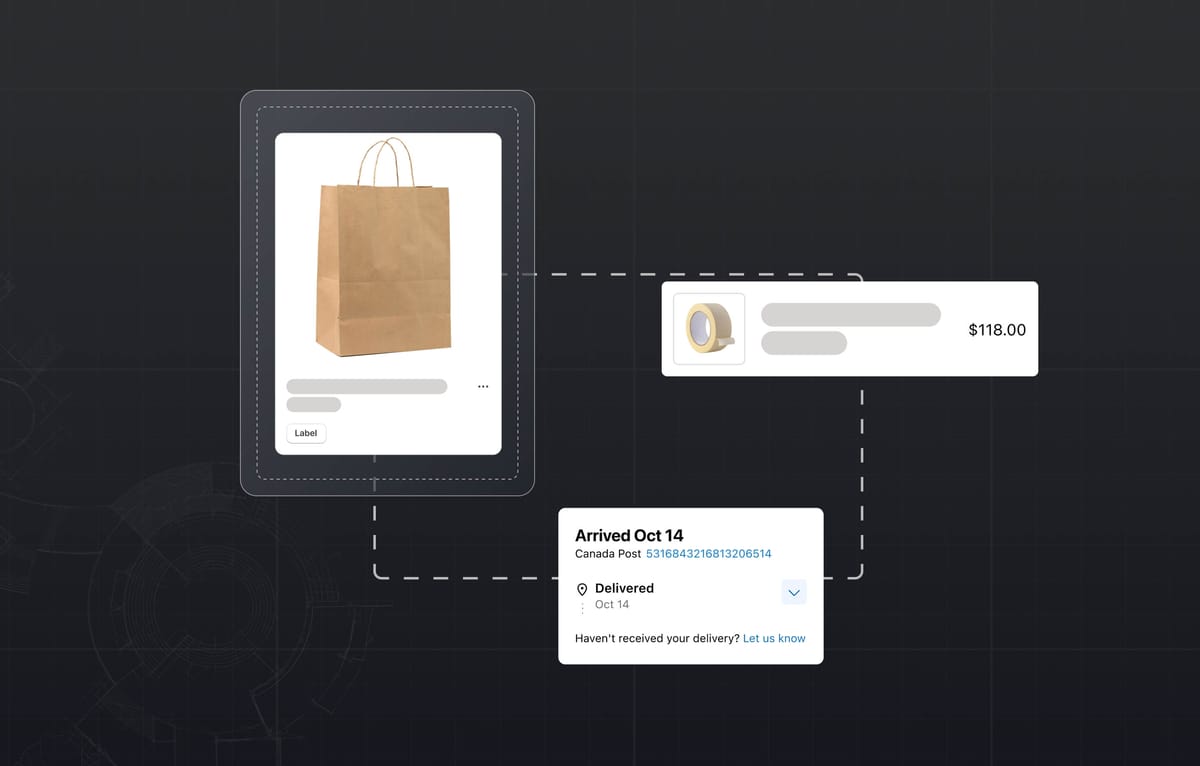
Shopify B2B's company account model reflects how wholesale buyers actually operate. A company profile in Shopify represents an organization, not an individual. Multiple contacts can belong to the same company, each with defined roles: one contact can place orders while another manages payment and invoicing, and a third views order history for internal reporting.
Company profiles hold the account's pricing assignment, catalog access, payment terms, credit limits, and shipping addresses. When a buyer logs into the B2B portal, the entire experience, what products they see, what prices they see, and what payment methods are available, is determined by their company configuration.
This structure eliminates the common workaround of managing wholesale buyers as tagged individual customers. It creates a true account management layer between your operation and each wholesale relationship.
Customer-Specific Pricing and Price Lists
Pricing is the most operationally critical aspect of wholesale commerce. Shopify Plus supports customer-specific pricing through price lists, a rules engine that determines what each company or customer segment pays.
Price lists can be configured as:
- Percentage-based: A distributor segment receives 30% off your standard retail price across all products.
- Fixed price overrides: A named account has a negotiated contract price of $14.50 per unit on a specific SKU, regardless of retail pricing.
- Volume-based tiers: Orders of 1 to 49 units at $18.00, 50 to 199 units at $16.50, 200 or more units at $14.75.
- Combinations: A tiered structure with fixed overrides on selected SKUs for a specific company account.
Price lists are assigned directly to company accounts. When that buyer logs in, their price list renders automatically. There is no manual calculation, no separate spreadsheet, no relying on sales reps to apply the correct discount. Pricing accuracy is automatic and enforced at checkout.
When you update a price list, the change propagates instantly to every buyer assigned to that list.
Gated Catalogs and Product Visibility
Not every wholesale customer should see every product. Shopify B2B's catalog management allows you to assign specific product collections to specific company accounts or customer segments.
A regional distributor sees only the products available in their territory. A trade customer sees products at their negotiated price without seeing standard retail pricing. A new account in an approval period sees a limited starter catalog before gaining access to your full range.
Catalog access is configured at the company level and enforced across the storefront. Buyers outside the appropriate catalog visibility cannot see, search for, or purchase restricted products.
For suppliers with complex channel structures, exclusive distribution agreements, or region-specific product availability, this functionality replaces manual enforcement and reduces the operational risk of selling restricted products to the wrong account.
Net Payment Terms and Purchase Order Support
Consumer ecommerce operates on immediate payment. Wholesale commerce operates on credit. The two require fundamentally different checkout experiences.
Shopify Plus B2B supports net payment terms enforced natively within checkout. A buyer assigned Net 30 terms completes their order without entering payment details. The order is confirmed, fulfillment begins, and a payment reminder is issued 30 days after shipment. Net 15, Net 30, Net 60, and Net 90 configurations are all supported.
Purchase order number capture is native at checkout. Buyers enter their internal PO number, which flows through to the order record, your ERP, and all order notifications and invoices. This is a hard requirement for procurement-managed purchasing in most B2B organizations, and it is available out of the box on Shopify Plus.
Partial payments and deposits are also supported. A buyer placing a large order can pay a deposit at checkout with the balance due on shipment or net terms.
B2B Checkout Experience
Shopify's B2B checkout is purpose-built for wholesale buying patterns. Beyond payment terms and PO capture, the checkout experience supports:
- Multiple shipping addresses: A buyer can select from all locations registered to their company account without re-entering addresses.
- Tax exemption certificates: Wholesale buyers with tax-exempt status can have exemptions applied automatically to their account, removing manual validation from each transaction.
- Bulk ordering: Large quantity inputs, quick-add by SKU, and CSV order upload for buyers managing large recurring orders.
- Quick reorder: Buyers can reorder directly from their order history with one action, the most used feature in any wholesale buyer portal.
- Saved carts: Buyers building large orders across sessions can save carts and return to complete them.
The checkout renders on mobile without degradation. Buyers placing orders from a warehouse floor, a trade show, or a sales meeting get the same complete experience as buyers at a desktop.
Self-Service Buyer Portal
The self-service portal is where Shopify B2B replaces the phone call, the email thread, and the manual order entry by your operations team.
Buyers log in through a dedicated URL and access their complete account: current pricing, available catalog, open orders and their status, full order history with reorder functionality, saved addresses, active quotes, and account documentation. They can place orders, check inventory, retrieve invoices, and manage their own contact information without contacting your team.
For suppliers managing 50 to 500 wholesale accounts, each buyer's ability to self-serve eliminates a substantial volume of inbound operational traffic: "What's the status of my order?", "Can you resend the invoice from March?", "What is my current pricing on SKU 4412?". These questions answer themselves when buyers have portal access.
The operational cost reduction is real. Suppliers typically see 50% to 70% decreases in manual order entry and customer service workload within the first year of a Shopify B2B launch.
ERP, PIM, and CRM Integration for Wholesale Operations
Shopify B2B is the buyer-facing commerce layer. Your ERP remains the system of record for inventory, pricing, and fulfillment. The integration between the two is what makes a wholesale operation function at scale.
Shopify's API architecture enables real-time, bidirectional integration with enterprise business systems. The standard integration model for wholesale suppliers on Shopify Plus:
- Order sync: Orders placed in Shopify appear immediately in your ERP's fulfillment queue. No manual re-entry, no batch delay.
- Inventory sync: Stock levels in your ERP update Shopify in real time. Buyers see accurate availability. Overselling on out-of-stock items is prevented.
- Pricing sync: Contract pricing and price list updates from your ERP propagate automatically to the Shopify price list assigned to each company account.
- Customer account sync: New company accounts approved in your ERP are created in Shopify automatically. Account status changes, credit holds, and term adjustments apply across both systems.
Supported ERP platforms include NetSuite, SAP, Microsoft Dynamics 365, Epicor, Sage, and Oracle. A Cin7 integration fits the same model, keeping inventory and pricing accurate across every account. For each of these, purpose-built Shopify connectors exist that handle the standard integration scope without custom development. Operations with non-standard data models or custom ERP configurations may require bespoke connector development, which is scoped as part of the implementation project.
PIM integration follows the same pattern. If your product information lives in Akeneo, InRiver, or a similar PIM, product data including attributes, images, descriptions, and variant structures syncs to Shopify as the distribution channel, with your PIM remaining the authoritative product record.
CRM integration, typically with Salesforce or HubSpot, gives your sales team visibility into buyer portal activity, order history, and account status without leaving their CRM environment.
How to Set Up Shopify B2B for Suppliers
Step 1: Define Your Account and Pricing Architecture Before Building
Before configuring Shopify, map out your wholesale structure on paper. How many customer segments do you serve? What are the pricing rules for each? Which products are available to which segments? What payment terms do you offer and to which account types?
This architecture work is not a Shopify exercise. It is a business logic exercise that Shopify then reflects. Suppliers who skip this step configure Shopify around their current improvised process rather than around a clean, scalable structure. The result is complexity that compounds over time.
Step 2: Enable B2B in Your Shopify Admin
On Shopify Plus, navigate to Settings, then select B2B. Activate the B2B feature to unlock company management, price lists, catalogs, and payment term configuration. This takes five minutes. The configuration work that follows takes longer.
Step 3: Build Your Company Account Structure
Create company profiles for each wholesale buyer. Add all contacts associated with each company, assign their roles (buyer, admin, accounts payable), and link their shipping locations. Import existing wholesale accounts via CSV to avoid manual data entry at scale.
Set payment terms and credit limits at the company level. These apply automatically to every order placed by any contact within that company.
Step 4: Configure Price Lists
Build one price list per pricing tier or customer segment. For most wholesale operations, this means three to eight price lists: a standard trade price, a key account tier, a volume break structure, and any named-account contract rates.
Assign each price list to the relevant company accounts. Test every assignment with a sample order before launch.
Step 5: Set Up Catalogs
Create catalog assignments that reflect your distribution and channel structure. A single default wholesale catalog covering your full range is the minimum. More complex operations may need separate catalogs per region, per account type, or per distribution tier.
Verify catalog assignments by logging in as a test buyer account and confirming product and pricing visibility before any buyer accesses the live store.
Step 6: Configure Checkout
Enable purchase order capture, net payment terms, and tax exemption certificate management in the B2B checkout settings. Test the complete checkout flow as each buyer type: a net terms account, a credit card account, a tax-exempt account, and a deposit-required account.
Step 7: Connect Your ERP
This step is the most technically complex in the project and should not be done last. ERP integration defines how orders flow, how inventory updates, and how pricing stays accurate. It should be scoped, built, and tested in parallel with the storefront build, not bolted on after launch.
Step 8: Migrate and Launch
Import historical order data for buyer account history. Configure 301 redirects if you are replacing an existing wholesale portal. Run parallel testing with a subset of buyers before full launch. Train your operations and sales teams on the Shopify admin before going live.
What Suppliers Get Wrong When Setting Up Shopify B2B
Treating it as a B2C store with a login gate. Adding a password to a standard Shopify store and calling it a B2B portal is not a B2B operation. Buyers expect company accounts, correct pricing on login, and payment terms at checkout. A gated B2C store delivers none of these and generates more support tickets, not fewer.
Skipping ERP integration. Running Shopify B2B without connecting your ERP means manually re-entering every wholesale order into your fulfillment system. This creates errors, delays, and removes the operational efficiency that justified the implementation. ERP integration is not optional for a functioning wholesale operation.
Configuring pricing in apps instead of native price lists. Third-party pricing apps create parallel pricing logic that conflicts with Shopify's native price list system. On Shopify Plus, use native price lists for all wholesale pricing. Apps that layer discount logic on top of native price lists produce incorrect pricing at checkout.
Over-engineering the storefront. Wholesale buyers are not evaluating your store design. They are placing orders. A clean, fast, functional portal with accurate pricing, easy search, quick reorder, and working checkout converts better than a heavily designed experience with slow load times.
Launching without buyer onboarding. Deploying a new portal and assuming buyers will adopt it without guidance produces low adoption rates. Build a communication plan: email notification of the new portal, a login walkthrough, direct outreach to your top 20 accounts, and a training session for your sales team to walk their accounts through the interface.
How Much Does Shopify B2B Cost?
The platform cost for a Shopify Plus wholesale operation is $27,600 per year ($2,300 per month). This includes all native B2B features described in this guide, hosted infrastructure, and Shopify's standard support tier.
For context against legacy alternatives:
- Legacy ERP portals: typically $50,000 to $200,000 per year in licensing, hosting, and maintenance, before any customization or development
- Custom-built wholesale portals: $150,000 to $400,000 in initial build cost, plus ongoing development and hosting
- Shopify B2B with full ERP integration: $27,600 per year in platform fees plus a one-time implementation cost
Implementation cost for a Shopify B2B project with ERP integration, custom pricing configuration, and a complete supplier portal typically ranges from $25,000 to $80,000 depending on the complexity of your ERP, catalog size, and number of custom workflows required. Uncap's B2B Accelerator program targets a 45 to 60 day launch at fixed price.
Most wholesale suppliers running on legacy systems recover their full Shopify Plus implementation cost within the first year through licensing cost savings and reduction in manual order processing overhead. Suppliers leaving a Shopware store see this payback fastest, once the maintenance overhead of the old stack drops away.
Choosing the Right Shopify B2B Implementation Partner
Shopify B2B is not difficult to configure at a basic level. What is difficult is building the architecture that serves a real wholesale operation: pricing logic that handles exceptions cleanly, ERP integration that handles edge cases correctly, a buyer experience that drives adoption, and a launch strategy that transfers existing wholesale relationships to the new platform without disruption.
The difference between a Shopify B2B implementation that delivers results and one that requires immediate remediation is almost always in the discovery and architecture work, not in the technical build.
Look for an implementation partner with:
- Direct experience migrating wholesale operations to Shopify B2B, not just B2C Shopify builds
- Proven ERP integration capability for your specific system (NetSuite, Dynamics, SAP, Epicor)
- A scoped, fixed-price engagement model so total project cost is known before work begins
- Post-launch support included as standard, not billed separately
Uncap has been building B2B wholesale commerce on Shopify since 2013 and is a Platinum Shopify Partner. Our B2B Accelerator delivers a complete supplier portal with ERP integration and custom wholesale configuration in 45 to 60 days at a fixed price, with 60 days of post-launch support included.
We work with wholesale suppliers, manufacturers, and distributors across the United States. We have launched more than 380 storefronts on Shopify. We know where the complexity is before the project starts.
Continue Reading
- Shopify B2B Wholesale Setup: Catalogs, Pricing, Permissions, and Net Terms
- B2B Ecommerce Replatforming: A Step-by-Step Guide to Moving to Shopify Plus
- Ecommerce for Distributors: Going Online with Shopify Plus
Frequently asked questions
Can Shopify do wholesale?
Yes. Shopify fully supports wholesale operations with native B2B features including company accounts, customer-specific pricing, gated catalogs, net payment terms, purchase order capture, and a dedicated B2B buyer portal. Foundational features are available on the Basic, Grow, Advanced, and Plus plans. Advanced features required for serious wholesale operations are available on Shopify Plus.
Does Shopify have a B2B platform?
Yes. Shopify B2B is Shopify's native wholesale infrastructure, available on Shopify Plus. It includes company account management, unlimited custom price lists, gated catalogs, net payment terms, PO capture, tax exemption management, and a buyer self-service portal. In 2026, Shopify also expanded basic B2B features including limited catalogs and volume discounts to the Basic, Grow, and Advanced plans.
How much does Shopify B2B cost?
Shopify Plus, which includes the full native B2B feature set, costs $2,300 per month ($27,600 annually). Standard Shopify plans range from $29 to $399 per month and include basic B2B functionality. Third-party wholesale apps on standard plans typically add $50 to $300 per month depending on the features required.
What does B2B wholesale mean?
B2B wholesale refers to selling products in large quantities to other businesses, such as retailers, resellers, distributors, or procurement departments, rather than to individual consumers. B2B wholesale transactions are typically characterized by bulk order volumes, negotiated pricing tiers, net payment terms rather than immediate checkout payment, and long-term account relationships managed at the company level.
Is Shopify B2B worth it?
For wholesale suppliers where B2B is a primary or significant revenue channel, Shopify Plus B2B is operationally worth it. Native company account management, customer-specific pricing, net payment terms, and a self-service buyer portal replace manual processes that generate operational cost and buyer friction. Most suppliers see 50% to 70% reductions in manual order entry workload within the first year, and total technology costs 30% to 50% lower than legacy ERP portal alternatives.
Can I run B2B and B2C on the same Shopify store?
Yes. Shopify Plus supports unified commerce, running both a B2C retail storefront and a B2B wholesale operation from the same Shopify backend with shared inventory. B2C buyers see retail pricing and a standard checkout. B2B buyers log into their company account and see their assigned catalog, contract pricing, and a B2B checkout with net payment terms and PO capture. Both channels share one admin, one inventory system, and one set of product data.
Can I do Shopify wholesale without Plus?
Yes, with limitations. Standard Shopify plans support basic B2B features including limited company profiles, up to three custom catalogs, and volume discounts. For full wholesale functionality including unlimited price lists, net payment terms, purchase orders, advanced buyer permissions, and a complete buyer portal, Shopify Plus is required. Third-party wholesale apps can extend standard plan B2B capabilities but add cost and complexity.
What ERP systems integrate with Shopify B2B?
Shopify Plus integrates with all major ERP platforms including NetSuite, SAP, Microsoft Dynamics 365, Epicor, Sage, Oracle, and Acumatica. Integration enables real-time order sync, inventory sync, customer account sync, and pricing sync between Shopify and your ERP. The complexity of the integration project depends on your ERP configuration, data model, and the degree of customization in your current system.
How long does it take to launch a Shopify B2B wholesale store?
A standard Shopify B2B implementation with ERP integration, custom pricing configuration, catalog setup, and a complete buyer portal typically takes 45 to 60 days from project kickoff to go-live. Complex operations with heavily customized ERP environments, large catalog volumes, or multi-site configurations may require additional time. Projects without ERP integration can launch in as few as 30 days.