

Conversational Commerce: What It Is and How It Works
Every guide on conversational commerce starts with chatbots. WhatsApp bots that answer product questions. AI assistants that recover abandoned carts. Voice commands that reorder household staples.
Those examples are real. They are also almost entirely about B2C.
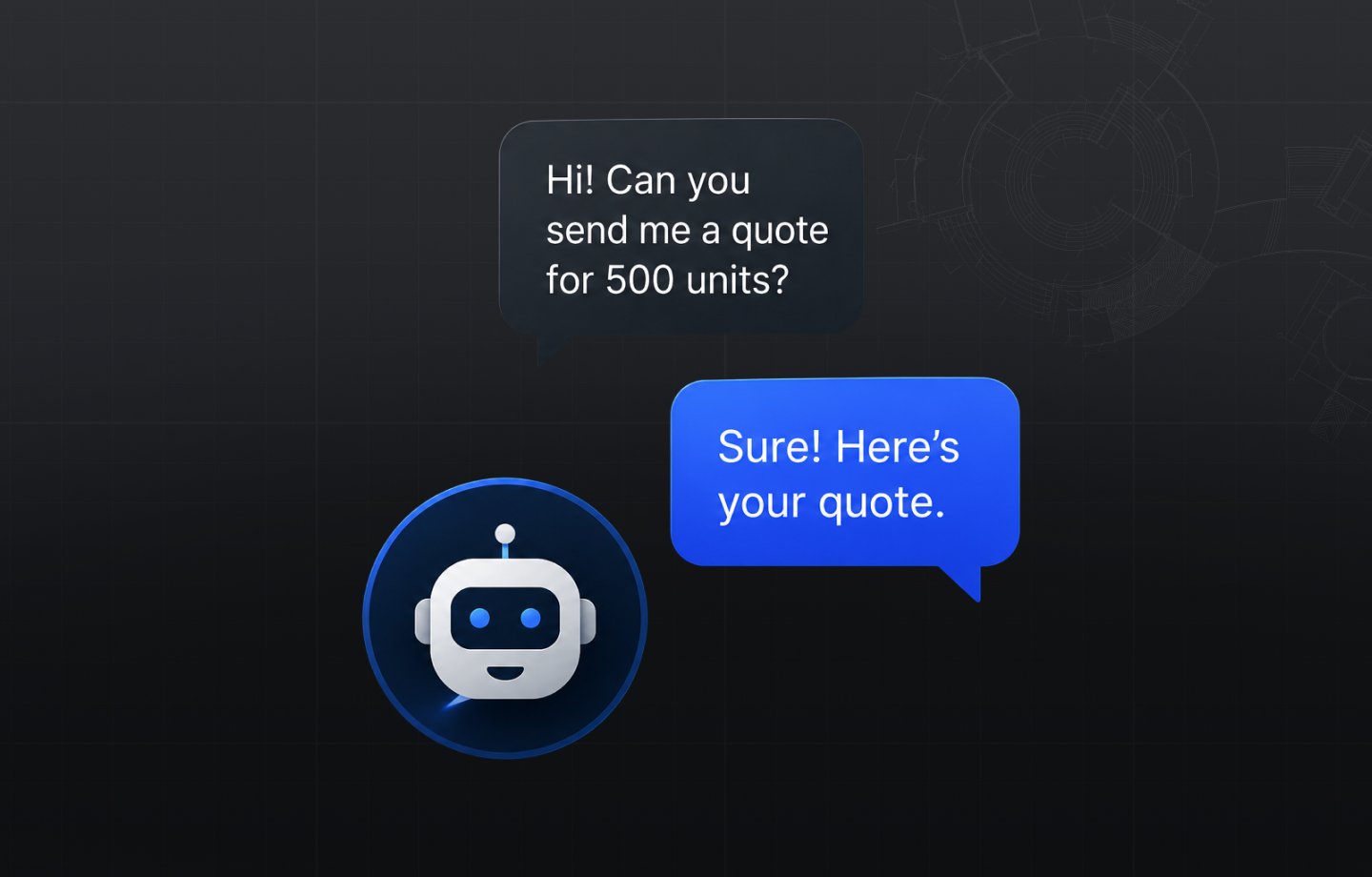
If you are a manufacturer, distributor, or wholesaler reading those definitions, you might recognize the problem they are solving without recognizing the solution. Of course buyers want to order through conversation. Your buyers have been doing exactly that for decades. The email that says "can you quote me 500 units of SKU 4412." The text from a rep confirming pricing. The phone call where shipping terms get worked out before the order is placed.
Conversational commerce is not new to B2B. What is new is the infrastructure that turns those conversations into structured, trackable, organized orders, without losing the relationship in the process.
What Is Conversational Commerce?
Conversational commerce refers to the use of real-time conversation as the primary channel through which a buyer moves from inquiry to purchase. Instead of clicking through a product catalog, filling out a form, and checking out, the buyer communicates their need, and the transaction is built around that communication.
The term was coined in 2015 by Chris Messina, the developer who created the hashtag, and originally referred to how messaging apps like WhatsApp and Messenger were beginning to replace the shopping cart as the interface for buying. The concept has expanded significantly since then.
Today, conversational commerce encompasses live chat and AI chatbots on ecommerce storefronts, WhatsApp and SMS-based ordering for B2C retail, voice-activated purchasing through smart home devices, sales rep-led conversations that result in quotes and orders, email threads, phone calls, and direct messages that initiate and complete B2B purchases.
That last category is where the majority of B2B revenue actually moves. And it is the one most definitions fail to address.
How Conversational Commerce Works
The mechanics are the same across B2C and B2B, even if the channel and the stakes are different.
A buyer has a need. They communicate that need through a message, call, or chat rather than navigating a catalog. The seller receives that communication, gathers any additional information needed, and builds the order or quote. The buyer reviews and confirms. The transaction completes.
What makes this different from traditional ecommerce is that the conversation itself is the buying interface. The product page, the cart, and the checkout are either absent or secondary. The relationship between buyer and seller is the context within which the purchase happens.
In B2C, this typically looks like a chatbot on a DTC website that asks a few qualifying questions and recommends a product, or a WhatsApp thread where a buyer asks about availability and pays via link. The conversation is short. The purchase is relatively simple. The value of the conversational layer is speed and personalization.
In B2B, the conversation is longer, the stakes are higher, and the relationship carries more weight. A buyer placing a $15,000 order with a distributor they have worked with for three years is not making an impulse decision. The conversation is how they confirm specs, negotiate pricing, check lead times, and make sure everything is right before anything ships. In fashion and apparel, that conversation runs by season and size run, mostly over email and text.
Why B2B Has Always Been Conversational Commerce
The wholesale and distribution industry did not need a technology trend to tell it that conversations drive orders. That has always been true.
A purchasing manager at a manufacturing facility does not browse a catalog and add items to a cart. They send an email. They call their rep. They forward a purchase order via attachment and expect someone to confirm receipt and pricing within the hour.
The global conversational commerce market is valued at more than $12 billion in 2026 and growing at double-digit rates annually. But that number significantly undercounts B2B reality, because most B2B conversational commerce has never been measured as such. It has been measured as email volume, as call logs, as deals in a CRM that someone remembers to update.
64% of B2B decision-makers say conversational tools improve buyer trust and transparency. That tracks with what wholesale operators already know from experience: buyers order more from sellers they can reach. The relationship is the moat.
The problem B2B has is not that it is not doing conversational commerce. It is that those conversations are happening everywhere at once, in personal inboxes, in text threads, in voicemails that get transcribed into notes, with no single place where the full picture lives.
What Breaks When the Conversation Has No Structure
When B2B conversational commerce runs through individual inboxes and personal phone lines, it works until it does not.
The rep who owns the relationship goes on vacation. The buyer emails and gets no reply for two days. A different rep picks it up without knowing the pricing that was agreed six months ago. The buyer gets a quote that does not match what they expected. The relationship takes a hit.
Or: an order comes in via email. The rep processes it manually. Three weeks later, the buyer disputes the quantity. There is no clear record of what was agreed. Both sides are working from memory.
Across 380+ Shopify storefronts since 2013, Uncap has seen this pattern consistently in wholesale distribution and manufacturing: the conversations are happening, the orders are moving, but the trail is invisible. Nobody can see what was discussed, what was quoted, or where a deal stands. Converting those emails into clean orders is the operational problem that sits underneath every conversation-driven B2B workflow.
What Conversational Commerce Looks Like When It Works
Structured Conversational Commerce in B2B means the conversation and the order live in the same place, and so does everything that connects them.
A buyer reaches out about an order. That message is visible to the whole sales team, not buried in one rep's personal email. The rep who picks it up can see the full account history: what this buyer ordered last quarter, what pricing was negotiated, what was discussed in the last three conversations.
They build a quote inside Shopify, where every version is saved and every revision is tracked. The buyer reviews and confirms. The order is created. If the buyer needs to get approval from their manager before confirming, the quote waits in a reviewable state, and the rep can see exactly where it stands.
Nothing falls through the gap between the conversation and the transaction. The two are the same workflow.
This is what Uncap Quotes is built around: the full quote workflow inside Shopify, with every quote, revision, and approval attached to the account and an approved quote converted into a Shopify order in one step. Brands leaving a Shopware store gain the most from structuring the conversation this way.
The conversation stays human. The infrastructure handles the parts that should not require human memory.
Conversational Commerce and the Self-Service Portal: Not Either/Or
There is a common assumption that conversational commerce and self-service ecommerce are alternatives. Either buyers place orders through a portal, or they place them through a rep.
In B2B, both happen inside the same account base. A buyer places routine reorders through the portal on Tuesday. On Thursday, they email about a special order with different specs and quantities. Both of those interactions are part of the same relationship. The seller needs to handle both without asking the buyer to change how they operate.
Wholesale distributors and manufacturers who grow the fastest are the ones whose infrastructure handles both: a clean self-service experience for routine orders and a structured conversational layer for everything that needs a rep. The two reinforce each other. The portal reduces the noise on routine transactions. The conversational layer captures the value that the portal cannot. A Cin7 integration keeps both honest, so the order a rep captures from a chat reflects real stock the moment it lands.
If you are weighing how much of your commerce stack to assemble yourself, that architecture question is exactly how composable commerce works with Shopify components.
The Conversation Is Already Happening
Your buyers are already reaching out by email, phone, and text. The conversation is not something you need to introduce. It is already your primary sales channel.
The question is whether those conversations are resulting in clean, trackable, organized orders, or whether they are scattered across inboxes, notes, and memory.
Request a Quote and see how Uncap turns the conversations your team is already having into a structured commerce workflow on Shopify, without changing how your buyers reach out.
Frequently asked questions
What is conversational commerce?
Using real-time conversation as the primary channel from inquiry to purchase: the buyer communicates the need, by chat, email, text, phone, or messaging apps, and the transaction is built around that conversation instead of a cart.
Is conversational commerce new to B2B?
No. B2B buyers have ordered through email threads, texts, and phone calls for decades. What is new is infrastructure that turns those conversations into structured, trackable Shopify orders without losing the relationship.
Where did the term conversational commerce come from?
Chris Messina, the developer who created the hashtag, coined it in 2015 to describe messaging apps beginning to replace the shopping cart as the buying interface. The concept has since expanded well beyond chatbots.
How does conversational commerce work for manufacturers and distributors?
The rep receives the order request in any channel, builds it directly in Shopify with the account's pricing and history in view, and the buyer confirms without logging into anything. The order still lands in the ERP like any other.