

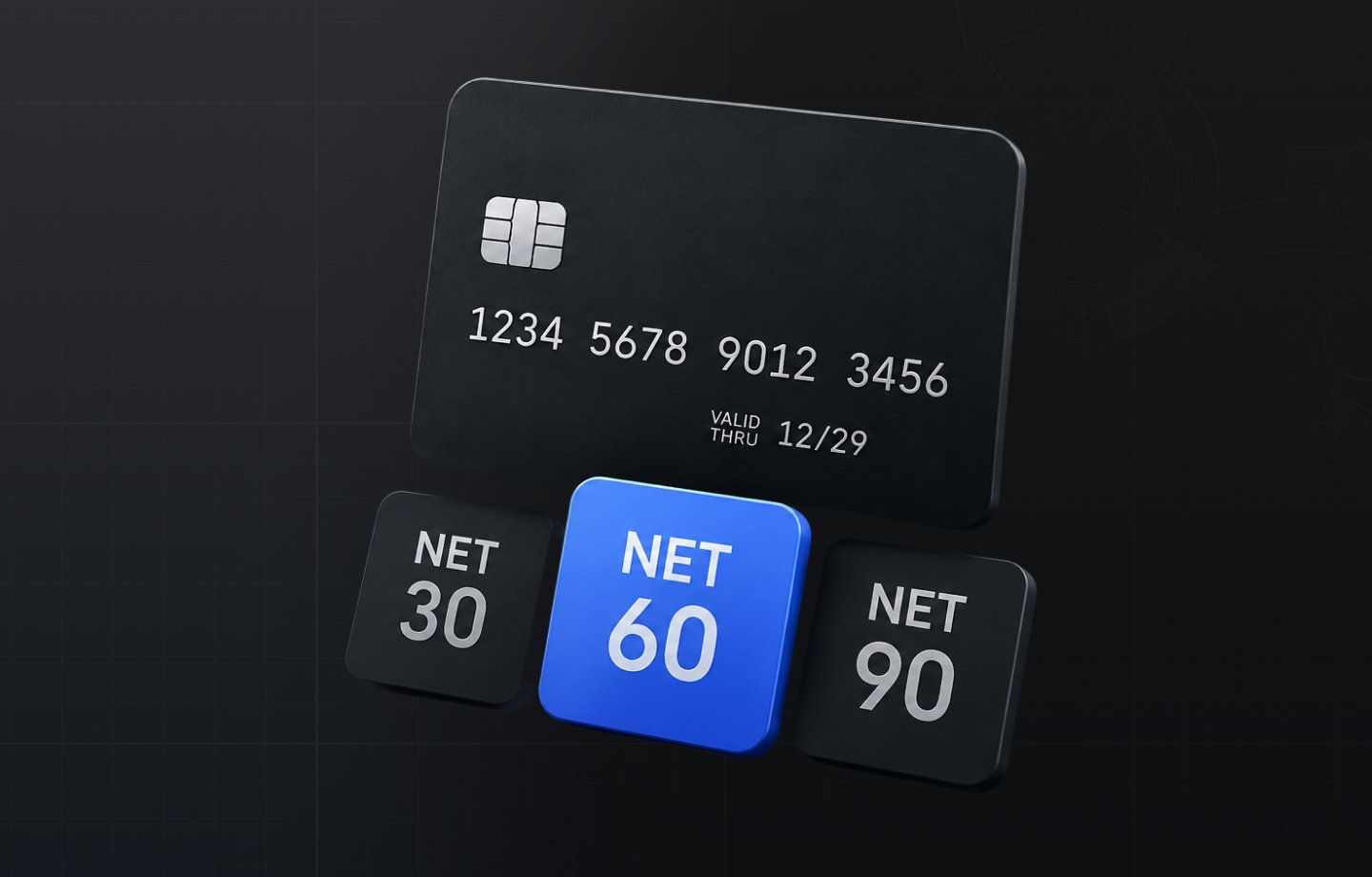
B2B Payment Terms: Everything You Need to Know (2026)
The payment terms you offer define more than when you get paid. They define which buyers will work with you, how much they will order, and how quickly the relationship can grow.
In B2B commerce, net terms are not a billing formality. For many buyers, they are the condition under which a new vendor relationship becomes viable at all. A distributor managing monthly cash cycles cannot commit to a supplier who requires payment on delivery. A manufacturer placing a first order with a new vendor needs time to verify quality before capital is tied up.
Understanding which terms apply to which situations, and how to manage them without losing control of your receivables, is one of the more practical skills in B2B operations.
The Standard B2B Payment Terms, Explained
Each term represents a different agreement about timing, trust, and cash flow. Here is what they mean and where each one fits.
Due on Receipt: Payment expected immediately upon invoice. Best for new accounts, high-risk buyers, or cash-based transactions.
Net 15: Payment due within 15 days of invoice. Best for short-cycle accounts with established trust.
Net 30: Payment due within 30 days of invoice. The default for most established B2B relationships.
Net 60: Payment due within 60 days of invoice. Best for larger buyers or seasonal businesses managing cash flow.
Net 90: Payment due within 90 days of invoice. Best for enterprise accounts and major retail buyers.
2/10 Net 30: 2% discount if paid within 10 days; full amount due in 30. Best for sellers who want to incentivize early payment.
Due on Receipt is the default for new relationships where trust has not been established. It protects the seller but limits buyer flexibility, which can make it a barrier to first purchases with accounts who expect standard terms.
Net 15 sits between immediate payment and the standard 30-day window. It works well for accounts with predictable monthly cash cycles and a short order-to-delivery timeline.
Net 30 is the baseline in most B2B markets. If you are not offering any terms at all, your buyers are almost certainly comparing you to vendors who offer at least this.
Net 60 and Net 90 are standard in industries with longer inventory cycles, including seasonal retail buying and large-scale manufacturing. Offering these terms signals that you understand the buyer's operating reality.
2/10 Net 30 is an early payment incentive. The buyer gets a small discount for paying fast; you get cash sooner. It works best when margins allow for the discount and the buyer has the liquidity to use it consistently.
Why Payment Terms Are a Relationship Tool, Not Just a Billing Setting
Merchants who offer net terms acquire 38% more buyers than those who require upfront payment. Of those buyers, 40% increase their monthly spend once terms are in place. Both numbers point to the same conclusion: terms change the relationship, not just the invoice.
The reason is straightforward. When a buyer is given terms, they are being told they are trusted. That signal matters in B2B commerce, where relationships span years and repeat orders are the baseline, not the exception. That pattern is sharpest in janitorial and safety supply, where high-frequency reorders on account are the norm.
Terms also lower the friction of first orders. A buyer placing an initial purchase with a new supplier is already taking on supply chain risk. Requiring immediate payment on top of that asks them to absorb financial risk at the same moment. Offering Net 30 on a first order says: evaluate the relationship before the invoice is due.
The most effective approach Uncap has seen across wholesale and distribution accounts is to treat terms as a graduation track. Start a new account at Due on Receipt. Move them to Net 30 after consistent payment history. Extend to Net 60 as order volume grows. Most buyers recognize this progression, and the accounts that earn better terms tend to deepen their commitment in return.
The state of B2B ecommerce payments covers how terms fit into the broader shift in how B2B buyers expect to transact in 2026 and beyond.
What Goes Wrong When Terms Are Managed Informally
The problem most wholesale and distribution businesses encounter is not deciding which terms to offer. It is tracking them.
When payment terms live in spreadsheets, account notes, or the memory of whoever opened the account, the system holds until it does not. A new order comes in for an account that was moved from Net 30 to Net 60 eight months ago. The rep who negotiated it is no longer working the account. The order processes at the wrong terms. The buyer receives an invoice that does not match what was agreed, and now you have a relationship problem on top of a billing problem.
According to Atradius, 55% of B2B invoices are overdue at any given time. Some of that is buyers being slow. But a meaningful portion comes from terms that were negotiated in one place and invoiced from another, with no reliable system connecting the two.
Draft orders in Shopify are the mechanism that attaches payment terms to an order before it is confirmed. Understanding how that works is foundational to managing terms at scale, because it is where the agreed terms and the actual order meet.
How Shopify B2B Handles Payment Terms
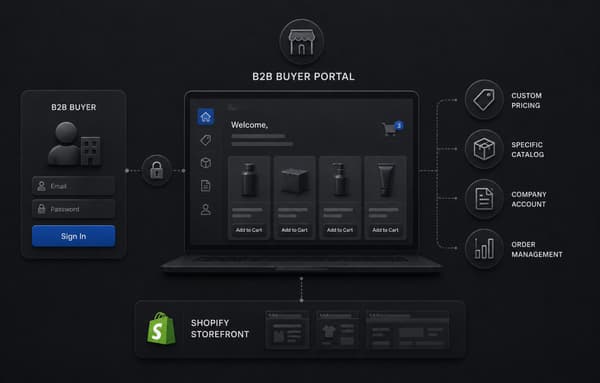
Shopify now supports payment terms natively across all paid plans, as of April 2026. Net terms can be set at the company level, applied to specific buyer locations, and configured with due dates that match each account's agreed terms.
This is the structural layer. When a buyer places an order, the correct terms travel with it automatically. No manual invoice editing. No risk that the wrong terms apply because a note was missed.
For wholesale distributors and manufacturers processing significant order volume, this solves the configuration problem. Every order carries the right terms from the moment it is placed. Brands moving off a commercetools build often rebuild this terms logic from scratch on Shopify.
What the platform alone does not solve is the management layer: knowing which accounts are ready to graduate, tracking whether payment history warrants an extension or a tightening, and making sure that the terms conversation happens at the right moment in a deal.
Managing Terms Across a Growing Account Base
For sellers managing dozens or hundreds of accounts with different terms in different states, the challenge is knowing who agreed to what, when the agreement was made, and whether anything about the account has changed since.
Uncap's Advanced Quote Management keeps the full account history in one place. Every agreed term, every revision to those terms, and every conversation where terms were negotiated stays attached to the account and visible to any rep who works it. When a terms change is being considered, the history is there: what was offered, what was accepted, and what the payment record looks like since.
Across more than 380 B2B commerce projects since 2013, the pattern Uncap has seen consistently in wholesale and distribution is this: the sellers who manage terms strategically, graduating buyers based on payment behavior and relationship depth, outperform the ones who set terms once and leave them static. The difference is rarely the terms themselves. It is the visibility into when to change them and the ability to act on that in the same workflow where quotes and orders are being built. When accounting runs on an ERP, a clean Sage integration keeps invoicing, credit, and terms aligned as the account base grows.
Terms Are Part of the Deal, Not an Afterthought
Payment terms are not set once and forgotten. They are negotiated, adjusted, and reconsidered over the course of a relationship. A buyer who has paid Net 30 reliably for two years is a candidate for Net 60. A buyer who has been slow consistently is a candidate for a conversation before the next order is confirmed.
That conversation belongs inside the deal, alongside the quote and the order history, not in a separate spreadsheet that a rep remembers to check. When the context is in one place, terms management becomes a proactive part of the relationship rather than a reactive response to overdue invoices.
Request a Quote and see how Uncap gives your team the visibility to manage payment terms as the relationship tool they are, not just a billing configuration.
Frequently asked questions
What are the standard B2B payment terms?
Due on Receipt for new or high-risk accounts, Net 15 for short-cycle trusted accounts, Net 30 as the established default, Net 60 for larger or seasonal buyers, Net 90 for enterprise accounts, and 2/10 Net 30 to incentivize early payment.
Why do payment terms matter so much in B2B?
For many buyers, net terms are the condition under which a vendor relationship is viable at all. A distributor managing monthly cash cycles cannot commit to a supplier demanding payment on delivery.
When should a seller offer Net 30 versus Due on Receipt?
Due on Receipt protects the seller on new, unproven accounts. Net 30 is the default once trust is established; withholding it from established buyers becomes a barrier to orders.
What is 2/10 Net 30?
A 2% discount if the invoice is paid within 10 days, with the full amount due in 30. It rewards early payment and accelerates the seller's cash conversion without shortening the stated term.