

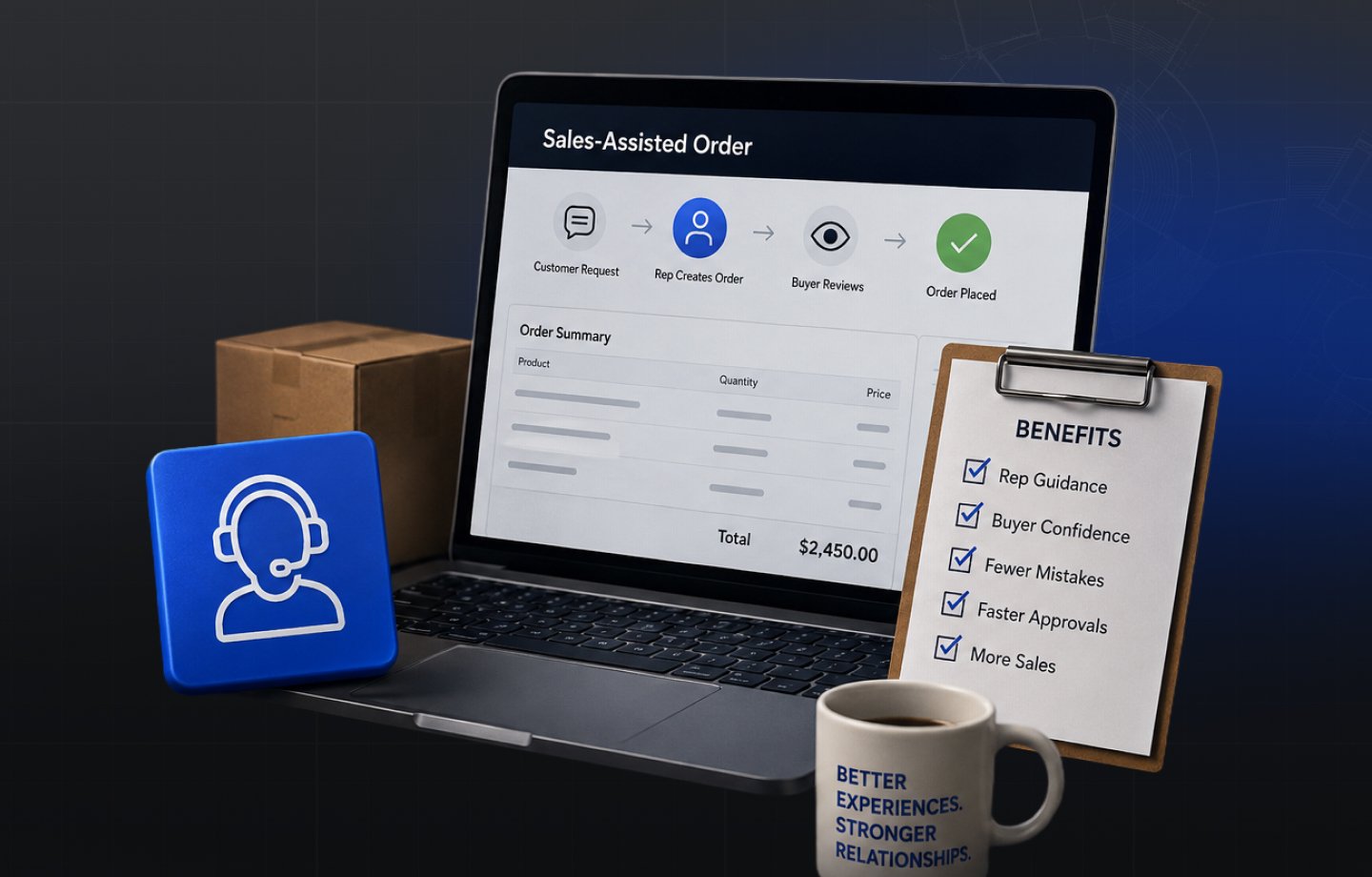
When a rep builds an order on a buyer's behalf and sends it for review, something happens in the seconds after the buyer opens it. They scan the line items. They check the price. They try to match what they see on the screen to what they remember agreeing to.
That moment is where the deal either moves forward or stalls.
If the order is accurate, the pricing reflects what was negotiated, and the items match the conversation, the buyer confirms and moves on. The deal is done. If something looks off, even a small discrepancy, they send it back. Or they pick up the phone. Or they sit on it until they have time to sort it out. Any of those outcomes means the deal does not close when it should have.
In B2B commerce, the quality of that first review is one of the most direct determinants of deal velocity. Most sellers have never thought about it that way.
What Is a Sales-Assisted Order?
A sales-assisted order is any order a rep builds and presents on a buyer's behalf, rather than the buyer placing it themselves through a self-service channel.
In B2B commerce, this is far more common than the industry conversation suggests. B2B buyers split roughly into thirds: one-third want in-person or phone interactions, one-third prefer remote conversations with a rep, and one-third expect fully digital self-service. That means two-thirds of your buyer base wants a rep involved at some stage of the order, even in 2026. In hospitality and foodservice supply, where standing orders repeat constantly, that rep involvement is even more common.
Sales-assisted orders show up in several forms: a rep takes an order over the phone and enters it into the system while the buyer is still on the call, a buyer emails a purchase order and the rep translates it into a Shopify order, a rep at a trade show builds a cart for a buyer on the spot and sends it for confirmation, a buyer asks for a quote, the rep prepares it, and the order is built from the confirmed quote.
In each case, the rep is the one constructing the order. The buyer is the one reviewing and confirming it. The moment they open that review is where the deal is won or lost before a word is said.
How Sales-Assisted Orders Work in Shopify
Shopify supports sales-assisted ordering natively through draft orders, which are the core mechanism for rep-built B2B transactions.
When a sales rep creates a draft order for a B2B buyer, Shopify automatically applies the company's negotiated pricing, payment terms, and checkout rules, without the rep needing to manually look these up or enter them. The rep selects the products, confirms the quantities, and sends the draft to the buyer as an invoice link for review and payment.
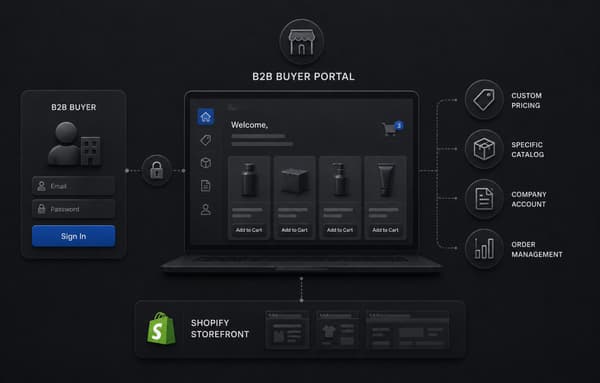
From the buyer's side, they receive a link that shows them exactly what has been built: line items, quantities, pricing, and payment terms. They review it and either confirm or flag a question. Once they confirm, the order processes.
This workflow has several advantages for the seller. Order accuracy improves because account-specific pricing is applied automatically, not from memory. Turnaround is faster because the rep does not have to manually calculate pricing or re-enter data from a spreadsheet. And the order is in Shopify from the start, which means inventory, fulfillment, and reporting are all in sync.
The mechanics work well. What determines whether the experience works well is something the mechanics alone cannot control.
What Makes the First Send Land
The first send lands when the buyer opens it and sees exactly what they expected, plus nothing they did not.
The five elements of a strong first send: The right products, at the right quantities. The pricing the buyer was quoted or already has on account. Payment terms that match the agreement. A fast turnaround, the order arrives while the conversation is still fresh. And enough context that the buyer knows what they are looking at without having to reconstruct the discussion from memory.
When all five are present, the buyer confirms. The deal closes.
When any one of them is off, the first send fails. The buyer does not confirm. They ask a question, flag a discrepancy, or push the review to tomorrow. Each of these outcomes costs time, and in B2B, time is often the difference between an order that closes this week and a deal that slips to next quarter.
What Goes Wrong Before the Buyer Opens It
Most first-send failures come from the same root cause: the rep built the order without complete context.
Wrong pricing. The buyer has a negotiated rate that lives in a spreadsheet, a CRM note, or the memory of the rep who opened the account. A different rep picks up the order and quotes list price. The buyer notices. The deal is now a negotiation again.
Missing line items. The buyer mentioned a handful of SKUs in a conversation three days ago. The rep built the order from the email summary, not the full thread. Two products are missing. The buyer sends it back.
Slow turnaround. The buyer asked for the order on Tuesday afternoon. The rep had it ready by Thursday morning. The buyer has moved on to other priorities. The confirmation takes another week.
No context attached. The buyer opens the draft and does not immediately recognize what it is. They were in four other conversations that week. A brief note about what the order is for, what was agreed, and any outstanding questions would have made the review immediate. Without it, they defer.
Across 380+ Shopify commerce storefronts since 2013, Uncap has consistently seen the same pattern in wholesale distribution and manufacturing: the deals that require the most revision cycles are almost always the ones where the rep built the order without access to the full account context. Not because the rep was careless. Because the context was not in front of them when they needed it.
What the Rep Needs Before Building the Order
The quality of that first send is determined before the buyer ever opens it. It is determined at the moment the rep starts building.
If the rep can see the full account history, the last five orders, the pricing that was negotiated six months ago, and the email thread where this order was discussed, they build an accurate draft. They know which products to include because they can see what was asked for. They know the right pricing because it is right there, not buried in a spreadsheet. They know to add a note because they can see the buyer has not placed an order in three months and may need context.
If the rep is building from a blank order form and their own memory, the order is a guess.
Converting email conversations into clean Shopify orders is the upstream step that sets each first send up. When the conversation is captured and attached to the account, the rep who builds the next order has everything they need without hunting for it. Operators moving off NetSuite commerce often replatform precisely to get that context unified.
How the Portal Changes What the Buyer Sees
When every message, quote, file, and order history lives in the same place as the deal, the rep does not have to reconstruct context before building. It is already there.
Uncap's Advanced Quote Management sits inside the Portal, where the full account history is always visible. When a rep opens an account to build a draft order, they see what was ordered last quarter, what pricing is in effect, what was discussed in the last conversation, and what outstanding questions exist. The order they build from that context is not a guess. It is a reflection of the relationship.
The result is a first send that lands. The buyer opens it, recognizes what they are looking at, sees the right pricing and the right products, and confirms. The deal closes without a revision cycle.
For manufacturers and distributors processing dozens or hundreds of sales-assisted orders each month, the difference between a first-send close rate of 60% and 85% is not a platform feature. It is whether the rep had context when they built the order. Where account data lives in an ERP, a Microsoft Dynamics integration puts that history and live pricing in front of the rep.
The First Send Is the One That Counts
Every revision cycle after the first send costs something: time, attention, sometimes the deal itself. The goal of sales-assisted ordering is not just to let a rep build an order on behalf of a buyer. It is to build an order that the buyer confirms immediately because it was right the first time.
That requires the rep to have context. The context lives in the account history, the conversation thread, and the pricing record. When those three things are in one place, the rep builds a better order. The buyer sees an accurate order. The deal closes faster.
Request a Quote and see how Uncap gives your sales team the context to build accurate orders that close on the first send.
Frequently asked questions
What is a sales-assisted order?
Any order a rep builds and presents on a buyer's behalf: a phone order entered live, an emailed purchase order translated into Shopify, a trade show cart, or a quote converted to an order after acceptance.
How common are sales-assisted orders in B2B?
Very. Buyers split roughly into thirds across in-person, remote rep conversations, and self-service, meaning about two-thirds of buyers want a rep involved at some stage of the order.
Why does the buyer's first review of an order matter so much?
The buyer scans line items and pricing against what they remember agreeing to. An accurate order confirms immediately; any discrepancy triggers a send-back, a phone call, or a stall, and the deal misses its close window.
How do you make sales-assisted orders faster and more accurate?
Give reps the account's negotiated pricing, order history, and conversation in one view when they build the draft, so the order matches the agreement the first time.