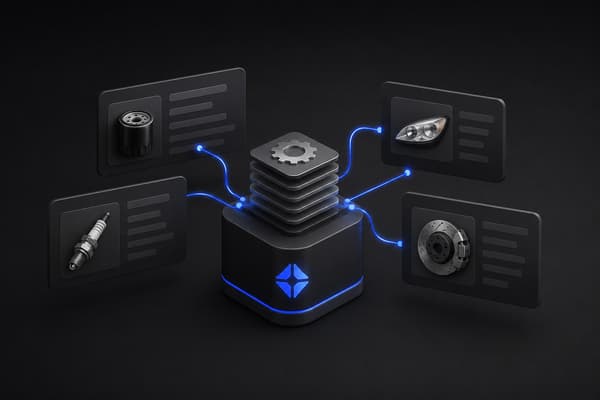



Electronics catalogs grow out of control faster than almost any other product category, and most distributors do not notice until they are managing tens of thousands of SKUs with no real system behind them. A single phone model can spin off a dozen SKUs once you account for storage size, color, carrier lock, and bundle configuration. A single cable can multiply into a dozen more once you add length, connector type, and packaging variant. None of this is hypothetical complexity. It is what happens by default when a wholesale electronics business grows, and it is exactly the kind of complexity that turns a healthy catalog into operational chaos if nobody manages it on purpose. This is not a problem you solve once. It is a system you build, and the businesses that build it early spend far less time firefighting later. If this sounds familiar, you are not managing it wrong. You are managing a genuinely harder category than most, and the fix is not working faster. It is building a system that was designed for this level of complexity from the start.
Why Electronics Catalogs Spiral Out of Control Faster Than Almost Any Other Category
Most product categories add SKUs slowly: a new color here, a new size there. Electronics catalogs add them in batches, because a single new device typically launches with several storage configurations, multiple colors, and sometimes carrier-specific or region-specific variants, all on the same release date. A wholesale distributor carrying that device is not adding one SKU. They are adding ten or more at once.
Accessories compound the problem. Cases, chargers, cables, and screen protectors each need their own SKU per device generation, per color, and often per connector type. A distributor stocking accessories for a handful of popular device lines can end up with more SKUs in accessories alone than in the devices themselves.
Product lifecycle speed makes this worse. New device generations arrive every year or faster, and each new release does not just add SKUs. It often leaves the previous generation's SKUs sitting in the catalog as slow-moving or dead stock, since older devices and their accessories rarely sell out cleanly before the next generation lands.
None of this is unique to a handful of large distributors. Even a mid-size wholesale electronics business carrying a few popular brands across a handful of categories can cross into the tens of thousands of SKUs within a couple of growth cycles, often faster than its internal systems were built to handle.
The Real Cost of SKU Chaos (Dead Stock, Stockouts, and Slow Fulfillment)
Unmanaged SKU growth does not just look messy. It costs real money in ways that are easy to underestimate until they show up on a balance sheet. Every SKU sitting in a warehouse takes up physical space, and that space costs money whether the product is moving or not.
Shopify's own research on SKU proliferation lays out the mechanics clearly: unchecked SKU growth leads to higher storage costs, more complex picking and packing procedures, and a buildup of dead stock that has to be written off as a loss. For electronics specifically, this risk is sharper than in most categories, since a slow-moving SKU tied to last year's device generation does not just sit quietly. It depreciates as the next generation makes it less desirable by the month.
Stockouts cause the opposite problem but the same underlying issue: poor visibility into what is actually happening across tens of thousands of SKUs. A distributor who cannot see real-time stock levels accurately is going to oversell popular SKUs during high-demand windows and undersell slow movers that should have been cleared out months earlier.
Fulfillment speed suffers too. Warehouse teams picking and packing orders across a sprawling, poorly organized SKU catalog move slower than teams working from a clean, well-structured one, and that slowdown compounds during peak volume periods when speed matters most.
Build a SKU Naming System That Scales Before You Need It To
A good SKU naming system is boring on purpose. It should read like a mini-description of the product, moving from general to specific: brand, category, model, color, storage or capacity, and any variant detail that actually matters for fulfillment. Keep codes short, ideally eight to twelve characters, and use capital letters and numbers consistently so two SKUs are never easy to confuse.
For electronics specifically, this means deciding upfront how you will encode the details that actually drive fulfillment decisions: storage size, color, carrier lock status, and region. Skip ambiguous characters like the letter O next to the number zero, or the letter I next to the number one, since these cause picking errors at scale that are completely avoidable with a cleaner system.
The naming system you build today has to work when you have ten times as many SKUs as you do now. A system that only makes sense at a thousand SKUs falls apart at fifty thousand, so it is worth spending real time on this before the catalog grows past the point where renaming everything becomes its own massive project. Catalogs trapped in an older Shopware store hit this wall sooner, since the attribute model tends to bend under years of ad hoc SKU additions.
This is also where bundles and kits get complicated. A charging cable sold individually and the same cable sold inside a starter kit are different SKUs, even though the underlying product is identical, and your naming system needs a clear, consistent way to represent that relationship without creating confusion downstream.
SKU Rationalization: When (and How) to Cut Dead Weight
SKU rationalization is the practice of regularly reviewing your entire catalog and deciding which SKUs earn their place. It is not a one-time cleanup. It is an ongoing discipline, ideally run on a fixed schedule rather than only when the warehouse is visibly overflowing.
Shopify recommends identifying the bottom 10 to 20 percent of underperforming SKUs based on profitability, inventory turnover, and contribution to overall sales, then flagging them for phase-out and discounting existing stock until it clears. For electronics distributors, this matters even more than usual, since holding onto last generation's SKUs too long almost guarantees a deeper discount later, as depreciation does the damage that a faster phase-out decision would have avoided.
The hardest part of rationalization is rarely the analysis. It is the decision to actually cut a SKU that someone, somewhere, still occasionally orders. A useful rule of thumb: if a SKU's carrying cost and complexity outweigh its contribution to revenue, it should go, even if cutting it feels uncomfortable in the moment.
Rationalization works best when it feeds back into purchasing decisions, not just catalog cleanup. If a category of SKUs consistently underperforms, that is a signal to buy less of it next cycle, not just to discount what is already sitting in the warehouse.
Syncing SKU Data Across Your Storefront, ERP, and Warehouse
None of the naming conventions or rationalization discipline matters much if the SKU data living in your storefront does not match what is actually in your ERP system and your warehouse. Disconnected systems are where SKU chaos actually becomes operational chaos.
A distributor running thousands of electronics SKUs across multiple categories cannot afford to have inventory counts that drift between systems, since even small discrepancies compound fast at that scale. Uncap's Connector integrates Shopify with ERP systems so SKU-level inventory counts, pricing, and order data stay aligned automatically across every system, instead of someone manually reconciling spreadsheets between platforms.
This matters most during high-volume periods, like a new device launch or a seasonal sales push, when order volume spikes and the cost of a sync error is highest. A storefront showing stock that the warehouse does not actually have does real damage to buyer trust, especially with B2B wholesale accounts placing large, recurring orders. For distributors whose stock lives across the warehouse and the ERP, a Fishbowl integration keeps inventory and pricing in step so the storefront never quotes a part the warehouse cannot ship.
Multi-location inventory makes this even more important. A distributor fulfilling from several warehouses needs SKU-level visibility into exactly which location holds which stock, so orders route to the right warehouse instead of promising stock that exists somewhere else entirely, three states away from where the order needs to ship.
Using PIM and Catalog Tools to Tame Product Data at Scale
Inventory counts are only one part of SKU complexity. The other part is product data: specs, images, descriptions, and compatibility details that need to stay accurate and consistent across thousands of SKUs and however many sales channels you operate.
This is where product information management tools earn their keep. Centralizing product data in one system, rather than maintaining it separately in a spreadsheet, a storefront, and a marketplace listing, cuts down on the kind of inconsistency that confuses buyers and creates support tickets. Uncap's breakdown of the top PIM platforms for Shopify covers the specific tools worth evaluating if your electronics catalog has outgrown manual spreadsheet management.
Electronics catalogs benefit from this more than most categories, since spec sheets, compatibility details, and certification information change frequently and need to stay accurate across every SKU variant of a product, not just the base model.
Good product data also pays off directly in search and conversion. A buyer comparing storage variants or carrier-locked versions of the same device needs clear, accurate, consistent specs to make a confident purchase decision, and messy or conflicting product data is a quiet but constant source of lost sales and returned orders.
Forecasting and Reordering When You Have Too Many SKUs to Track by Hand
Manual reordering decisions break down fast once a catalog crosses into the thousands of SKUs. Nobody can hold accurate reorder timing for that many products in their head, and relying on a handful of experienced staff to make those calls does not scale, especially when those staff eventually leave or go on vacation during a critical reorder window.
SKU-level reorder points solve this directly: each SKU gets its own threshold based on its actual sales velocity, lead time, and seasonality, rather than applying one blanket reorder rule across a catalog where a phone case and a flagship device behave nothing alike. This is one of the clearest wins available once SKU data is clean and centralized in one system.
Electronics adds urgency here because lead times on popular components and devices can shift quickly, and a reorder point calculated on stale assumptions can leave a distributor stuck without stock during exactly the weeks when demand is highest, like a new product launch or a seasonal buying period.
None of this requires predicting the future perfectly. It requires having clean enough data that the reorder math runs on real signals instead of guesswork, which is the difference between a forecast you can trust and one you have to double check every time.
Handling SKU Complexity for B2B Wholesale Buyers Specifically
Wholesale electronics buyers add a layer of complexity that pure consumer catalogs do not have to deal with. The same SKU might need different pricing depending on order volume, different minimum order quantities depending on the account, and different availability depending on whether a buyer has a standing relationship or is placing a first order.
Large bulk orders covering dozens of SKUs at once need a fast, accurate way to get priced and quoted, especially when buyers are comparing multiple suppliers and speed matters. Uncap's Distribution solutions are built around exactly this kind of operational complexity, helping wholesale electronics sellers manage tiered pricing, bulk ordering, and account-specific catalogs without the SKU sprawl turning into a sales bottleneck.
A buyer placing a recurring order for the same fifty SKUs every month should not have to rebuild that order from scratch each time. Saved order templates and reorder shortcuts matter more as SKU counts grow, since manually rebuilding a complex order becomes its own source of errors and lost time on both sides of the transaction.
Account-specific catalogs help too. Not every buyer needs to see every SKU you carry, and showing a wholesale account only the categories and price tiers relevant to them cuts through a lot of the noise that comes with a catalog running into the tens of thousands of items.
What This Looks Like in Practice
Consider a wholesale electronics distributor carrying phone accessories, audio equipment, and small appliances across several brands, serving both retail resellers and direct B2B accounts. Without a deliberate system, this business is managing tens of thousands of SKUs across constantly shifting product generations, with naming conventions that drifted over years of ad hoc additions.
Fixing this does not happen overnight, but it follows a clear sequence: standardize the naming convention going forward, run a rationalization pass to identify and phase out the bottom-performing SKUs, sync inventory and pricing data across the storefront, ERP, and warehouse so every system reflects the same numbers, and centralize product data so specs and compatibility details stay accurate at scale.
Distributors serving the electrical and electronics industry who put this system in place stop treating SKU growth as something that happens to them. It becomes something they manage on purpose, with the data and tools to back it up, instead of a slow-building mess that eventually forces a painful, expensive cleanup.
Bringing Order to an Electronics Catalog That Has Outgrown Your Systems
Managing millions of SKUs without losing your mind is less about working harder and more about having systems that scale with your catalog instead of against it. If your electronics catalog has outgrown spreadsheets and disconnected systems, Uncap's team can help you build a connected storefront, ERP, and product data setup designed for exactly this kind of complexity.
Frequently asked questions
How many SKUs is too many for a wholesale electronics catalog?
There is no fixed number. The point at which a catalog becomes unmanageable depends on whether your naming conventions, data systems, and rationalization process scale with it, not on the raw SKU count itself.
How often should we run SKU rationalization?
Most distributors benefit from reviewing SKU performance quarterly, with electronics catalogs sometimes needing more frequent review around major product launches, since that is when last generation's SKUs need to be flagged for phase-out fastest.
Do small wholesale electronics businesses need a PIM system, or is that overkill?
Smaller catalogs can often manage with disciplined spreadsheets for a while, but the threshold for needing a dedicated PIM system arrives sooner in electronics than in most categories, given how fast specs and variants change.
What's the biggest mistake distributors make when their SKU count grows quickly?
Waiting too long to formalize a naming convention and rationalization process. The longer ad hoc SKU creation continues, the more expensive and disruptive the eventual cleanup becomes.