

Running an ecommerce business means making a thousand small bets about how people behave. What will they click. What will they skip. Why they added something to the cart and then vanished. Why one product page converts and the next one, built the same way, does not.
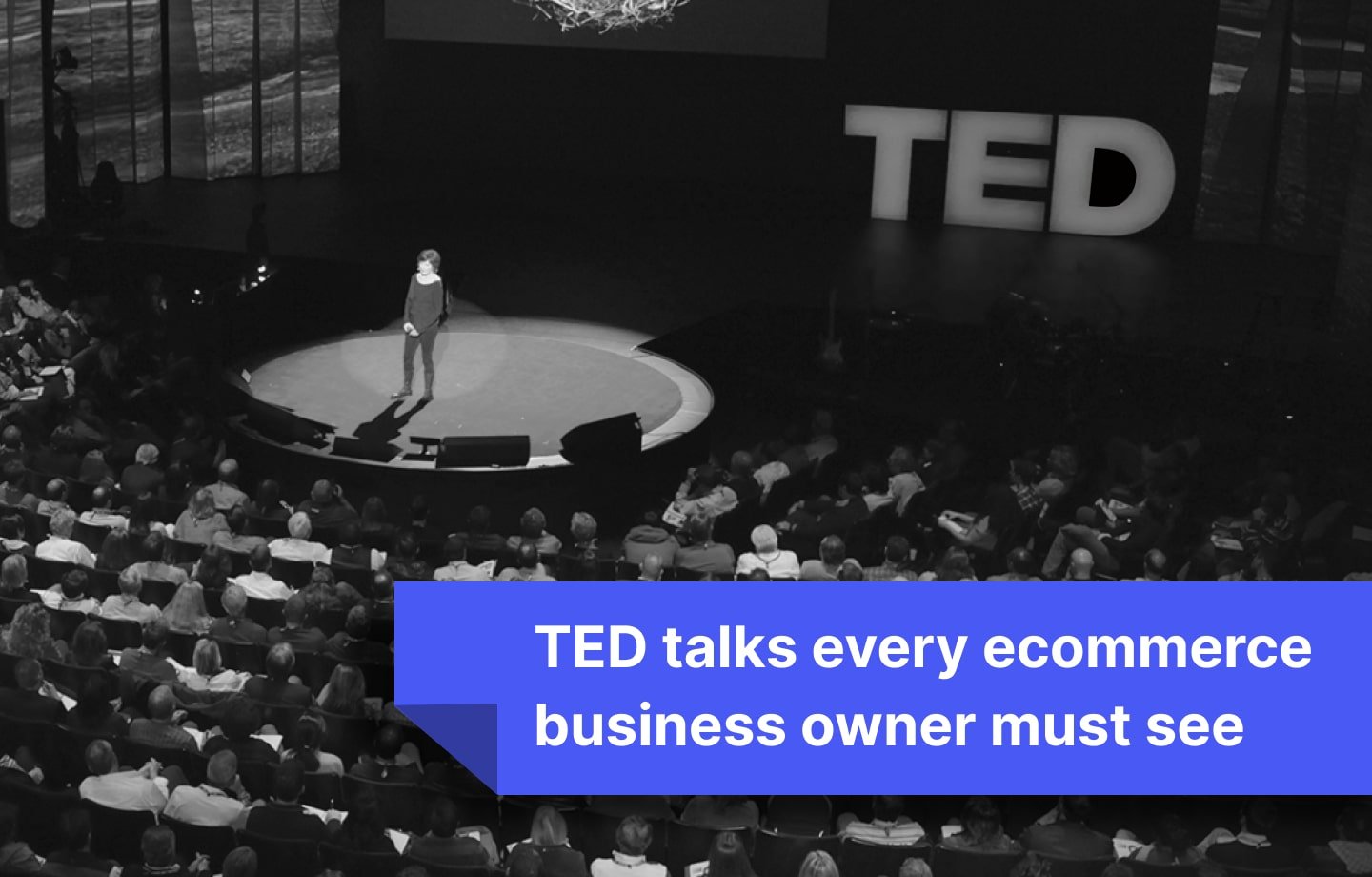
You can guess at those answers, or you can borrow from the people who have studied them for decades. The five talks below are not about ecommerce. They are about choice, motivation, and the strange, predictable ways humans actually decide. Watch them with your store in mind and you will start seeing your own catalog, checkout, and team differently.
They add up to about an hour. Here is each one, and what it means for the business you run.
1. Barry Schwartz: The Paradox of Choice
The idea: we treat more choice as obviously good. Schwartz argues the opposite. Past a certain point, more options do not free people. They paralyze them. Too much choice leaves buyers anxious, slower to decide, and less happy with whatever they finally pick.
Why it matters to your store: every operator's instinct is to add more. More products, more variants, more filters, more upsells on the page. Schwartz is the reminder that each addition has a cost you cannot see in the catalog. A buyer staring at forty near-identical options does not feel served. They feel stuck, and a stuck buyer closes the tab. This hits B2B especially hard, where a single category can hold hundreds of SKUs that all look the same to anyone but a specialist. A fashion and apparel wholesaler feels this most, where a single season's catalog can bury the buyer in near-identical options.
The takeaway: curation is a feature. The goal is not the biggest catalog. It is the shortest path to the right product for this buyer.
2. Sheena Iyengar: How to Make Choosing Easier
The idea: Iyengar has spent her career studying choice, and her research backs up the problem Schwartz names, then goes a step further. She shows how to fix it. When people face too many options they freeze, but smart structure can unfreeze them: cut the useless options, group what remains, and start simple before going complex.
Why it matters to your store: this is the practical companion to the paradox of choice. You may genuinely need to sell hundreds of products, so the answer is rarely to slash the catalog. The answer is to guide the decision. Categories that match how buyers actually think. Filters that narrow fast. A configurator or a fitment tool that shows a buyer only what is relevant to them and hides the rest. You keep the depth. You just stop making the buyer wade through all of it.
The takeaway: you do not have to choose between selection and simplicity. Structure the experience so the buyer feels the simplicity and you keep the selection.
If you want the operator's version of how these buyers differ, the key differences between B2B and B2C ecommerce is a useful companion.
3. Dan Ariely: Are We in Control of Our Decisions?
The idea: we believe we are rational. Ariely, a behavioral economist, shows we are predictably not. Using simple demonstrations, he proves that the way options are framed changes what people pick, often more than the options themselves. Add a deliberately worse third option and you can steer people toward the choice you want, every time.
Why it matters to your store: every pricing page, every plan comparison, every "most popular" badge is a framing decision, whether you designed it on purpose or not. The default option, the order you list things in, the anchor price you show first, all of it shapes what buyers do. Ariely's point is not to manipulate people. It is that there is no neutral design. You are influencing the decision either way, so you might as well be intentional and honest about it.
The takeaway: how you present the choice is part of the product. Design your pricing and your defaults on purpose, not by accident. That is hard to do on a WooCommerce store that cannot express B2B pricing cleanly in the first place.
4. Dan Pink: The Puzzle of Motivation
The idea: this is the one talk on the list not about your buyers. It is about your team. Pink lays out the research showing that carrot-and-stick rewards work for simple, mechanical tasks and actually backfire on anything that requires real thinking. What drives good work is intrinsic: autonomy, mastery, and purpose.
Why it matters to your store: your ecommerce operation runs on people, and the best of them are not doing mechanical work. They are solving problems, serving accounts, and figuring out what to build next. Pink explains why the way to get more out of that team is not more pressure. It is freeing them from the mind-numbing busywork, the order retyping and the repetitive quoting, so they can spend their energy on work that actually uses their judgment. Do more with the team you have by pointing them at the problems worth solving.
The takeaway: automate the robot work so your people can do the human work. That is where motivation, and growth, comes from. A clean Sage integration is a concrete example: it frees a team from manual order entry so they can spend that time on work that actually uses their judgment.
5. Malcolm Gladwell: Choice, Happiness, and Spaghetti Sauce
The idea: Gladwell tells the story of how the food industry stopped chasing the one perfect product and discovered something better. There is no single sauce that makes everyone happy. There are clusters of people who want different things. Serve the clusters, not the imaginary average customer, and everyone wins.
Why it matters to your store: it is tempting to build for a made-up "typical" buyer. Gladwell's lesson is that the typical buyer does not exist. Your customers cluster: the one who wants the fastest reorder, the one who needs a custom configuration, the one who buys by the pallet, the one who wants to talk to a human first. A store that recognizes those segments and serves each one on its own terms beats a store built for an average nobody actually is. This is the whole case for customer-specific pricing, for guided buying paths, for meeting different buyers where they are.
The takeaway: stop optimizing for the average customer. Find your clusters and serve each one well.
Why these five, together
Notice the thread running through all of them. People do not decide the way we assume they do. They get overwhelmed by too much choice, they are steered by how options are framed, they are motivated by purpose over pressure, and they refuse to fit a single mold. Every one of those truths shows up in your store, in your conversion rate, and in your team's day.
The talks are the theory. The work is applying it: a catalog that guides instead of overwhelms, pricing designed on purpose, buying paths built around how your buyers actually cluster, and a team freed to do the work that grows the business. That last part, turning behavioral insight into a store that actually reflects it, is exactly what we do.
Uncap has been a Shopify Platinum Partner since 2013, with more than 380 B2B commerce projects delivered for operators who build stores that fit how their buyers really behave. If you have watched these and started seeing gaps in your own store, let's talk.
Frequently asked questions
Why does too much choice hurt ecommerce conversion?
Barry Schwartz's paradox of choice shows that past a certain point more options paralyze buyers rather than helping them. A buyer staring at dozens of near-identical SKUs feels stuck, and a stuck buyer closes the tab.
How can a large catalog avoid overwhelming buyers?
Sheena Iyengar's research points to structure rather than slashing the catalog: cut useless options, group what remains, and lead the buyer from simple to complex so the path to the right product stays short.
Are these TED talks specifically about ecommerce?
No. They cover choice, motivation, and decision-making psychology. The value is applying those findings to your own catalog, checkout, and team, which is why they are worth an operator's hour.
Why does choice overload hit B2B catalogs especially hard?
A single B2B category can hold hundreds of SKUs that look identical to anyone but a specialist. Curation, guided navigation, and sensible defaults matter even more when the buyer is choosing between technical variants.