

Search for wholesale distributor software and every result answers with its own category: ERP vendors say distributor software means ERP, ordering apps say it means order capture, and the listicles rank eleven ERPs as if that settles it. No wonder the discovery calls all start the same way, with a distributor saying "we need a new system" and meaning three different things at once. Distributor software is not one system. It is three jobs, and most of the expensive mistakes in this category come from asking one system to do another one's job.
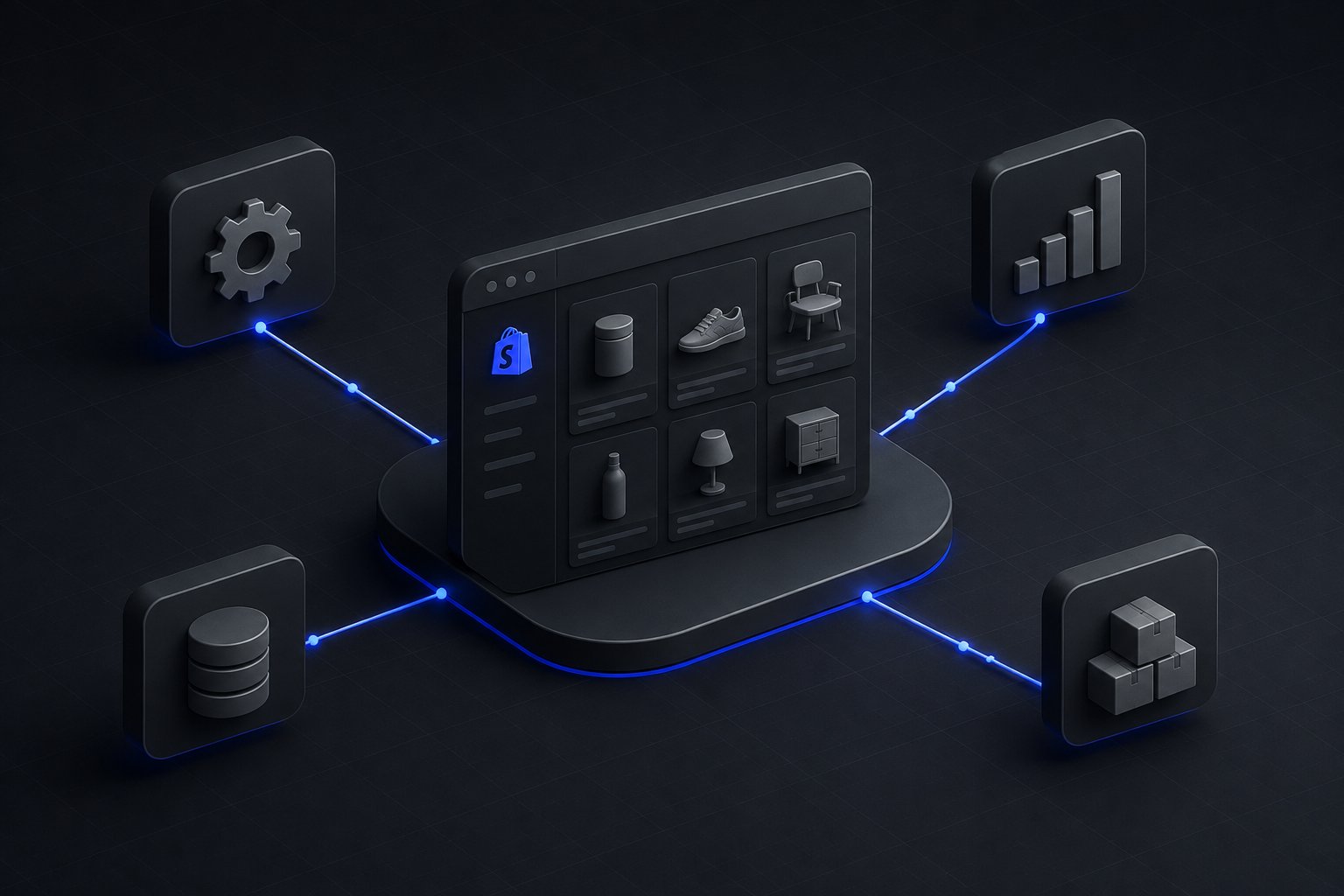
Quick answer: A distribution operation runs on three distinct systems with three distinct kinds of truth. The ERP owns operational and financial truth: inventory, purchasing, credit, orders, and the item master. The PIM owns product content truth: the enriched attributes, specs, and assets that make products findable and buyable. The ecommerce platform owns the selling surface: accounts, pricing display, and ordering workflows for buyers. They connect through sync, each remaining the authority for its own truth, and the moment one system starts impersonating another, the ERP as a webstore, the storefront as a pricing engine, the item master as product content, the stack starts costing more than it returns.
The ERP: Operational and Financial Truth
The ERP is the system distributors already have and already trust, and for good reason: it is where the business actually lives. Purchasing and replenishment, inventory by warehouse and branch, customer records with credit limits and payment terms, contract pricing, order processing, and the financials that close each month, that is ERP territory, and nothing in this article suggests moving any of it. Whether the name on the login is NetSuite, Epicor, SAP, Dynamics, Acumatica, or Sage, the ERP is the system of record, full stop.
What the ERP is not is buyer-facing. Its item master describes products the way operations needs them described, part numbers, costs, units, vendors, locations, which is a different job than making a product findable and convincing to a buyer. And its web storefront module, where one exists, was built by an ERP vendor solving an ERP problem; the distributors who try it usually discover that a storefront bolted to the back office inherits the back office's pace of change. The temptation to make the ERP do everything is really a wish to avoid integration, and it trades a solvable problem for an unsolvable one.
Ecommerce: The Selling Surface
The ecommerce platform's job is the buyer's whole experience: logging into a company account, seeing their contracted prices, browsing a catalog scoped to what they are allowed to buy, and ordering the way professional buyers order, quick order by SKU, reorder from history, quotes where pricing needs a human, purchase orders and net terms at checkout. Everything a buyer touches is this system's job, and it is a real job; the difference between a portal accounts adopt and one they route around is made entirely on this surface.
Just as important is what the selling surface must not own: the truth. Prices displayed on the storefront should be mirrors of ERP contract records, not a second pricing engine drifting from the first. Inventory shown to buyers should be the ERP's numbers on a short sync cycle, not the storefront's opinion. The storefront that quietly becomes a second system of record creates the reconciliation work the stack existed to eliminate, which is why the discipline runs one way: ecommerce displays and captures, the ERP decides.
PIM: Product Content Truth
The third system is the one distributors most often discover they were missing. Product content, the technical attributes buyers filter by, the spec values that answer pre-sales questions, images and documents, category structures, cross-references, is not what an ERP item master holds, and stretching the item master to hold it produces the familiar symptoms: attributes crammed into description fields, spec sheets living in a shared drive, and every channel getting a slightly different version of the truth.
A PIM exists to own that content: one enriched record per product, feeding the storefront and every other channel from the same source. Whether a given distributor needs one is a scale question more than a category question, a focused catalog can live well on the ecommerce platform's native structured data, while a catalog with tens of thousands of attribute-heavy SKUs across multiple suppliers usually cannot, and the PIM platforms that fit Shopify is the next read once the symptom list above feels familiar. The decision rule: when product content has a full-time maintenance burden and no single home, the PIM stopped being optional some time ago.
How the Three Connect
The stack works when each system exports its truth and imports the others', on a cadence matched to how fast each truth changes.
Between ERP and ecommerce runs the operational sync: items and pricing flowing to the storefront, with contract price lists mirrored per account and event-triggered updates when rates change; inventory by location on a short cycle; orders flowing back under the right customer, terms, and references; fulfillment and invoice status returning to the buyer's view. This is the connection with the least tolerance for improvisation, and it is the job Uncap Connect does, both directions, in real time, with the ERP kept as system of record, inside the broader ERP integration practice.
Between PIM and ecommerce runs the content flow: enriched product records publishing to the storefront's catalog, on the slower cadence content actually changes. And underneath all of it sits the exercise that prevents most stack failures: deciding, field by field, which system owns which attribute, price from the ERP, marketing copy from the PIM, order status from the ERP, so no two systems ever both believe they hold the pen.
The Conflations That Cost Distributors
Each of the three classic mistakes is a system impersonating a neighbor. The ERP-as-webstore keeps truth unified and buyers unimpressed, and its faster storefront iterations die in the queue behind operational IT work. The storefront-as-ERP starts innocently, a price edited directly in the ecommerce admin to close a deal, and matures into two pricing systems that disagree on invoice day. The item-master-as-PIM caps how good the buying experience can get, because the catalog can only be as rich as the operational record that feeds it.
The all-in-one suite deserves its own honest sentence: buying every job from one vendor is a real strategy with a real cost, since a suite is rarely best at all three jobs, and the suite's weakest module becomes a ceiling you have already paid for. The three-system stack trades a vendor relationship for best-fit systems plus integration, and for mid-market distribution the integration has become the solved side of that trade.
What a Working Stack Looks Like
For the mid-market distributors Uncap builds for, the reference shape is consistent: the incumbent ERP stays exactly where it is, Shopify carries the selling surface with company accounts, mirrored price lists, and distributor ordering workflows, a PIM joins when catalog scale demands it, and the sync layer keeps every system honest about which truth it owns. Nothing about that architecture is exotic, which is the point. The distributors who struggle are rarely missing a system; they are usually running one system too far outside its job.
Uncap has been a Shopify Platinum Partner since 2013, with 380+ storefronts launched on Shopify, including for manufacturers, distributors, and wholesalers. Talk to Our Experts if you want your current stack mapped against the three jobs, the field-ownership exercise alone usually explains where the friction has been coming from.
Frequently asked questions
What software does a wholesale distributor actually need?
Three systems doing three jobs: an ERP as the system of record for inventory, purchasing, credit, pricing, and financials; an ecommerce platform as the buyer-facing selling surface with accounts, mirrored pricing, and ordering workflows; and, at catalog scale, a PIM owning enriched product content. The connective tissue is the sync that lets each system stay authoritative for its own truth.
Can the ERP's web storefront module serve as the ecommerce platform?
It can exist, and it rarely competes. ERP web modules inherit the ERP's pace of change and its vendor's priorities, which are operational rather than buyer-facing, so the storefront ages while the back office hums. The pattern that holds up is a dedicated selling surface synced to the ERP, not a storefront bolted inside it.
What is the difference between a PIM and the ERP item master?
The item master describes products for operations: part numbers, costs, units, vendors, locations. A PIM describes products for buyers and channels: enriched attributes, specs, assets, categories, and cross-references, maintained once and published everywhere. Stretching the item master to do the PIM's job caps the buying experience at operational-record quality.
Should pricing live in the ecommerce platform or the ERP?
Truth in the ERP, display on the storefront. Contract rates and tiers are mirrored to the ecommerce platform as price lists so buyers see their real numbers at browse time, while the ERP remains the system that decides them. Editing prices directly in the storefront is how a business ends up with two pricing systems that disagree on invoice day.


