

CASE STUDY · FARMERS DEPOT
Farmers Depot
Unified Commerce on Shopify & Microsoft F&O Integration
Shopify migration for Farmers Depot with seamless Microsoft Dynamics 365 F&O ERP integration, improving scalability, operations, and B2B performance.

The build ERP stays in charge.
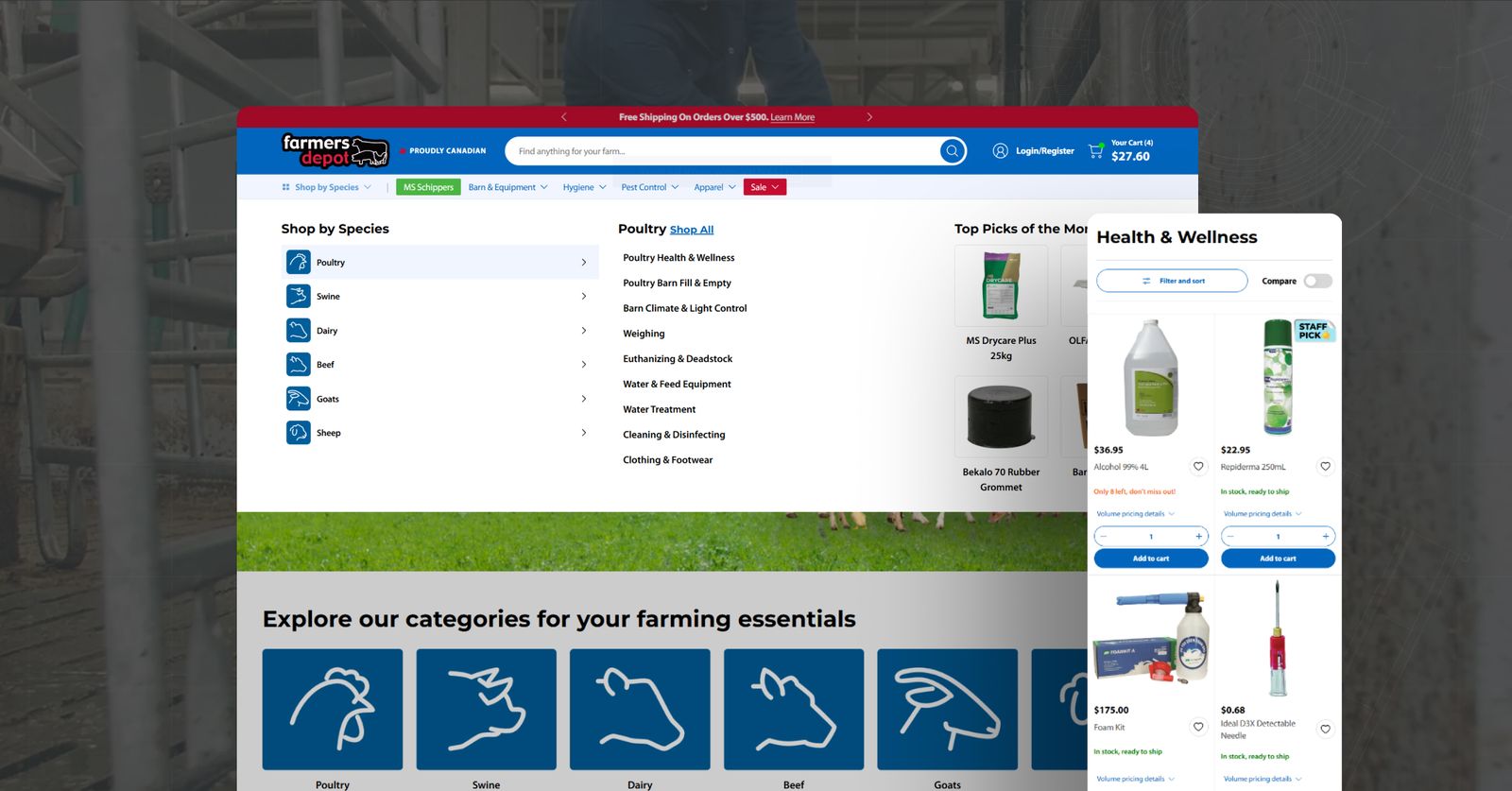
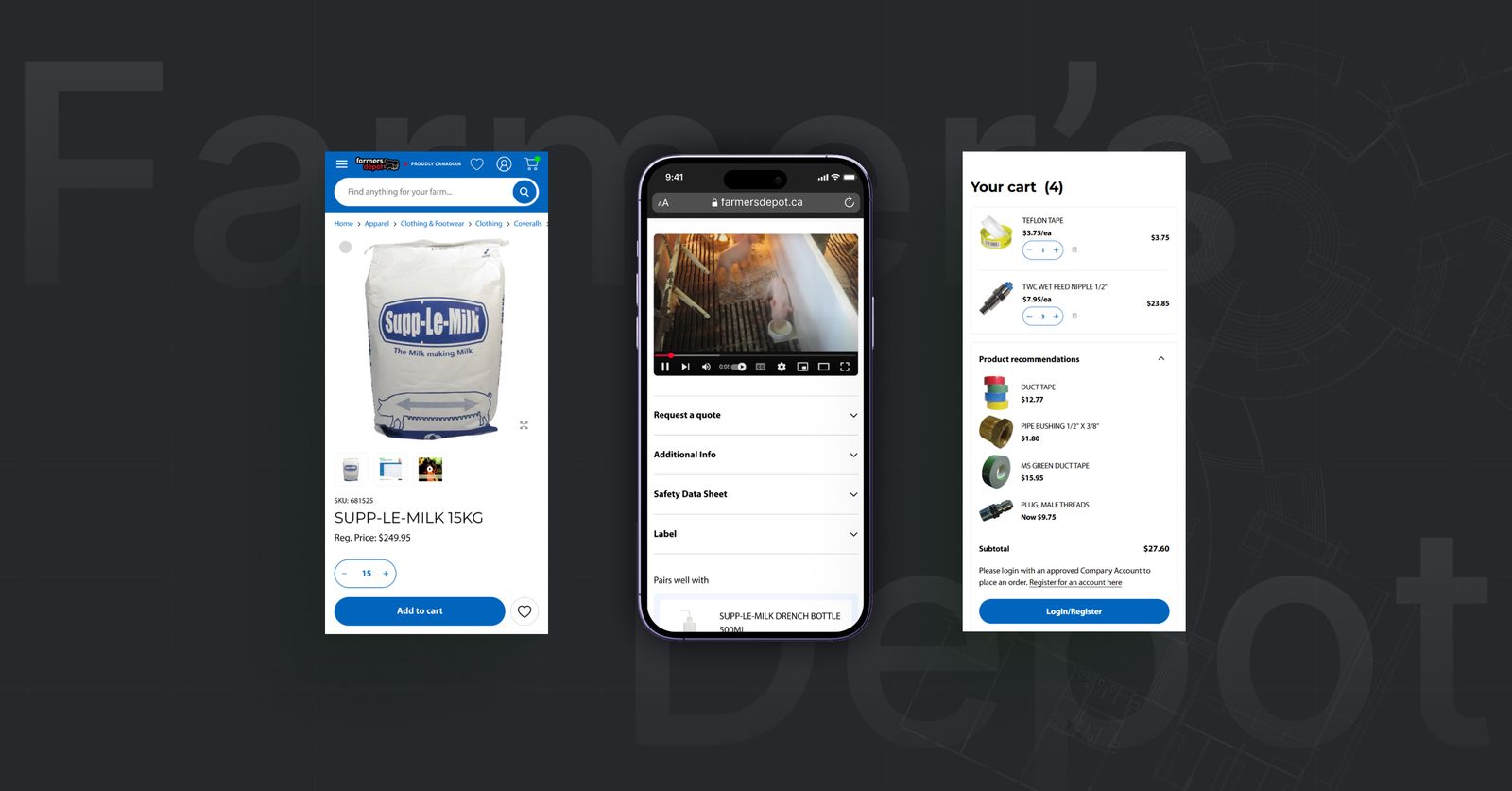
Shopify Plus B2B is the customer-facing storefront; Microsoft Dynamics 365 F&O stays the system of record for products, companies, pricing, and inventory. APPSeCONNECT middleware keeps the two in sync, and Shopify Flow, metafields, and custom theme work extend Shopify's native B2B features to match how Farmers Depot actually sells.
ERP as the single source of truth
Products, companies, pricing, and inventory live in Dynamics 365 F&O. Shopify renders them; nothing is managed twice.
Middleware, not custom pipes
APPSeCONNECT handles the two-way synchronization, monitored automatically so failures surface before customers see them.
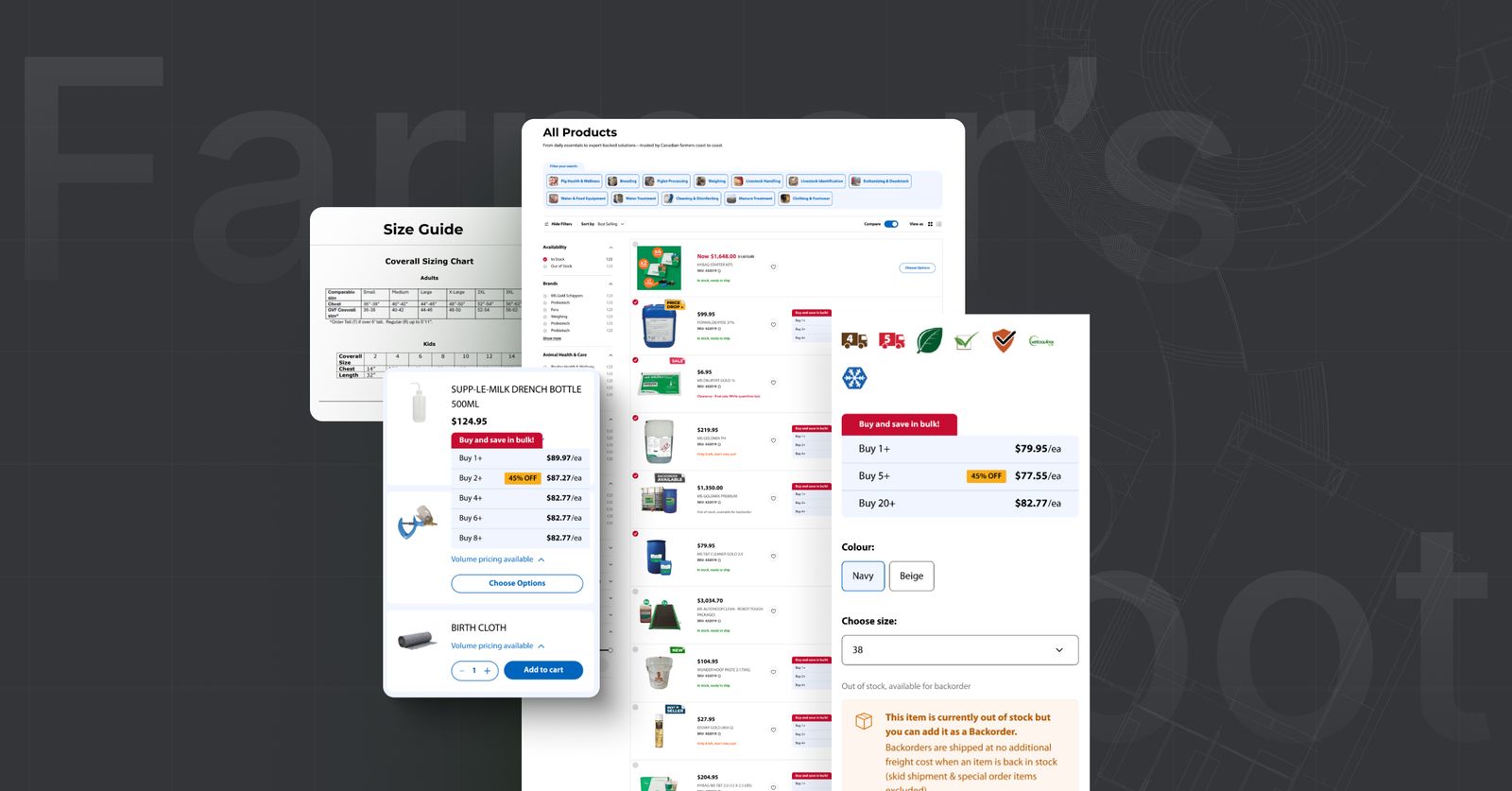
Company pricing catalogs
About 10 catalogs with catalog-aware volume discounts. Every buyer logs in and sees their company's price, storewide.
Metafield-driven merchandising
Product badges and storefront behavior run on metafields, so the team changes merchandising without a developer.
The scale in numbers.
Automation instead of admin.
Shopify Flow replaced the manual work around the sync. The operational risks that come with a 13,000-company integration, sync failures, wrong catalog assignments, duplicate companies, inconsistent inventory policies, are watched and corrected by workflows instead of people.
- Company onboarding configured automatically
- Customers tagged by payment terms
- Inventory policies updated on lifecycle changes
- Duplicate companies detected and flagged
- Pricing catalogs validated on assignment
- ERP sync failures monitored with notifications
The project turned Shopify Plus into a robust B2B platform tightly integrated with the ERP. Data synchronizes automatically, every company sees its own pricing, and the business runs day to day with minimal manual intervention.
Uncap delivery team

