

A hospital's value analysis committee reviews your quote. The price looks right, until someone asks if it matches their GPO contract tier, and your rep has to call back in two days with an answer. By then, the buyer has already moved to the next medical equipment distributor on their list. This happens more than it should, not because the product was wrong, but because the ordering experience couldn't keep up with how hospitals actually buy. Hospital procurement doesn't run like a typical B2B account. It runs on contract pricing, compliance documentation, and approval chains that most ecommerce platforms were never built to handle.
What Hospital Procurement Teams Actually Look For in a Medical Equipment Distributor
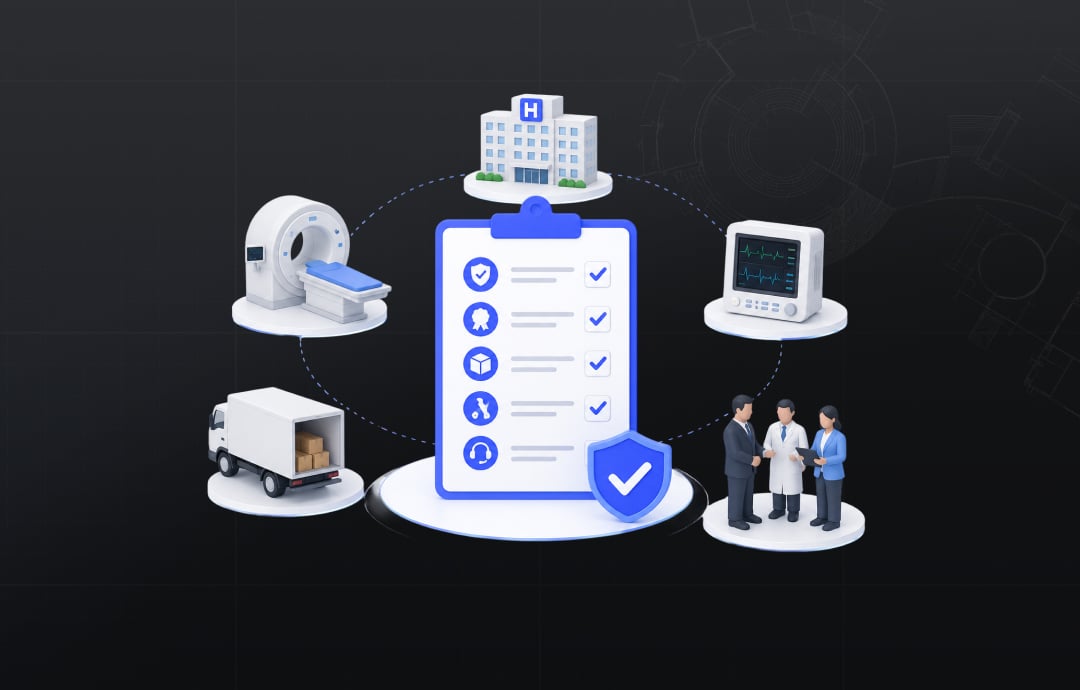
Hospital procurement teams look for three things from a medical equipment distributor: pricing that automatically reflects their GPO contract, documentation that proves regulatory compliance before the purchase order is cut, and an ordering process that fits inside their approval chain instead of working around it. Everything else, catalog breadth, delivery speed, even price itself, is secondary to getting those three right.
A value analysis committee doesn't evaluate a distributor on product alone. They're checking whether your quote already reflects the contract tier the hospital negotiated, and whether the compliance paperwork is attached before anyone asks for it. They're also checking whether their own purchasing system can talk to yours without someone re-keying line items. Get those three wrong, and the best price in the room doesn't matter.
GPO Contract Pricing Has to Be Automatic, Not Manual
Most hospitals buy through a Group Purchasing Organization contract, a negotiated price tier that applies the moment a facility places an order, not after someone reviews it. If your ordering system shows list price, and your rep has to manually look up and apply the right contract tier, you've added a step. It's a step the hospital's own procurement software doesn't have to deal with anywhere else.
That manual step is also where pricing errors creep in. A quote that's even slightly off the contracted rate gets kicked back to the value analysis committee, and the order sits while someone reconciles it. For a distributor running quotes through Uncap Quotes, contract pricing can apply automatically based on the account. The number on the quote already matches what the hospital's finance team is expecting to see. Distributors reaching that point are often leaving an older Magento store that could not carry clean SKU and pricing data reliably.
This shift is part of a broader move, and why digital procurement adoption is accelerating in medical equipment puts the trend in context.
Compliance Documentation and UDI Tracking Aren't Optional
Every medical device sold in the United States carries a Unique Device Identifier. Hospital procurement teams expect that UDI, along with the lot number and expiration date, attached to the order, not buried in a separate spreadsheet someone has to request. The FDA's UDI system exists specifically so a recalled lot can be traced back to the exact facility and department that received it.
For a distributor, that means compliance data needs to live at the SKU level inside the order itself. A purchase order without UDI and lot tracking attached is a purchase order a hospital's compliance team will flag, and a flagged order is a delayed order. Building that tracking into the catalog from the start is faster than retrofitting it after the first recall request.
Multi-Facility Ordering Means Account Hierarchies, Not One-Size-Fits-All Logins
Most hospital buyers aren't a single account. They're part of an Integrated Delivery Network, a health system with multiple facilities. Each facility places its own orders under contract terms and billing that rolls up to one parent account. A single login that treats every department the same way doesn't match how the buyer actually operates.
What a hospital system actually needs looks like the same account hierarchy logic built into a B2B self-service portal. Department-level users order against their facility's contract, while visibility and approval roll up to a central procurement office. Without that structure, every new facility means another login to manage and another spreadsheet tracking who's allowed to buy what.
What This Looks Like in a Working Medical Supply Ordering Experience
Getting all three right, contract pricing, compliance data, and account hierarchy, isn't a single feature. It's how the ordering experience is built underneath the catalog.
Contract pricing syncs to the account. The price a buyer sees already reflects their GPO contract tier, pulled from the account record instead of applied manually after the fact.
Compliance data travels with the SKU. UDI, lot number, and expiration date are attached at the product level, so they show up on every order line without a separate lookup.
Account hierarchy mirrors the health system. Facility-level buyers order against their own contract terms, while billing and approval roll up to the parent account.
Quotes convert to orders without re-entry. A quote built for a value analysis committee becomes the actual order once it's approved, instead of being rebuilt from scratch.
Shopify's B2B tooling provides the account and pricing foundation for this. Uncap Connect keeps that foundation in sync with the ERP on the back end. Contract pricing and compliance data stay accurate without a manual update every time something changes. For distributors on NetSuite, that connection keeps contract pricing, availability, and documentation consistent between the ERP and what a hospital buyer sees online. Our guide to ecommerce and ERP integration for medical equipment distribution goes deeper on how medical distributors serve hospital procurement without letting the storefront and the ERP drift out of sync.
Why Choosing the Right Medical Equipment Distributor Protects the Relationship
For a hospital, switching distributors isn't a small decision. It means re-credentialing a new vendor, renegotiating how compliance documentation gets delivered, and retraining staff on a new ordering process. That's exactly why getting the ordering experience right the first time matters more in healthcare than in almost any other B2B vertical. The cost of friction isn't just a lost order. It's a buyer who starts evaluating alternatives.
Distributors who move orders through GHX or another healthcare EDI network already know how unforgiving this buyer is about data accuracy. The same discipline that EDI requires, clean SKU data, accurate pricing, reliable compliance fields, is what a Shopify-based ordering experience needs to deliver to earn the same trust online.
Uncap is a Shopify Platinum Partner, on Shopify since 2013, building B2B commerce for manufacturers and distributors who sell into vertical markets with exactly this kind of operational complexity. For a medical and dental equipment distributor, the ordering experience isn't a side project. It's the first thing a procurement team judges you on.
Getting the Ordering Experience Right Is the Differentiator
Hospital procurement teams aren't choosing a medical equipment distributor on product alone. They're choosing the one whose ordering process doesn't create more work for their value analysis committee, their compliance team, or their finance department. Get the contract pricing, the documentation, and the account structure right, and the conversation moves from price to partnership.
Talk to Our Experts to see how Uncap builds ordering experiences that match the way hospital procurement teams actually buy.
Related reading: Punchout catalogs on Shopify B2B.
Frequently asked questions
What's the biggest mistake medical equipment distributors make with hospital ordering?
Treating every buyer like a single retail account. Hospital procurement runs on GPO contract pricing, compliance documentation, and multi-facility account hierarchies. A distributor whose ordering system doesn't reflect that structure pushes the work of fixing it onto the buyer, and that's exactly what loses the next order.
Do hospitals expect a self-service ordering portal, or do they still want a sales rep?
Both, depending on the order. Routine reorders and standard catalog items move faster through self-service ordering with contract pricing already applied. Complex quotes, new product evaluations, and value analysis committee submissions still go through a rep. That's why the ordering system needs to support both paths instead of forcing one.
Does Shopify support GPO contract pricing and UDI tracking out of the box?
Not natively. Shopify's B2B tools handle company accounts and negotiated pricing structures well. GPO-specific contract logic and UDI or lot-level compliance tracking require building that data into the catalog and account structure. That's the kind of implementation a Shopify Platinum Partner handles.