

Search for windows and doors online and every result is either a storefront selling to homeowners or a manufacturer's dealer system offering "easy online ordering" to its own distribution partners. Notice what that second category means for a supplier: the most digital part of your business is a portal that belongs to your manufacturer, carries their brand, shows their catalog, and teaches your customers to think of you as a middle step. A window and door supplier's own online channel is a different project, and almost nobody publishes advice about it, because the companies with the answers are busy selling either windows or portals.
Quick answer: The windows and doors catalog splits three ways, and each third gets a different ordering experience. Stock products, standard sizes, in-warehouse units, sell through a straightforward B2B catalog with contractor pricing and real availability. Configured products, sized to the eighth inch with handing, glazing, grids, and finishes, need a configurator that either prices the combination live or routes it to a quote, depending on whether the pricing logic is deterministic. And the parts business, hardware, balances, rollers, screens, is a reorder catalog with an identification problem to solve. Get the split right and the storefront serves the counter instead of embarrassing it.
The Three Catalogs Hiding in One Price Book
Treating windows and doors as one catalog is the mistake that stalls most of these projects. The stock third behaves like normal commerce: standard sizes, palletized inventory, a contractor buying six units for a Tuesday install. It needs accurate availability, account pricing, and fast reorder, and nothing about it requires special machinery.
The configured third behaves like manufacturing, because it is. A made-to-order window is a specification, not a SKU: width and height to the eighth inch, handing, glazing package, grid pattern, interior and exterior finish, hardware, and a lead time measured in weeks. The selling problem is capturing a valid specification and pricing it, and the split rule that governs it is the one the configurable building products guide establishes for the whole category: configurations whose price is deterministic can price and sell online, while configurations whose price depends on judgment route to a quote. Windows sit mostly on the deterministic side, which is why manufacturer dealer systems can quote them instantly, and why a supplier's own channel can too.
The parts third is the quiet profit center. Balances, sash locks, rollers, weatherstrip, and screens generate steady reorder revenue at parts margins, and the selling problem is identification: the contractor knows the window is a 2004-era double-hung from a builder long gone, not which balance it takes. Cross-reference content, photographs, and spec-based filtering do more for this catalog than any promotion, and the supplier who makes identification easy becomes the default source for every repair in the territory.
Configured Ordering Without the Paper Round Trip
The traditional configured-order workflow is a paper spec sheet, a faxed or emailed order form, a rekeying step at the counter, and a callback when something on the form was ambiguous. Every ambiguity is a potential remake, and remakes in made-to-order product are margin erased at freight-included prices.
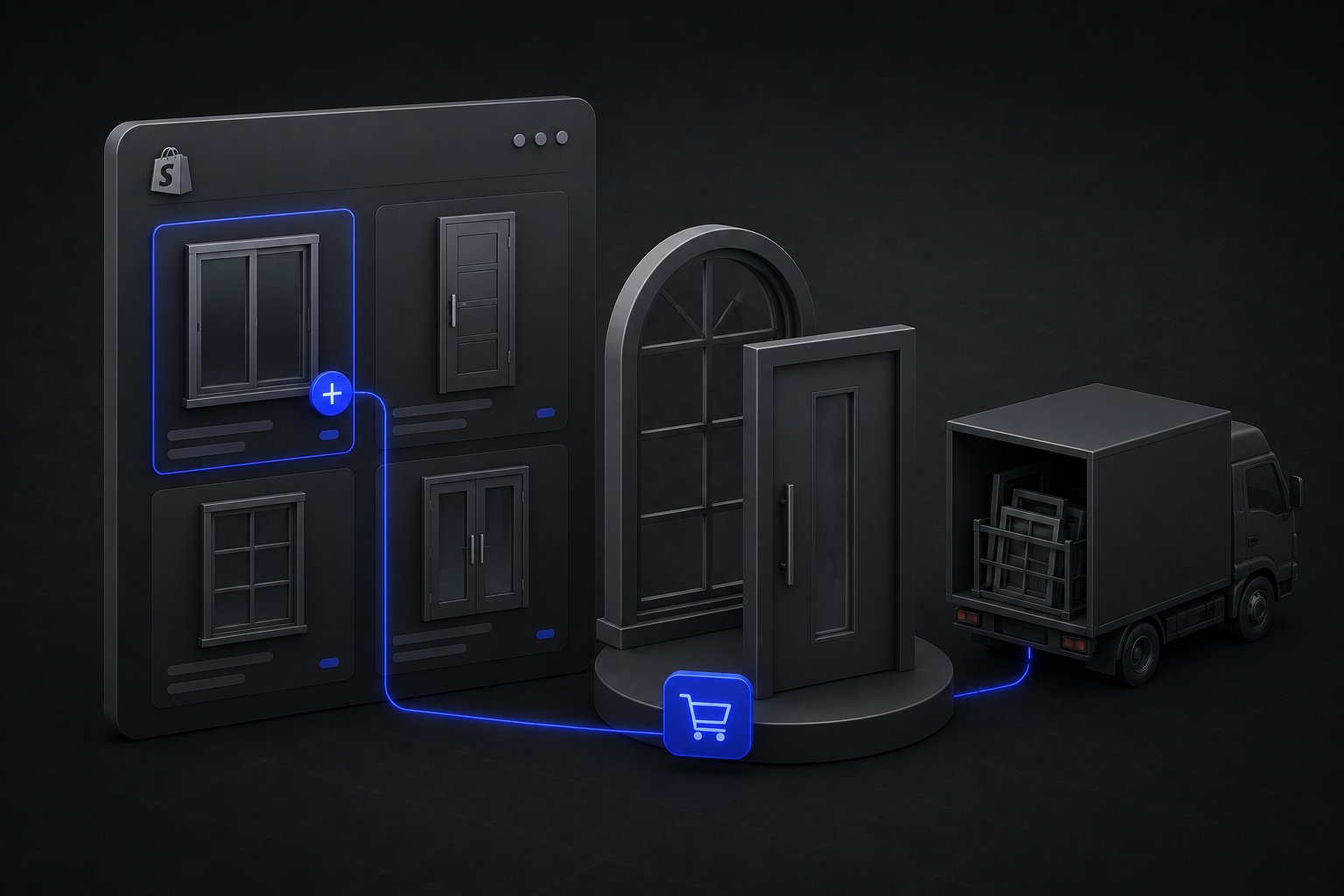
Online configuration earns its keep by making invalid orders impossible to place: sizes constrained to the product's real limits, options filtered to valid combinations, and the finished specification captured as structured order data rather than handwriting. That is configurator work, the job Uncap Builder does on Shopify, turning a valid configuration into a cart with the specification attached. Where the deal needs a human, a project of forty openings, negotiated pricing, staged delivery, the configuration flows into a quote instead, and the quote carries the spec through revision and approval without anyone retyping it.
One discipline matters more than any feature: the measurement belongs to a named party. Whether the contractor certifies their own openings or the supplier sells measurement as a service, the order should record who measured, because the alternative is relitigating every remake. A structured order line has room for exactly that kind of accountability; an emailed spec sheet does not.
Dealer Programs, Lead Times, and the Status Phone Call
Suppliers with dealer and contractor programs already run tiered pricing, and the storefront's job is to mirror it: each account logging into its program rates, the way contractor pricing and account tiers are structured on Shopify B2B generally. What made-to-order adds is the time dimension. A configured order lives for weeks between placement and delivery, and every one of those weeks generates the industry's signature phone call: where is my order?
Answering that question online is worth more than most feature investments, because it is the call volume. Order status that reflects the real stages, in production, shipped from plant, received at warehouse, ready for delivery or will-call, turns the account page into the answer. The supplier who shows lead times honestly at order time, current production backlog included, also wins the quieter trust contest: contractors plan crews around those dates, and a date that holds is worth more than a date that flatters.
Where the Manufacturer's Portal Ends and Yours Begins
The manufacturer dealer systems that dominate this category's search results are good at their job, which is ordering that manufacturer's product. What they cannot do is represent your business: your mixed-brand catalog, your parts inventory, your stock program, your delivery routes, your accounts and their pricing across everything you sell. A supplier whose only digital channel is a manufacturer's portal has digitized a third of the catalog and outsourced the customer relationship along with it.
The build for the building and construction suppliers Uncap works with is the storefront that carries all three catalogs under the supplier's own brand: stock with live availability, configured products through a configurator wired to quote where judgment enters, and parts with identification tooling, with every account seeing its own program. Uncap has been a Shopify Platinum Partner since 2013, with more than 380 B2B commerce projects delivered for manufacturers, distributors, and wholesalers. Talk to Our Experts if your configured orders still travel as spec sheets, mapping the deterministic-versus-judgment line in your price book is the first working session.
Frequently asked questions
Can configured windows and doors be sold online?
Yes, when the configurator enforces valid combinations and the pricing logic is deterministic: size within limits, options filtered, the finished specification captured as structured order data. Configurations whose price depends on judgment, large projects, negotiated terms, staged delivery, route to a quote instead, carrying the specification with them.
What should a window and door supplier sell through a standard B2B catalog?
The stock program: standard sizes and in-warehouse units, with contractor pricing, live availability, and fast reorder. The parts and hardware catalog also belongs there, with identification support, cross-references, photos, and spec filtering, since parts buyers usually know the window, not the part number.
Why not just use the manufacturer's dealer ordering portal?
Because it covers one manufacturer's catalog and carries their brand, not yours. A supplier's own channel represents the whole business, mixed brands, stock, parts, delivery, and account programs, and keeps the customer relationship where the margin is.
How should made-to-order lead times be handled online?
Shown honestly at order time, including current backlog, and tracked visibly afterward through the real stages: in production, shipped from plant, received, ready for delivery or pickup. Order status online is the answer to the industry's most common phone call, and dates that hold beat dates that flatter.