


Spend ten minutes in any home-design forum and you will find the same complaint, usually with a lot of exclamation points: why does getting a quote for cabinets, or windows, or a front door require a showroom appointment with a design consultant? The frustration is justified, and so is the process that causes it. Made-to-order building products genuinely cannot be priced from a product page. The mistake is concluding that the only alternative to a broken cart is a gatekept consultation, when the actual answer sits between the two.
Quick answer: Configure-to-quote lets the buyer do the specification work self-serve, series, dimensions, options, finishes, against rules that keep the configuration buildable, then routes the completed spec to a rep as a quote request instead of a cart checkout. The rep verifies what rules cannot (field measurements, site conditions, freight), and the approved quote converts to an order carrying the full specification into manufacturing. The buyer skips the appointment. The seller skips the risk of manufacturing to an unverified number.
Why Made-to-Order Breaks the Cart
Windows, doors, and cabinetry share a property that defeats standard ecommerce: the dimensions are the product. Two windows in the same series with different measurements are different products with different prices, and the price is computed, not looked up. Windows are commonly priced by united inch, the sum of width and height, with option surcharges layered on. Doors price by configuration: slab or prehung, handing and swing, jamb depth, glazing. Cabinetry prices by the box and the linear foot, multiplied across door style, wood species, and finish.
Three more properties compound the problem. Configuration rules are real manufacturing constraints, a divided-lite pattern that does not exist above a certain sash size, a hinge-side choice that conflicts with an inswing in a given frame. Code requirements shape what is orderable, egress rules for bedroom windows and tempered-glass requirements being the familiar examples, with specifics varying by application and jurisdiction. And there are no returns: a made-to-order unit manufactured to the wrong number is scrap with freight attached, which is why no sane seller lets an unverified dimension flow straight to production.
Put together, that is why this category still quotes. The question is whether the quote process has to begin with a phone call, and it does not.
The Configuration Layer: Let the Buyer Do the Spec Work
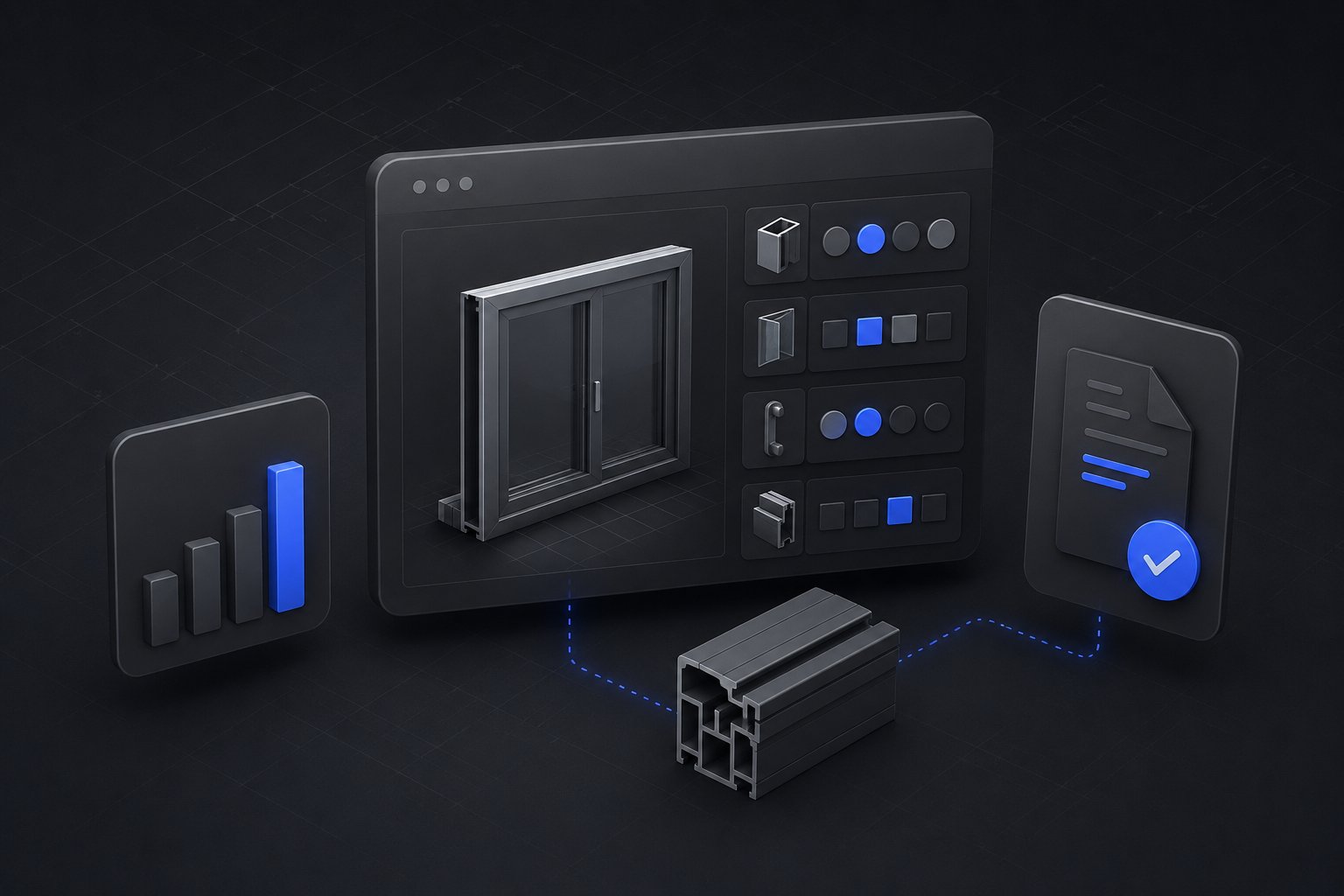
The self-serve half of configure-to-quote is a guided configurator that walks the buyer through the decisions in the order the product logic requires: series first, then dimensions within that series' manufacturable range, then the options the chosen series and size actually support, with the price updating as the spec builds. Invalid combinations are simply not offered. The buyer cannot specify the unbuildable, which converts the estimator's error-catching into logic that runs on every configuration.
Uncap Builder runs that layer on Shopify: dimension-driven pricing rules, constraint logic between options, and a completed configuration that exists as structured data rather than a wish written into a form's comment box. The same translation principle that powers coverage calculators for roofing and siding applies here with the stakes raised: the store owns the product logic, so the buyer only owns their choices.
For cabinetry and millwork, the configuration is usually plural, a kitchen is twenty boxes with shared style decisions, so the configurator needs project-level structure: set the door style, species, and finish once, then specify boxes against it, with the whole set traveling together as one quote.
The Quote Layer: Verify, Price, Convert
A completed configuration should not become an order by itself, and pretending otherwise is how made-to-order sellers eat scrap. It becomes a quote request, and the rep's job narrows to exactly what rules cannot do: confirm the measurements are field-verified rather than hoped, check site conditions where they matter, price freight for units that ship on A-frames rather than in boxes, and attach the real lead time.
Uncap Quotes carries that workflow natively: the configured spec arrives as a draft quote, revisions happen against the structured configuration rather than in email prose, and the buyer's approval converts the quote to an order with the specification intact. The revision loop matters more in this category than almost anywhere, because specs change between request and order, an architect adjusts a rough opening, a homeowner upgrades glass, and each change should be a revision on the record, not a new thread with a new PDF and a fresh chance to build from the old number.
Behind the converted order, the full specification carries through as a bill of materials manufacturing can build against: the spec the buyer approved is the spec the shop floor sees, with nothing retyped in between. Retyping is where dimension errors are born.
The Trade Layer: Builders and Dealers
The homeowner ordering one door is the visible case; the volume runs through trade accounts. A builder outfitting a subdivision orders the same door spec forty times with per-lot variations, and a dealer quotes manufacturer product into their own local market daily. Both need the configure-to-quote flow wrapped in account structure: trade pricing applied to configured products automatically, saved specification templates that make the forty-first door a two-minute task, and quotes organized by job or lot rather than as a flat list. That account layer is the same contractor pricing and tier architecture the rest of building materials commerce runs on, applied to configured products.
For manufacturers selling through dealers, the configurator does quiet double duty as channel infrastructure: dealers spec against current rules and current pricing instead of last year's printed price book, and the manufacturer stops fielding the calls that begin "is this combination still available."
What This Unlocks
Return to the forum complaint. The homeowner does not actually object to a quote; they object to being unable to do anything themselves before a salesperson enters. Configure-to-quote gives them the spec work, which most serious buyers in this category are eager to do, and gives the seller a request that arrives complete: series, sizes, options, finishes, structured and priced at list. The conversation that follows is verification and scheduling, not discovery. Quotes go out in hours instead of after appointments, and the seller's pipeline fills with configurations instead of voicemails.
Uncap has been a Shopify Platinum Partner since 2013, with 380+ storefronts launched on Shopify, including for manufacturers, distributors, and wholesalers, including operators in building materials and construction. Book a Demo to see dimension-driven configuration and quote conversion running against a made-to-order catalog.
Frequently asked questions
Why can't made-to-order windows and doors be sold through a normal cart?
Because the price depends on dimensions and options that must be computed per configuration, manufacturing constraints and code requirements limit what is orderable, and custom units cannot be returned. An unverified dimension flowing straight to production is scrap with freight attached, so the flow ends in a verified quote rather than a checkout.
What is configure-to-quote?
A flow where the buyer builds a complete, validated specification self-serve, series, dimensions, options, finishes, priced live against configuration rules, and submits it as a quote request. A rep verifies measurements, site conditions, freight, and lead time, and the approved quote converts to an order carrying the full spec into manufacturing.
How does the quote step prevent dimension errors?
Two ways: the configuration exists as structured data, so revisions change the record instead of spawning new documents, and the approved specification flows to manufacturing as a bill of materials without retyping. Most dimension errors in made-to-order work are transcription errors, and the flow removes the transcription.
Do builders and dealers use the same configurator as homeowners?
The same configuration logic with a trade account wrapped around it: trade pricing applied automatically, saved spec templates for repeated orders, and quotes organized by job or lot. A builder's forty-first door from a saved template is a two-minute task instead of a fresh specification.