

It is Wednesday morning. A boutique owner is reviewing her sell-through report from the past week. Three styles are gone: a linen midi dress that sold out in four days, a ribbed tank that moved in every color, and a printed wrap top that customers kept asking about on Instagram. She needs to restock all three and pull something new to fill the gap for the next trend cycle.
She opens the ordering portal for her wholesale apparel distributor. The catalog looks identical to three months ago. There is no "new arrivals" section she can trust. The sold-out linen dress is available to reorder, but the minimum order quantity requires a full six-pack per color, which means she is committing to six units of a style she has only sold in one or two colors consistently. There is no option to reorder a three-pack. The inventory page shows a quantity number but no size-run breakdown, so she cannot tell if the available stock is all in one size or spread across her range. There are no flat lays or lifestyle images she can use for her social content. There are no net terms on her account; the portal only accepts card at checkout.
She closes the tab and calls her showroom rep in LA. The rep takes the order in seven minutes, applies her account pricing, sets up the mixed colorway split she wants, and promises to check on net terms with the account team. The distributor gets the sale. But a wholesale apparel distributor that only closes through the phone is leaving efficiency on the table, and boutique owners who do enough of those phone calls eventually look for a distributor whose digital channel actually works.
That digital channel gets far more manageable for a distributor when wholesale and retail run from a single storefront, which we break down in how to run both wholesale and retail channels from one Shopify store.
What the Wholesale Apparel SERP Gets Wrong About Who Is Buying
The search results for "wholesale apparel" are dominated by blank, imprintable garments: t-shirts, hoodies, crewnecks in Gildan and Bella+Canvas for screen printing, embroidery, and promotional decoration. That is one wholesale apparel buyer. It is not the only one.
The retail fashion buyer is a different person entirely. She is a boutique owner, an independent fashion retailer, or a multi-door specialty chain buyer. She is not buying blank apparel to decorate. She is buying finished wholesale women's clothing, accessories, and fashion jewelry wholesale to stock her store, her website, and her pop-up. Her purchasing decisions are driven by trend cycles, customer sell-through data, and her open-to-buy budget. She is not comparing price per unit on plain t-shirts. She is evaluating whether a wholesale apparel distributor's product mix, buying experience, and account terms make it worth giving that distributor her purchase orders season after season.
Those two buyers are not served by the same distributor or the same ordering experience. What follows is for the second buyer.
What Retail Fashion Buyers Expect from Wholesale Apparel Distributors
Retail fashion buyers expect five things from wholesale apparel distributors in 2026. These are not aspirational features. They are the baseline requirements for earning and keeping a boutique account in a market where buyers have access to more wholesale fashion options than at any point in the past decade.
Wholesale apparel distributors who meet all five earn recurring purchase orders, strong account loyalty, and fewer phone-in exceptions. Those who meet two or three earn the occasional transaction before the account migrates to a distributor with a better buying experience.
The 5 Things Retail Fashion Buyers Expect from Wholesale Apparel Distributors in 2026
1. Curated trend-aligned edits, not a 2,000-SKU catalog dump. A retail fashion buyer does not open a distributor catalog to browse. She opens it with a specific buying mission: fill a gap in her assortment, add a trending silhouette, or replace a style that sold through. A catalog with no editorial structure, no trend labeling, and no curated "this week's picks" section puts the entire navigation burden on the buyer. She has to scroll or search through every SKU to find what might be relevant to her store's aesthetic and her customer's preferences.
The wholesale apparel distributors that win boutique accounts in 2026 are the ones that do part of the curation work for the buyer. A "New This Week" section that surfaces actual new styles, not restocked basics. A "Trending Now" edit that groups silhouettes and categories showing strong early sell-through across the distributor's retailer network. A way to filter by aesthetic or style category (boho, contemporary, elevated casual, workwear, resort) rather than just by category (dresses, tops, bottoms). These editorial structures help a buyer find what she needs in twenty minutes of focused browsing rather than an hour of aimless scrolling. Distributors often struggle to build these editorial structures on a heavy commercetools stack where every catalog change becomes a development ticket.
2. MOQ flexibility that matches boutique reorder patterns. Minimum order quantities in wholesale apparel were designed for buyers with warehouse capacity and broad distribution. A boutique owner buying for one or two store locations and a DTC website does not have that capacity. She needs to restock what sold, not what she guessed would sell when she placed the original order.
A rigid MOQ that requires a six-pack per style per color works for a buyer building initial inventory. It does not work for a reorder on a style that has sold down to one or two sizes. The boutique owner who sold through her linen dress in gray and olive needs two or three units in each remaining color, not a full six-pack in a color she has already moved. If the distributor's ordering system cannot accommodate a smaller reorder quantity without the buyer calling in an exception, the buyer either over-buys to meet the MOQ (and takes on inventory risk) or sources the restock from a different supplier with more flexible minimums.
Flexible MOQs are not about removing minimums across the board. They are about designing a reorder tier that reflects how boutique buyers actually consume inventory across a season.
3. Real-time inventory with colorway and size-run visibility. A wholesale apparel buyer making a purchasing decision needs to know three things before she adds a style to her order: whether it is in stock, what colors are available, and whether the available stock covers the size range her customers shop. A number that says "42 units available" tells her nothing useful if she cannot see how those 42 units break down across smalls, mediums, larges, and XLs, and whether the two colors she wants are included in that count.
Size-run visibility matters most on reorders. If a boutique has sold through primarily in medium and large in a previous buy, she is reordering to those sizes. If the distributor's inventory shows availability at the style level but not the size level, she has to call the warehouse to confirm the size breakdown before she can complete the order confidently. That call happens every time. The distributor that eliminates that call by surfacing size-level availability in the ordering portal saves the buyer time and earns her trust in the accuracy of the digital channel.
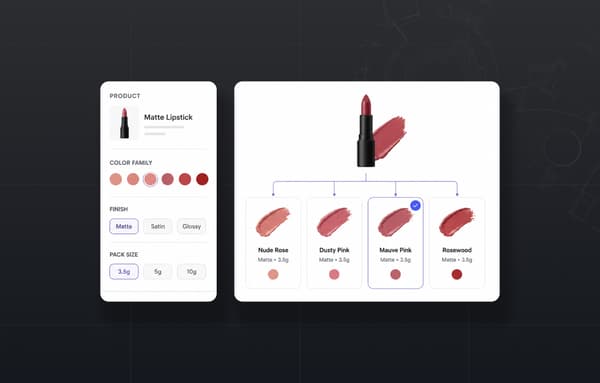
Colorway visibility has the same logic. A dress that comes in seven colors but is only available in three because four have sold through needs to show exactly which three are in stock, with accurate unit counts per size within each available color. Keeping that line-level stock and per-account pricing current is exactly what a NetSuite connection handles, so a wholesale order reflects what is genuinely available to ship.
4. Digital assets that help buyers sell what they buy. A boutique owner places a wholesale fashion order and immediately faces the problem of how to present what she bought to her customers. She needs images for her website, content for her Instagram, and enough product detail to answer the questions her customers will ask in store: what is the fabric content, how does it fit, is it true to size, does it wrinkle, can it be machine washed.
Wholesale apparel distributors that provide professional flat lays and lifestyle images, accurate fabric composition and care instructions, honest fit notes (runs large in the chest, true to size in the hip), and basic styling guidance are providing their retail accounts with something genuinely useful. These assets reduce the production burden on small boutique teams who do not have the budget for a full product photography workflow on every new style.
For fashion jewelry wholesale, this is even more pronounced. A boutique buyer adding a jewelry edit to her store needs images that show scale, metal finish accuracy, and how pieces look when worn, not just isolated product shots on white backgrounds. A distributor who provides that content alongside the ordering experience is giving the buyer a meaningful operational advantage.
5. Account pricing and net terms that reflect the relationship, not just the transaction. A boutique owner who has been ordering from the same wholesale apparel distributor for three years has a relationship. She knows the sales rep. She forecasts seasonally. She places reliable, recurring purchase orders. In most industries, that buyer would have negotiated pricing that reflects her cumulative volume. In wholesale fashion, too many distributors treat every order as a standalone transaction, with the same pricing available to a first-time buyer who found the distributor on a marketplace.
Net terms matter here as much as pricing. A boutique owner managing cash flow across inventory, payroll, and rent cannot pay for wholesale purchases on a credit card and wait thirty to sixty days for those goods to sell before she sees cash return. Net 30 or net 60 terms are not a courtesy. They are the financial structure that makes a wholesale relationship viable for a buyer who is reinvesting revenue back into inventory. The wholesale apparel distributors who offer net terms to established accounts, with clear credit limits and a straightforward application process, are the ones who earn the long-term account.
The B2B ecommerce pricing strategies guide covers how volume tiers, account-specific pricing, and net terms work together in a wholesale ordering environment, and how each one affects buyer loyalty and average order value.
Fashion Jewelry Wholesale: What Boutique Buyers Need from Accessories Distributors
Fashion jewelry wholesale is a category where the SERP gives retail buyers very little to work with. Buyers searching for a reliable source of wholesale fashion jewelry for their boutique find marketplace listings and product catalogs, almost none of which address the buying considerations that actually matter at the account level.
A boutique buyer sourcing fashion jewelry wholesale needs to know several things that most wholesale jewelry catalogs do not surface clearly. Material composition matters: a buyer whose customer base is sensitive to certain metals needs to know whether pieces are nickel-free, brass-based, or gold-filled before purchasing at quantity. Display format matters: does the jewelry ship in individual polybags, on display cards, or in a counter display unit ready for the floor. Restockability matters: is this a one-time closeout buy or a style with ongoing replenishment availability. MOQ by style matters: a boutique testing a new jewelry category does not want to commit to thirty units of one earring style before she knows whether her customer responds to it.
Wholesale apparel distributors who carry fashion jewelry alongside their clothing assortment have an opportunity to make their accessories buying as transparent as their apparel buying. The same logic applies: colorway visibility, size-level (or finish-level) availability, professional digital assets, and flexible opening order quantities for new accounts.
Why Wholesale Blank Apparel and Wholesale Fashion Apparel Are Not the Same Business
The wholesale apparel market that the SERP shows is largely organized around blank garments for decoration. Gildan, Bella+Canvas, Next Level, and Hanes sell wholesale blank t-shirts, hoodies, and sweatshirts to screen printers, embroiderers, and promotional products companies who are decorating and reselling those garments under their own branding or their clients' branding.
That buyer has completely different needs from a fashion retail buyer. She is comparing GSM weight and thread count per dollar. She is looking for consistency of cut across dye lots. She needs colors that match Pantone standards for branded decoration. She is ordering in cases, not style-based assortments.
A boutique owner sourcing wholesale clothing for her store is not that buyer. She is evaluating style and trend relevance, fit and proportion, fabric hand feel, how a dress photographs for Instagram, and whether the distributor's buying experience is fast enough that she can complete an order in twenty minutes between other responsibilities. Wholesale apparel distributors serving fashion retailers who design their buying portal around the blank apparel buyer's workflow are structurally mismatched to the accounts they are trying to serve.
How Wholesale Apparel Distributors Are Building Better Buying Experiences for Boutiques
The wholesale apparel distributors who are winning independent retail accounts in 2026 are building buyer portals around the boutique owner's workflow rather than a generic wholesale storefront.
Shopify B2B provides the account management foundation that fashion wholesale operations need: company accounts with account-specific pricing, net terms at checkout, and the ability to present different catalog views to different buyer segments. A new account sees the full catalog. An established account with a defined aesthetic sees a curated segment of the catalog that matches what she has bought before and what is trending with similar accounts. A high-volume account sees her negotiated pricing on every product before she adds it to the cart.
On top of that foundation, the configuration that makes a wholesale apparel portal genuinely useful for boutique buyers covers style-level and size-level inventory availability, trend and new arrival collections that update weekly rather than seasonally, digital asset delivery alongside the product listing, and mixed colorway and size split ordering that lets a buyer compose a reorder without calling in an exception.
According to Statista's fashion market research, the global apparel market continues to grow, with online B2B wholesale purchasing representing an increasing share of how independent retailers source their inventory. Boutique buyers who find a wholesale apparel distributor whose digital channel matches their workflow are significantly more likely to consolidate their purchasing with that distributor than to split orders across three or four suppliers.
Uncap is a Shopify Platinum Partner, on Shopify since 2013, with 380+ commerce storefronts launched on Shopify, including for wholesalers, distributors, and manufacturers across fashion, apparel, and accessories. For wholesale apparel distributors evaluating what a boutique-ready buying experience requires, the fashion and apparel industry page covers the account structures, catalog architecture, and ordering workflows that apply to fashion wholesale B2B operations specifically.
The wholesale commerce solution covers how the ordering layer, account pricing, and catalog management come together for wholesale operations on Shopify, including the configuration that turns a standard B2B checkout into a buying experience boutique owners will actually use.
For wholesale suppliers who are also thinking about how to structure the channel architecture between their B2B wholesale accounts and any direct-to-consumer presence, the Shopify B2B wholesale guide for suppliers covers how to separate the two channels cleanly without creating pricing conflicts or catalog overlap.
Much of what retail fashion buyers expect from wholesale apparel shows up in other wholesale categories too. Our industries overview is a useful next stop for seeing how these expectations shift from sector to sector.
Talk to Our Experts to discuss what a boutique-ready wholesale apparel buying experience looks like for your distributor operation.
Frequently asked questions
What do retail fashion buyers expect from wholesale apparel distributors in 2026?
Retail fashion buyers expect five things from wholesale apparel distributors in 2026: curated trend-aligned product edits rather than undifferentiated catalog browsing, minimum order quantities flexible enough to support boutique-scale reorders rather than warehouse-scale commitments, real-time inventory with size-run and colorway visibility at the SKU level, digital assets (flat lays, lifestyle images, fabric and fit notes) that help boutique buyers sell what they purchase, and account pricing with net terms that reflect the ongoing relationship rather than treating every order as a first-time transaction. Distributors who meet all five consistently earn recurring purchase orders from independent retail accounts. Those who meet two or three earn occasional transactions before the account finds a distributor with a better buying experience.
What is the difference between wholesale blank apparel and wholesale fashion apparel?
Wholesale blank apparel refers to undecorated garments sold to screen printers, embroiderers, and promotional products companies who decorate and resell the garments. Wholesale fashion apparel refers to finished, trend-forward clothing and accessories sold to boutique owners and independent fashion retailers for direct resale. The buyer profiles, purchasing patterns, and needs are completely different. A blank apparel buyer compares price per unit on a consistent cut across dye lots and cares about color consistency for branded decoration. A fashion retail buyer evaluates trend relevance, fabric quality, fit and proportion, available digital assets for resale, and whether the distributor's account terms work for her cash flow. Wholesale apparel distributors who design their buying experience around one of these buyers are almost always mismatched to the other.
What should boutique owners look for when choosing a wholesale clothing distributor?
Boutique owners evaluating wholesale clothing distributors should prioritize four operational factors beyond product mix. First, how current and accurate is the distributor's new arrivals feed and inventory data, including size-run availability and colorway breakdowns. Second, does the distributor offer reorder MOQ flexibility that does not require a full style commitment on a restocking purchase. Third, does the distributor provide professional digital assets alongside the product listing that can be used for the boutique's own marketing. And fourth, does the distributor offer net terms for established accounts, and how straightforward is the application process. A wholesale fashion distributor whose buying portal answers all four of these without requiring a phone call is providing a materially better experience than one whose portal handles only the catalog browse and leaves everything else to a showroom rep.
What do wholesale apparel distributors need to include in a B2B buyer portal for fashion retail accounts?
A wholesale apparel B2B buyer portal for fashion retail accounts needs to include several elements that are often missing from generic wholesale storefronts. Account-specific pricing that reflects negotiated rates for established buyers, displayed before the cart. Inventory visibility at the size and colorway level, not just the style level. A curated new arrivals section that updates frequently enough to give buyers a reason to check back regularly rather than waiting for a quarterly line sheet. Net terms at checkout for accounts with an established credit relationship. And digital asset access alongside each product listing so the buyer can plan her marketing without a separate request to the distributor's team. The ordering workflow should also support mixed colorway and size split orders without requiring phone intervention, since the ability to compose a nuanced reorder in the portal rather than through a rep is what makes a digital channel genuinely useful for a boutique buyer.