

The salon owner opens the ordering portal on Tuesday morning before the first client comes in. She needs a 10-pack of her go-to oxidative developer, two liters of toner, and a restocking order of the nail gel system her nail tech uses every day. She has maybe seven minutes.
The portal shows the developer at the retail price. Her account pricing has been different for three years, but the portal is displaying the standard list. She cannot tell if the toner is in stock or if that number reflects what was in the warehouse last Friday. The gel system she needs is buried three categories deep with no product ID that matches what her distributor invoice says.
She closes the tab and calls her rep.
That call is not a relationship touchpoint. It is a sign that the wholesale beauty supply distributor's digital channel failed to serve a professional buyer who came ready to spend. Across thousands of salon accounts, those calls represent the ordering volume that should be processing without rep involvement, and the digital channel cost that comes from not solving the problems that drove her back to the phone.
This guide is for wholesale beauty supply distributors building ordering portals for salon professional accounts. It covers what licensed beauty professionals actually expect from their distributor relationships, where most digital ordering experiences fall short, and how to close the gap.
Why Salon Professionals Are the Most Demanding Buyers in Wholesale Beauty Supply
Salon professionals are not casual buyers. A licensed cosmetologist, nail technician, or esthetician orders from their beauty supply distributor multiple times per month. Their business margin depends on what they pay for backbar products. Their client results depend on the quality and consistency of the products they use. Their license depends on working with professional-grade formulations that are appropriate for their scope of practice.
These are high-frequency, high-accountability buyers. They know what they pay. They know what they are supposed to pay. They know the difference between a professional-line product and a consumer version of the same brand. When the ordering portal does not reflect their reality, they do not give it the benefit of the doubt.
The beauty supply wholesale relationship is also intensely brand-driven. Salons build workflows around specific color systems, nail platforms, and skincare lines. Switching costs are high because staff training is product-specific. A distributor who can keep a salon account in stock on their preferred brands, at their contract pricing, with accurate availability, earns a repeat buyer who rarely shops around. A distributor whose portal frustrates that same buyer on three consecutive visits earns a phone call to a competing distributor.
What Salon Professionals Actually Expect from a Wholesale Beauty Supply Distributor
Salon professionals expect their wholesale beauty supply distributor to operate like a reliable business partner, not a catalog with a minimum order. They want their account pricing to appear without asking, their preferred products to show as available before they build their order, their purchase orders to process with their net terms applied, and their product documentation to be accessible in one place. The ordering channel, whether phone or portal, should serve their workflow without adding steps.
The Five Things That Determine Whether a Salon Account Orders Online or Calls the Rep
Understanding what drives salon professionals to self-serve versus calling the rep is the clearest signal a wholesale beauty supply distributor has about whether their digital channel is working. The following five factors determine the outcome for every ordering session a salon professional attempts.
Account pricing visible at the catalog level before the cart. A salon owner managing a two-chair studio and a salon owner running a ten-stylist location are not paying the same price for a liter of professional hair color. Volume commitments, tenure, and annual spend determine their contract pricing. That pricing lives in the distributor's system. The portal has to display it at the product level, not at checkout. A salon professional who sees list pricing on a product they have been buying at a negotiated rate for years does not proceed to checkout to see if the right number appears. They call. Showing account pricing at the catalog level is the single highest-impact change a wholesale beauty supply distributor can make to increase digital order volume from professional accounts.
Real-time inventory on professional-grade lines. Salons do not hold large backbar inventories. Most order what they need for the next one to two weeks. A nail technician who builds a gel order based on portal inventory, only to receive a backorder notice 24 hours later, has a client scheduled for a service she now cannot complete. The trust damage from that experience is not repaired by a discount on the next order. It is repaired by showing accurate, real-time inventory every time the buyer checks. For a wholesale beauty supply distributor, this means the portal's inventory numbers must reflect current warehouse availability, not a batch-synced count from the night before. For distributors running Cin7, that live connection keeps the portal in step with the warehouse rather than an overnight batch.
Authenticated, professional-only access with clean account gating. Professional beauty supply is a licensed-professional category. Certain formulations (professional-strength oxidants, nail acrylics, chemical relaxers) are restricted to licensed buyers for regulatory and liability reasons. Distributors who enforce this correctly earn the trust of their professional accounts because it means the products they are buying are not available to anyone who sets up an account. Salons care about this. Their clients are paying for professional results with professional products. The gating process should verify the license once, store it on the account, and then get out of the way. A salon professional who has to re-upload their cosmetology license on every order session or cannot complete checkout because the gating system does not recognize their credential will not return to that portal.
Net terms and quick reorder for backbar staples. Professional salon accounts operate on net terms. A salon owner placing a weekly backbar reorder should be able to check out on net 30 without re-entering payment information, without a phone call to confirm their credit standing, and without the terms disappearing mid-session because the portal does not maintain their account status. Equally important is reorder speed. A salon professional who orders the same twelve products every two weeks should be able to pull up their last order, verify availability, and resubmit it in under three minutes. Portals that require rebuilding the cart from scratch every session lose the buyer to a distributor whose system remembers what they buy.
Product data that matches professional use cases. Consumer product listings describe fragrance and finish. Professional product listings describe developer volume compatibility, processing time, lift capacity, and contraindications with other services. A nail technician selecting a builder gel needs the viscosity spec and cure time. A colorist needs to know which developer percentages the manufacturer recommends for each lifting level. Safety Data Sheets (SDS) for chemical products are a regulatory requirement in salon environments. When the product listing in the distributor portal does not include this information, the salon professional finds it elsewhere or calls to ask. Product data is not a backoffice concern. It is a buying decision factor for every professional buyer.
Why Most Wholesale Beauty Supply Distributors Are Still Losing Digital Orders
The gap between what wholesale beauty supply distributors build and what salon professionals need almost always comes down to the same set of problems.
Pricing is not connected to account records. The portal was built on a retail commerce platform and adapted for wholesale. Account pricing is maintained separately and manually synced, which means it is always one update behind the actual contract. This is common for distributors still on a WooCommerce store, where salon pricing tiers had turned into a maze of plugins.
Inventory is not live. The warehouse management system updates the portal overnight or on a schedule. During the day, the available count in the portal and the actual available count in the warehouse diverge every time a pick occurs.
The license gating process was built as an afterthought. It works for new account creation but creates friction on repeat orders or when a license renews and the verification record needs updating.
Product data comes from supplier feeds that were not built for professional ordering. The fields that matter to a salon professional (developer compatibility, shelf life after mixing, professional application instructions) were never populated because the feed was designed for consumer product descriptions.
Reorder is not surfaced. The portal does not show order history in a way that makes it easy to repeat a previous order. Every session starts from a search or category browse.
Each of these problems is solvable. The challenge is that they require the distributor's digital ordering channel to be integrated with their operational systems, not sitting beside them.
License Verification and Account Gating in Professional Beauty Wholesale
Professional license verification is not optional in beauty supply wholesale. It is a legal and reputational requirement. But the implementation of verification is where many wholesale beauty supply distributors create the friction that drives salon professionals away from the digital channel.
Effective professional gating in a B2B beauty supply portal works like this: a new applicant submits their cosmetology license, nail technician certification, or esthetician license during account creation. The license is verified and stored on the account record. From that point forward, the buyer is authenticated at login. They see the professional catalog, the professional pricing, and the professional checkout options, including net terms, without re-verifying on every session.
The verification record should include a license expiration date and prompt the account holder to update their credential before it lapses, not after. A salon owner who cannot complete an order because their license expired three days ago and the system locked their account has a legitimate grievance, because the system had that expiration date and did not surface it in advance.
On Shopify B2B, company accounts can be set up with role-based access and account-specific price lists, so the gated professional catalog is tied to the account at login rather than policed at checkout. License status can drive account activation and deactivation without manual intervention by the distributor's team.
Product Data That Salon Professionals Actually Use
A salon professional does not read product descriptions. They read specifications. For a wholesale beauty supply distributor, getting product data right for a professional audience means including the fields that affect how a licensed professional uses the product in their practice.
For professional hair color: that means developer volume recommendations for each level of lift, processing time at room temperature versus under heat, compatibility notes with other lines in the salon's current system, and whether the product contains ammonia or uses an alternative oxidation system.
For professional nail systems: that means cure times under LED versus UV, viscosity rating for the gel, whether the product is HEMA-free, compatibility with the brand's own topcoats, and any application temperature specifications.
For chemical treatments: Safety Data Sheets (SDS) are a legal requirement in professional salon environments under OSHA's Hazard Communication Standard. SDS documents must be accessible to staff before a product is used in a service. A distributor portal that buries SDS access three clicks deep, or requires a separate request to the rep to get documentation, is creating a compliance gap for their salon accounts.
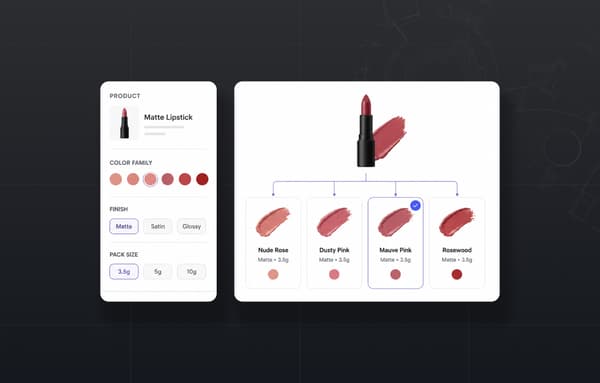
Distributors who invest in professional product data find that their portal becomes a reference resource, not just a transaction channel. A salon owner who looks up an SDS, checks a developer compatibility chart, and orders the product from the same page has fewer reasons to maintain a relationship with a distributor whose catalog requires a follow-up phone call for the same information. Much of what salons expect from wholesale beauty distributors comes down to how clearly the catalog presents every shade, size, and format, and our guide to managing product variations in cosmetics wholesale covers that side of the catalog in detail.
How Wholesale Beauty Supply Distributors Are Building Ordering Portals That Salon Accounts Use
The wholesale beauty supply distributors who have the highest portal adoption rates among salon professional accounts are not the ones with the most products in their catalog. They are the ones who built the ordering experience around how a salon professional actually places an order.
The ordering workflow for a returning salon account should work like this: the buyer logs in, sees their account pricing on every product in the catalog, finds their preferred products in the first search, checks current warehouse availability before building the cart, enters their PO number, confirms their net terms, and submits. The order lands in the distributor's system immediately. No one on the distributor's team has to re-enter it.
For wholesale beauty supply distributors running on Shopify, the Shopify B2B wholesale platform handles the account structure that makes this possible: company accounts with location hierarchies, account-specific price lists tied to contract records, net terms enforced at checkout, purchase order capture, and quick reorder from previous order history. The professional catalog is gated at the account level, so the buyer sees only what applies to their account type and license status from the moment they log in.
The data layer behind that portal needs to connect the distributor's ERP or inventory system to Shopify in real time, so that the pricing and availability the portal displays reflects what the warehouse and the contract actually say, not what they said at the last sync.
Uncap has been a Shopify Platinum Partner since 2013, with 380+ commerce storefronts launched on Shopify across wholesale, distribution, and manufacturing. For beauty supply distributors building or improving their professional ordering portals, the beauty and cosmetics wholesale industry page covers the specific scenarios and Shopify capabilities relevant to professional beauty accounts.
For distributors still working out their account pricing structure and tiering model before building the portal, the B2B pricing strategy guide covers how volume tiers, customer groups, and contract pricing structures translate to Shopify B2B price lists.
Talk to Our Experts to discuss what the right B2B portal looks like for your beauty supply distributor accounts, catalog size, and ERP environment.
Frequently asked questions
What do salon professionals look for in a wholesale beauty supply distributor?
Salon professionals look for four things above everything else: their account pricing visible at the product level before checkout, accurate inventory that reflects current warehouse stock rather than a scheduled sync from the previous night, professional-grade product data including SDS documentation and application specifications, and a checkout experience that accepts their PO number and applies their net terms without a call to verify. Distributors who deliver all four retain professional accounts long-term. Those who fail on any one of them compete primarily on price, which is a margin problem that does not improve with volume.
Why do salon professionals order by phone instead of using a distributor's online portal?
Phone ordering is the fallback when the portal fails to serve the professional buyer's actual needs. The most common failures are: showing list pricing instead of account pricing, displaying inventory counts that are hours or days out of date, requiring the buyer to rebuild their cart from scratch on every session instead of surfacing reorder history, and providing product listings without the professional specifications the buyer needs to confirm they are ordering the correct item. Each of these is a solvable problem at the platform level. When they are not solved, the digital channel drives calls rather than replacing them.
How should wholesale beauty supply distributors handle professional license verification?
License verification should happen once, at account creation, and persist on the account record until the license expires. The system should store the license type (cosmetologist, nail technician, esthetician, barber, salon establishment), the license number, the issuing state board, and the expiration date. When a license is approaching expiration, the portal should prompt the account holder to update before the deadline, not lock the account after the fact. On repeat orders, the verified buyer should move directly to the professional catalog and checkout without re-verifying. Verification as a recurring friction point in the ordering session drives professional buyers back to phone ordering faster than almost any other UX problem.
What is the difference between professional beauty supply and consumer beauty supply?
Professional beauty supply refers to formulations, concentrations, and product formats that are intended for use by licensed professionals in a salon, spa, or clinic environment. These include professional-strength hair color developers (above 10 volume in some categories), nail acrylics, chemical relaxers, and certain skincare actives. Consumer versions of the same brands are typically lower-concentration formulations sold at lower price points through retail channels. Wholesale beauty supply distributors who serve professional accounts are responsible for maintaining the professional-consumer distinction in their catalog gating and product presentation. Mixing professional-only items into a catalog accessible to unlicensed buyers creates liability exposure and undermines the value of the professional pricing relationship.
How does a wholesale beauty supply distributor set up account-based pricing for salon accounts?
Account-based pricing in a wholesale beauty supply operation typically follows a tiered structure: new accounts or lower-volume accounts receive a standard professional tier, established accounts with volume commitments receive a contract price list that reflects their annual spend, and key accounts receive negotiated pricing at the individual product level. These tiers are managed in the distributor's ERP or accounting system as customer price lists or discount groups. When the distributor's Shopify portal is connected to the ERP in real time, each buyer sees the price list assigned to their account at login, without the distributor's team maintaining parallel pricing records in two systems. For distributors still designing their pricing structure, reviewing how wholesale pricing tiers translate to Shopify B2B company accounts is a useful starting point before the portal build begins.
What product data do salon professionals need that consumer catalogs do not provide?
Professional beauty product listings require fields that consumer catalogs do not include. For hair color: developer volume recommendations by lift level, processing time at room temperature, at-heat, and under foil, ammonia vs. ammonia-free system, compatibility notes with other brand lines in the salon. For nail systems: cure time under LED versus UV, HEMA-free certification, viscosity rating, compatibility with the brand's own topcoat and bonder systems. For any chemical product used in a service: a Safety Data Sheet (SDS) accessible directly from the product listing without a separate request. For skincare professional lines: active ingredient concentrations, contraindications with other treatments, and professional application protocols that differ from consumer use directions. Distributors who provide this data in their portal reduce the pre-order research time for every salon professional who orders from them.