

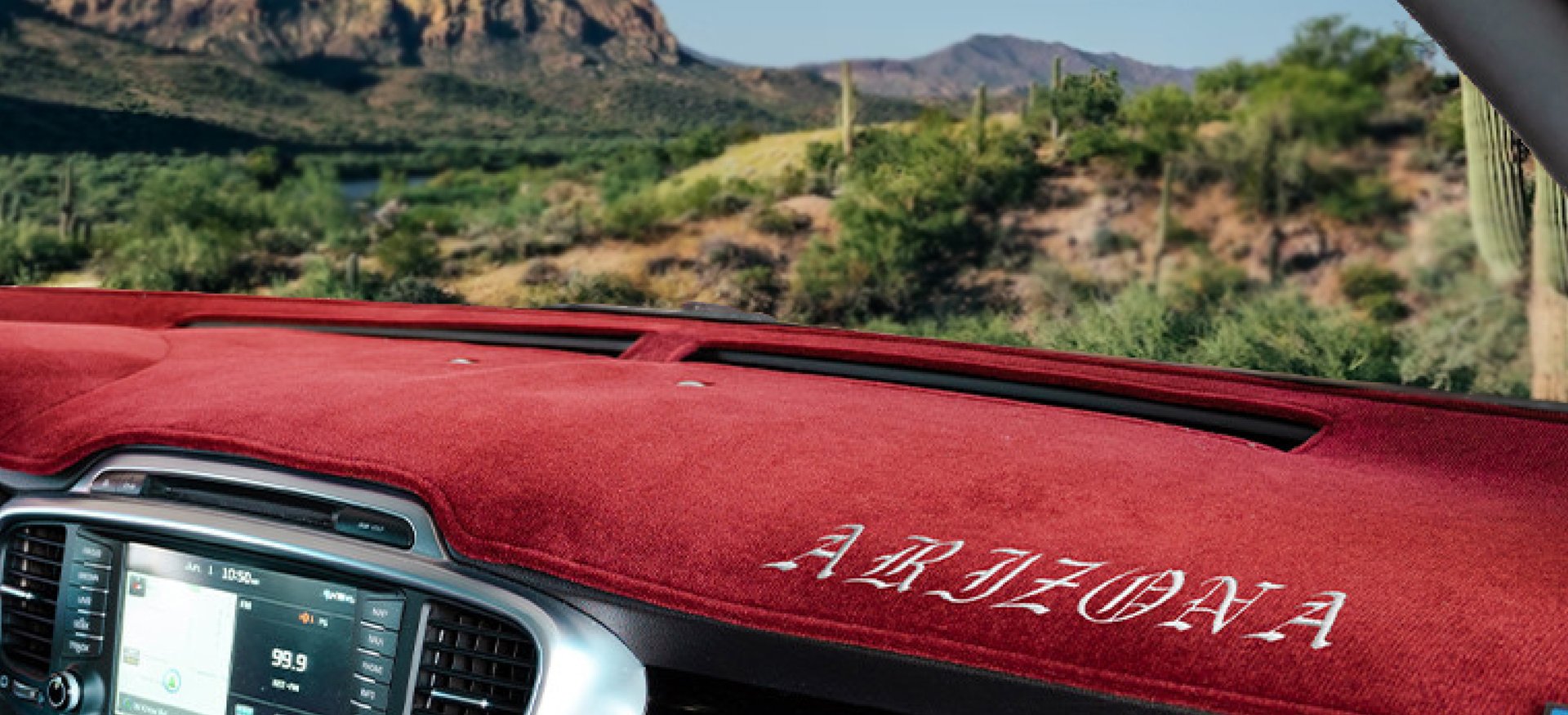
Dash
Designs fit for every vehicle.
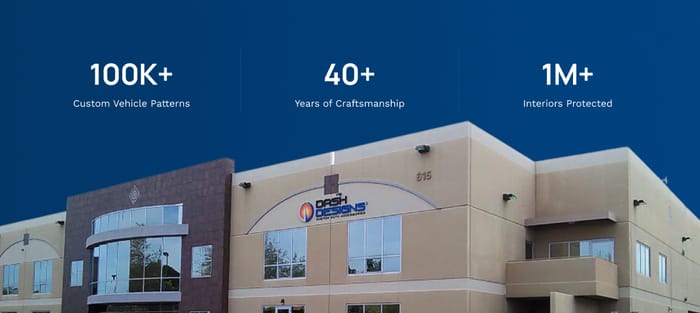
Dash Designs has manufactured vehicle-specific seat covers, dash covers, and interior accessories in Tempe, Arizona since 1983. Every product depends on interconnected attributes, vehicle year, make, model, material, seat position, style, fitment, and color, and each combination can be its own SKU with its own imagery and pricing. A direct move to Shopify would have meant 20,000 to 30,000 customer-facing product pages. Uncap replatformed the store from Web Shop Manager, redesigned the storefront, and built a custom Shopify application that sells the full matrix from a manageable set of product pages.

Built for the
way fitment sells.
The Who
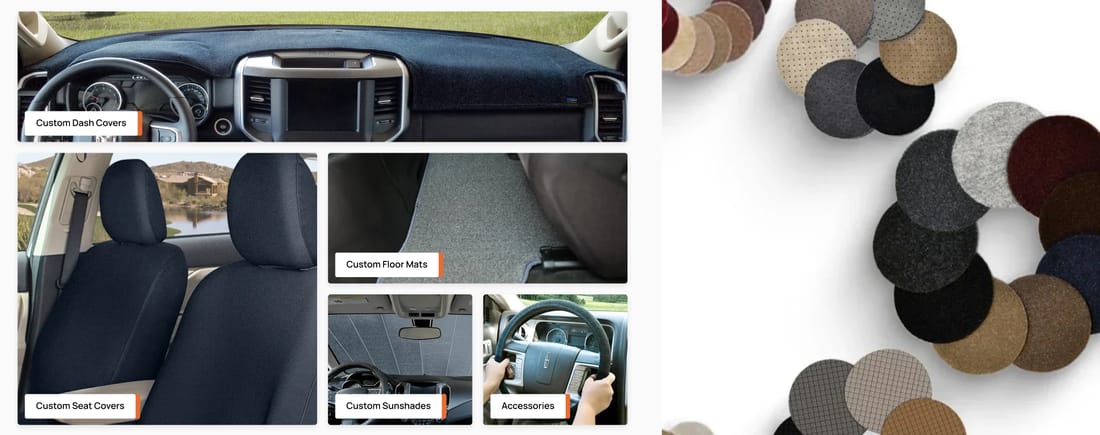
Dash Designs has manufactured vehicle-specific interior accessories in Tempe, Arizona since 1983: custom seat covers, dash covers, sunshades, and floor mats, precision-patterned to each vehicle. Unlike conventional ecommerce products, its catalog depends on multiple interconnected attributes, including vehicle year, make, model, material, seat position, style, fitment, and color, and each combination can represent a distinct purchasable SKU with its own imagery and pricing.
The Problem
Dash Designs needed a modern ecommerce experience capable of handling that complexity without compromising product accuracy, customer experience, or long-term maintainability. Migrating the structure directly into Shopify would have required managing approximately 20,000 to 30,000 customer-facing product pages, creating significant challenges for merchandising, SEO, advertising, and catalog maintenance. The company needed more than a new website, it needed a better way to organize and sell complex automotive products.
The Solution
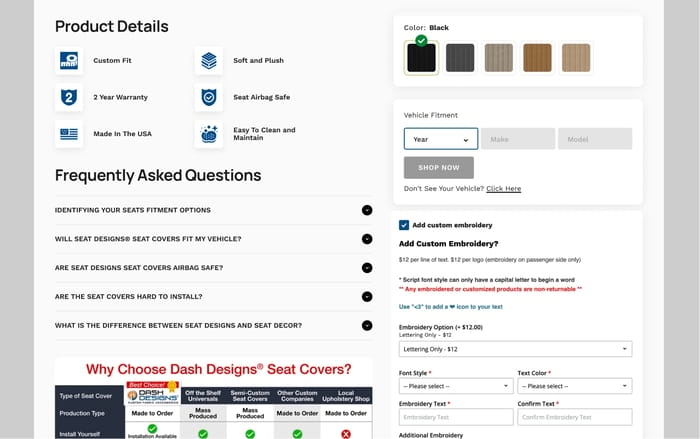
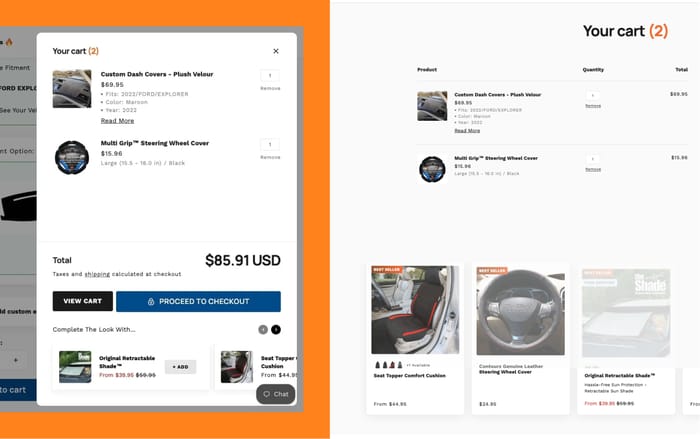
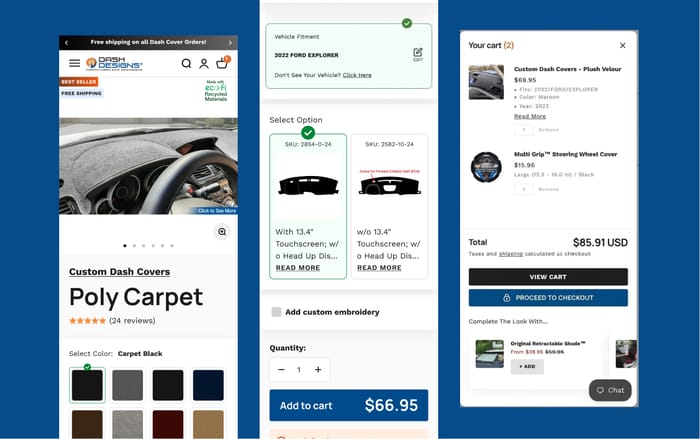
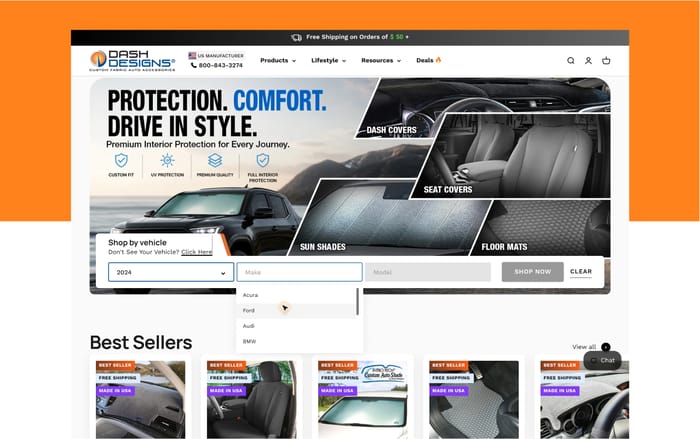
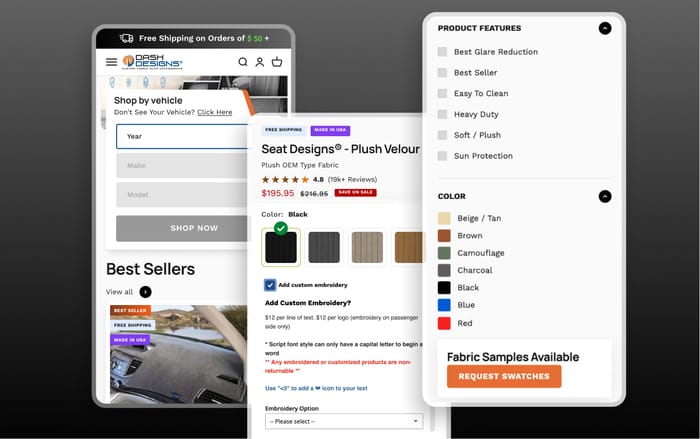
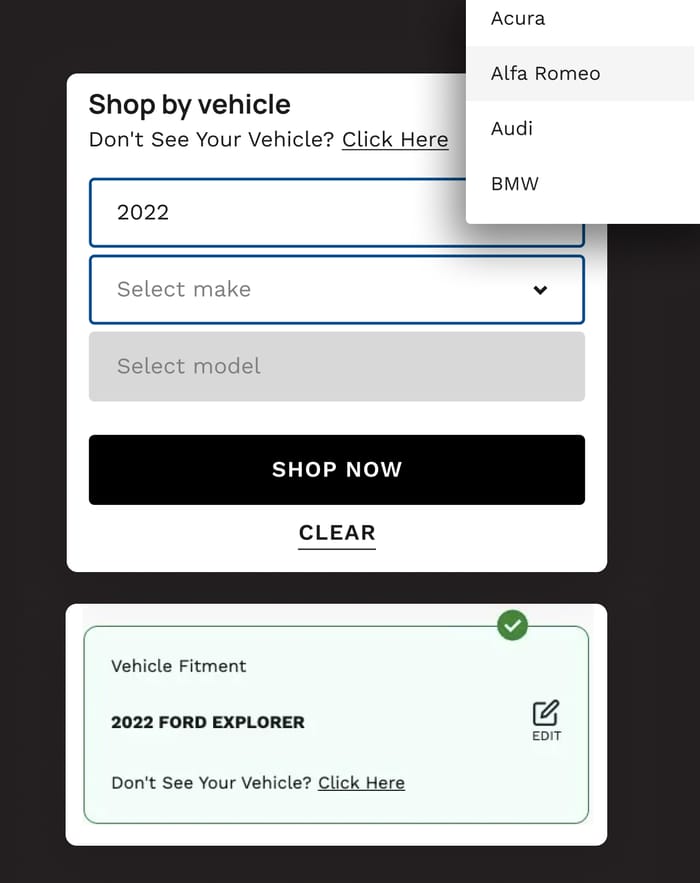
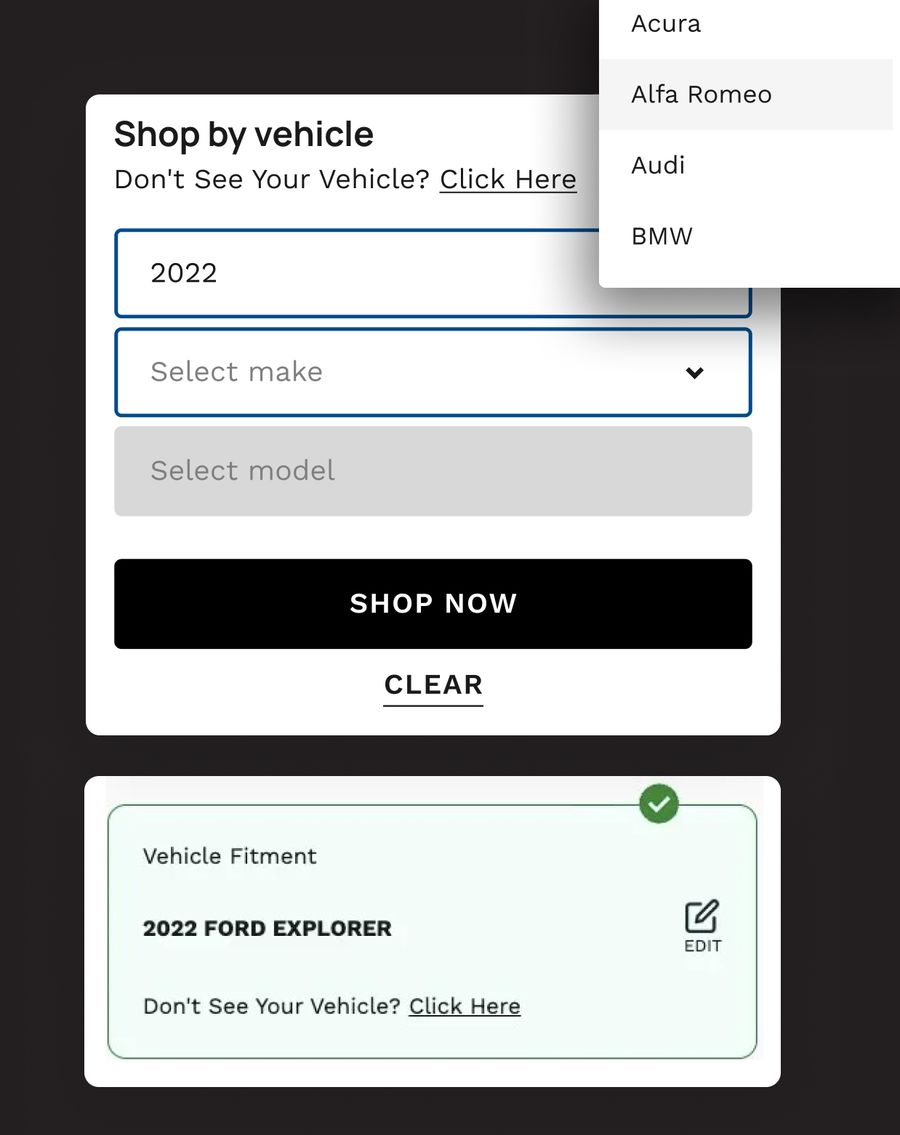
Uncap replatformed Dash Designs from Web Shop Manager to Shopify, redesigned the storefront, and separated the merchandising experience from the underlying product-combination matrix: a manageable set of product landing pages connected to a custom Shopify application that handles the configuration logic. Customers identify their vehicle by year, make, and model, configure individual seat positions, and select style, fitment, material, and color; the app resolves the correct SKU with configuration-specific imagery and pricing, layers in conditional console-cover upsells and embroidery customization, and hands off to Shopify's native cart, checkout, and order processing. Uncap also prepared the move with URL redirects, customer data transition planning, payment testing, and launch support.
The Results
The new storefront launched in May 2026 with a DNS switchover of approximately 20 minutes and began receiving orders immediately. By September 2026, internal reporting showed a 4.0% conversion rate and a 63.4% checkout completion rate, alongside a modernized mobile-friendly shopping experience and an architecture that simplifies ongoing merchandising, maintenance, and future product additions. The foundation is built around the actual complexity of Dash Designs' products rather than forcing the business around conventional ecommerce structures.



Unified
Commerce



Answers, before you ask.
Uncap replatformed Dash Designs from Web Shop Manager to Shopify, redesigned the storefront, and developed a custom product configuration architecture: a manageable set of product landing pages connected to a structured product matrix, with a custom Shopify application handling the configuration logic.
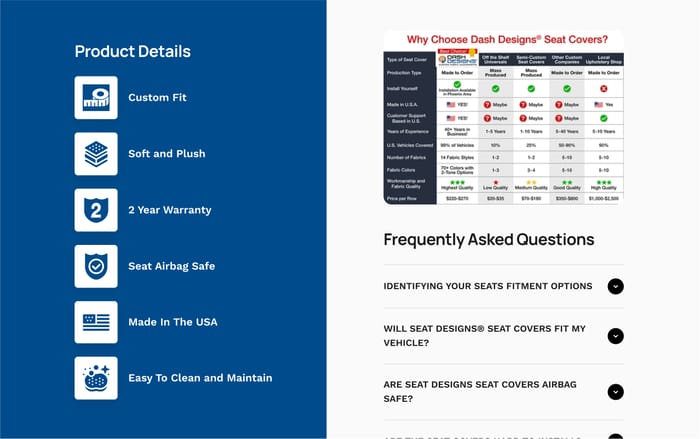
Dash Designs' products depend on vehicle year, make, model, material, seat position, style, fitment, and color, and each combination can be a distinct SKU. Migrating that structure directly would have meant managing roughly 20,000 to 30,000 customer-facing product pages, a significant burden for merchandising, SEO, advertising, and catalog maintenance.
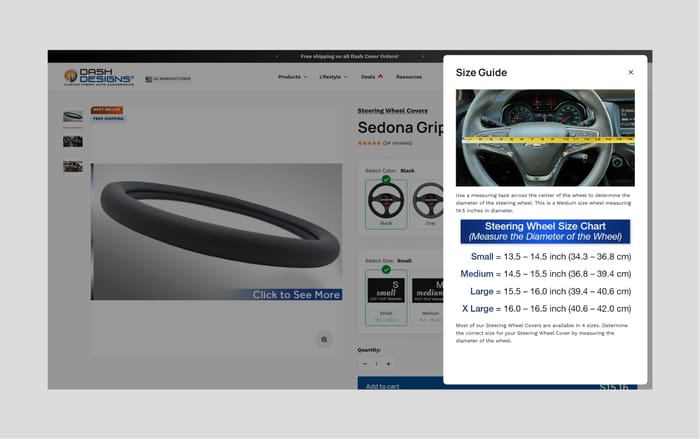
Customers identify their vehicle by year, make, and model, select compatible products, configure individual seat positions, and choose style, fitment, material, and color. The application resolves the correct purchasable SKU with configuration-specific images and pricing, adds conditional console-cover upsells and embroidery customization, and hands off to Shopify's native cart, checkout, and order processing.
The new storefront launched in May 2026 with a DNS switchover of approximately 20 minutes and began receiving orders immediately. By September 2026, internal reporting showed a 4.0% conversion rate and a 63.4% checkout completion rate.
Shopify with a custom configuration application, plus Klaviyo for email marketing, Globo, Shopify Payments, and Shop Pay.
Keep exploring
E3 Spark Plugs
YMM fitment search and cross-reference for a spark plug brand going direct.
Kooks Headers
Performance exhaust manufacturing on a fitment-driven Shopify build.
ScooterWorks
Scooter parts and fitment search, replatformed to Shopify.
eVacuumStore
Replacement-parts commerce with interactive parts diagrams.


