

Durable medical equipment is not a cart product. A wheelchair order specifies seat width, seat depth, cushion type, armrest style, and footrest configuration. A hospital bed order specifies rail type, mattress, and weight capacity. Medical casework is dimensioned to the room it goes into. Which is why most DME manufacturers and distributors still run orders through an inbox: the product cannot be described by a SKU, so the order becomes a conversation.
Quick answer: Selling configurable DME online means replacing that conversation with two structured paths. Configure-to-order handles products where the option logic is known: the buyer picks valid options, sees the configured price, and orders. Quote-to-order handles the rest: the buyer submits a configured request, a rep prices what rules cannot, freight, installation, project specifics, and the approved quote converts to an order without re-entry. Most DME catalogs need both paths, routed by product complexity.
Why DME Does Not Fit a Standard Cart
Three things break the standard ecommerce model for durable medical equipment.
The product is a set of decisions, not a SKU. A mobility device might have thousands of valid configurations and far more invalid ones. A flat product page with a dropdown per option cannot express "this cushion is only compatible with these seat widths" or "bariatric capacity requires the reinforced frame." Without constraint logic, the storefront lets buyers build products that cannot be manufactured.
A wrong spec is not a normal return. A mis-specified consumer product goes back in a box. A mis-specified wheelchair or bed is a delayed patient placement, a re-order measured in weeks, and sometimes a safety issue. The cost of configuration errors is what keeps DME ordering on the phone, because a human order desk catches mistakes a dumb form does not.
Price is not always computable at the storefront. Options with fixed pricing can price themselves. Freight on a bariatric bed to a third-floor walkup, installation of casework into a clinic buildout, or a dealer's project-level discount cannot. Some part of the catalog will always need a human to finish the price, and the ordering system has to hand off to that human cleanly instead of forcing the whole order back to email.
The Two Paths: Configure-to-Order and Quote-to-Order
The practical design question for a DME seller is not "can we sell online" but "which products take which path."
Configure-to-order fits products where the option logic and pricing are fully known: standard mobility lines, beds with defined option sets, support surfaces, bathroom safety equipment. The buyer, a dealer, a care facility, a home health provider, steps through the options, the storefront enforces valid combinations, the price updates as they configure, and the order submits like any other. No rep touches it unless something is unusual.
Quote-to-order fits everything the rules cannot finish: custom casework, complex rehab configurations, project orders with installation, and any order where the account's pricing depends on volume or contract terms. The buyer builds the configuration and submits it as a quote request instead of an order. A rep completes the pricing, the buyer approves, and the quote converts directly into an order carrying the approved configuration and price, no rekeying, no version confusion about which PDF was final.
The routing rule most sellers land on: if a trained buyer can specify it correctly without help, it is configure-to-order. If specifying it correctly requires judgment, measurement, or negotiated pricing, it is quote-to-order. Both paths live in the same storefront, against the same catalog and account structure.
What Configure-to-Order Requires From the Storefront
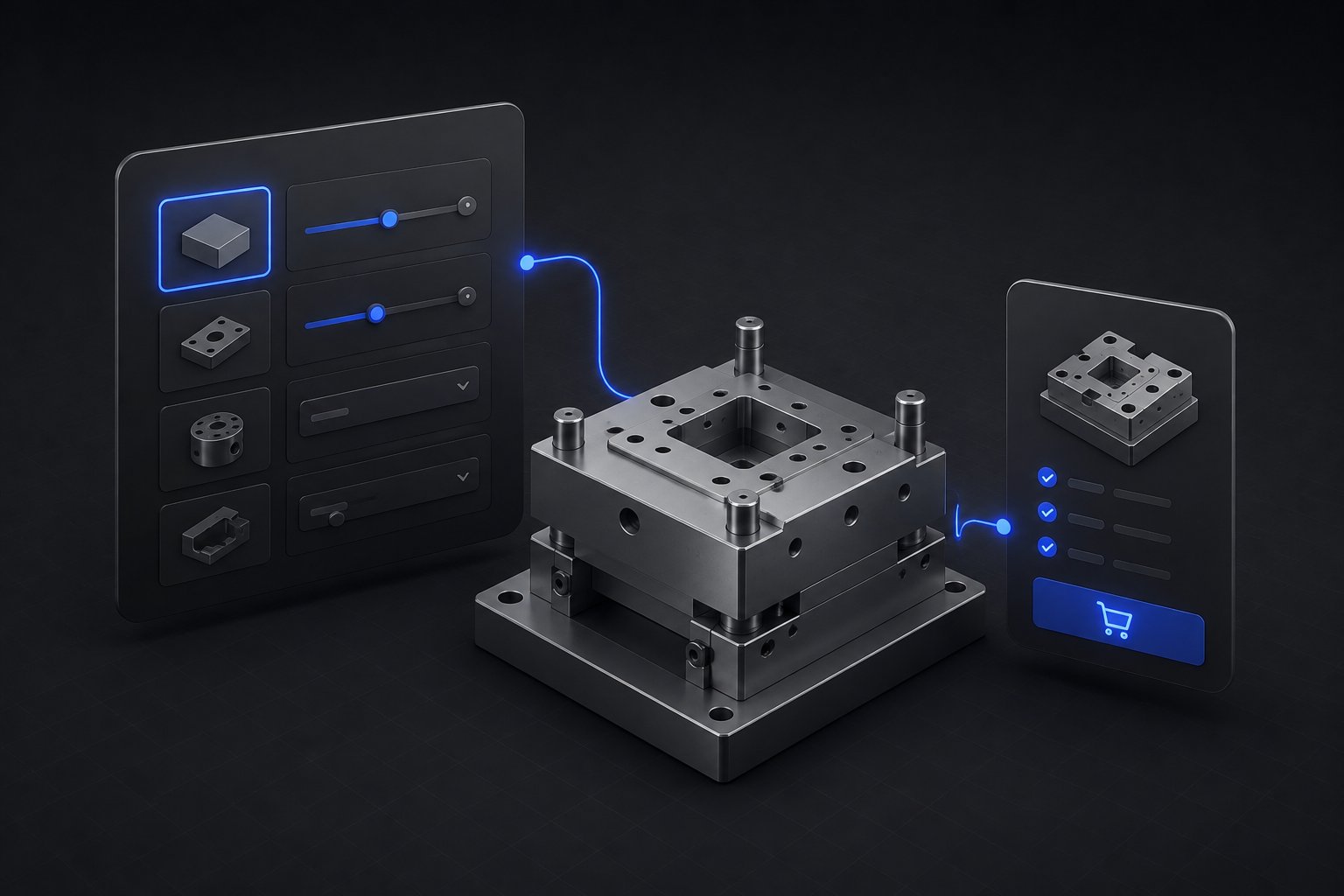
The heart of it is constraint logic: the storefront has to know which options exist, which combinations are valid, and what each choice does to the price. This is what Uncap Builder does on Shopify, product configuration and bundling at the storefront level, so the buyer assembles a valid product instead of picking from disconnected dropdowns and hoping.
Configuration rules do double duty. They are a selling tool, guiding the buyer through decisions in the order a fitter would ask them. And they are an error gate: an invalid combination is simply not buildable, which converts the order desk's mistake-catching into logic that runs on every order automatically. For B2B accounts, configured pricing still has to respect the account's price list, a dealer's configured chair reflects dealer pricing, not list.
What Quote-to-Order Requires
The quote path fails when it leaves the platform. A configured request that turns into an email thread, then a spreadsheet, then a PDF, recreates the exact version-control problem that makes DME ordering slow today. The workflow has to stay in one place: request, revision, approval, conversion.
Uncap Quotes runs that configure-price-quote workflow natively on Shopify: the buyer's configured request arrives as a draft quote, the rep adjusts pricing and adds what the rules could not, freight, install, project terms, and the buyer's approval converts it to an order with the configuration intact. Approval steps matter on both sides, a dealer's purchasing manager may need to sign off before the order fires, and the bill of materials behind a configured product needs to carry through to fulfillment so what was quoted is what ships.
The Licensing Footnote Worth Knowing
DME selling carries a regulatory layer that generic ecommerce advice skips. License requirements vary by state, and they differ depending on whether you sell wholesale to practitioners and facilities or retail to consumers, as Wolters Kluwer's summary of DME licensing requirements lays out. For a B2B seller, that reinforces the account-gated model: catalog visibility and purchasing rights tied to verified accounts, not an open storefront.
Where This Fits in the Bigger Picture
Configurable ordering is one piece of what a medical distributor's digital channel needs. The full guide to B2B ecommerce for medical supply distributors covers the rest, contract pricing, license gating, ERP sync, and reordering, and the medical and dental industry page shows how the pieces come together in a full build.
Uncap has been a Shopify Platinum Partner since 2013, with 380+ storefronts launched on Shopify, including for manufacturers, distributors, and wholesalers. Book a Demo to walk through your catalog and see which products belong on which path.
Frequently asked questions
What is the difference between configure-to-order and quote-to-order for DME?
Configure-to-order lets the buyer build and purchase a valid configuration self-serve, because the option logic and pricing are fully defined. Quote-to-order routes the configured request to a rep who completes what rules cannot, freight, installation, negotiated pricing, and the approved quote converts directly to an order.
Can durable medical equipment really be sold online given how configurable it is?
Yes, when the storefront enforces configuration rules instead of offering open dropdowns. Constraint logic makes invalid combinations unbuildable, which is the same error-catching a phone order desk provides, applied consistently to every order.
How do configured products handle account-specific B2B pricing?
The configured price is computed against the account's price list, so a dealer and a care facility configuring the same product see their own rates. Quote-based orders carry the rep's approved pricing, which can reflect contract terms the storefront rules do not encode.
Why not just handle all DME orders as quotes?
Because most orders do not need one. Routing standard configurations through self-serve keeps reps focused on the orders that genuinely need judgment, and buyers get the fast path for the majority of purchases instead of waiting on a quote cycle for a standard chair.