
A buyer shopping for brake pads does not think in SKUs. They think "2019 Ford F-150." If your Shopify store cannot answer that question in one search, the buyer either guesses, calls your team, or leaves for a site that already knows what fits.
That is what a Year, Make, Model (YMM) fitment app solves. This roundup covers five of the strongest options for Shopify auto parts sellers, starting with the one built specifically for B2B manufacturers and distributors, not just consumer storefronts.
A quick note on where you'll run into these apps while researching: several show up as individual listings on the Shopify App Store, ranked mostly by install count and star rating, with no side-by-side comparison of how they actually behave for a B2B catalog. That's a reasonable starting point for browsing, but it won't tell you which one handles account-specific pricing, ERP-synced stock, or a six-figure SKU count. That's the comparison this roundup is built to do.
1. Uncap Garage
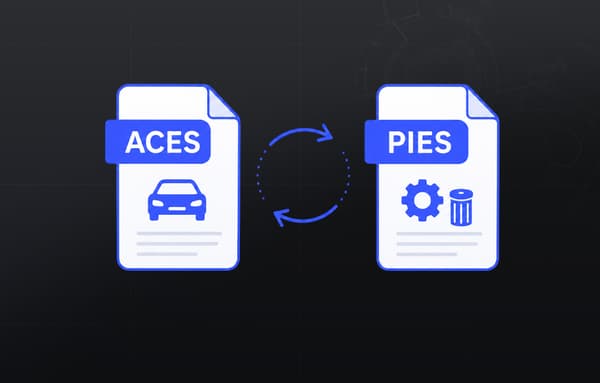
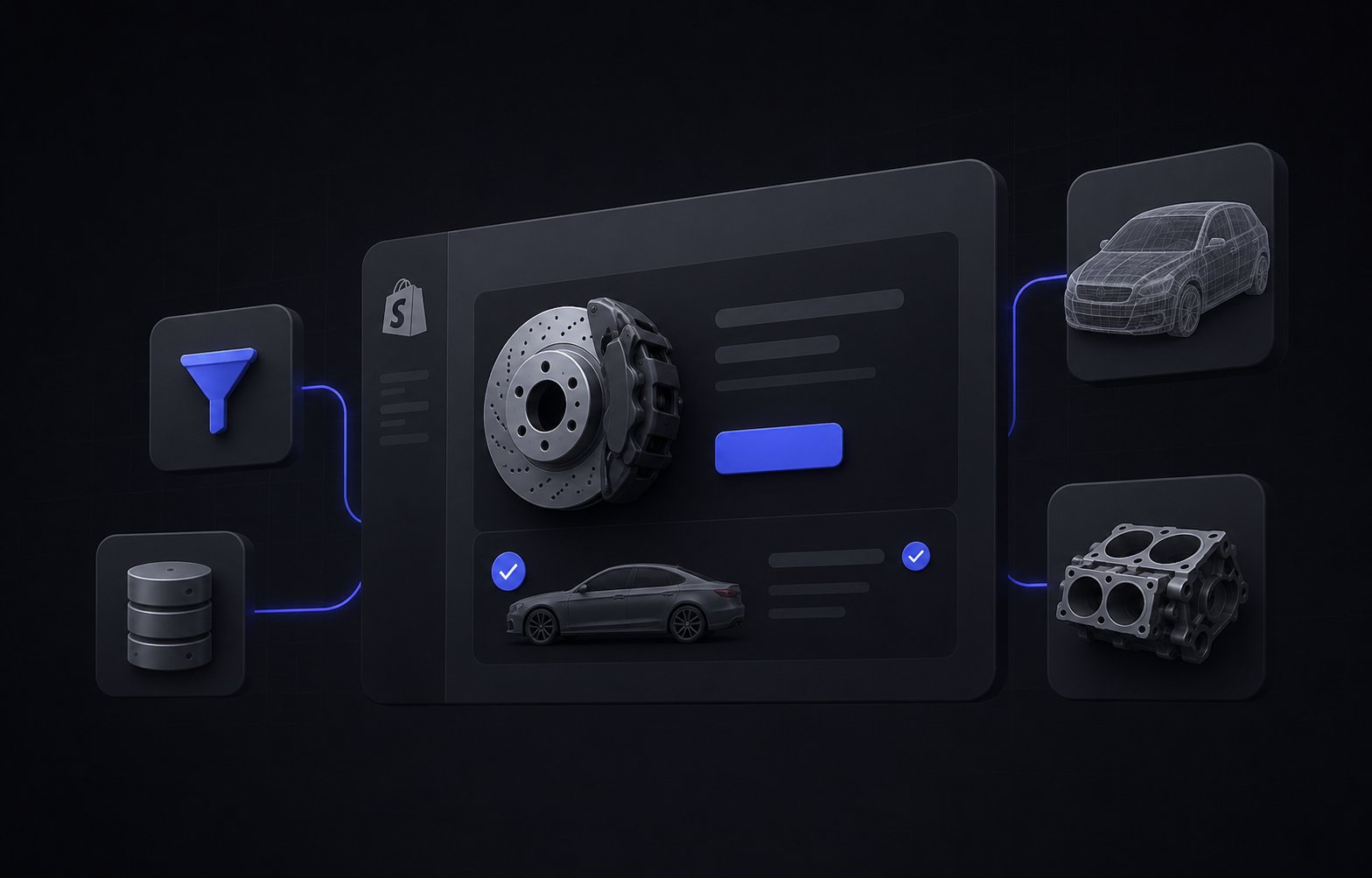
Uncap Garage filters a Shopify B2B catalog by vehicle, using the ACES and PIES fitment data every app on this list is ultimately built on. A buyer picks year, make, and model, and only compatible parts show up. That much is table stakes across the category. Where Garage differs is what happens after that selection for a B2B account.
Account-specific pricing carries through the filter. A distributor buyer who selects their vehicle sees fitment-confirmed parts at their negotiated account pricing, not a generic retail price they have to question later. Shopify's own documentation on B2B pricing confirms this is native functionality on the platform, and Garage is built to work directly with it rather than around it.
Fitment data stays synced to the system that owns it. For a manufacturer or distributor running Shopify alongside an ERP, fitment and inventory accuracy have to agree. A part that shows as compatible but is actually discontinued or out of stock creates the exact support ticket a fitment app is supposed to prevent. Garage is built to work alongside Uncap Connect so vehicle compatibility and ERP-confirmed stock tell the same story.
It is built by a team that ships B2B commerce, not just a fitment widget. Uncap has been a Shopify Platinum Partner since 2013, building for manufacturers and distributors selling complex, fitment-dependent catalogs. That context shows up in decisions the other four apps on this list, all general-purpose fitment tools, do not have a reason to make: how a saved vehicle interacts with account-level catalogs, how a multi-location distributor's buyers see location-specific stock, and how fitment data holds up under real B2B order volume.
Best for: Manufacturers and distributors selling fitment-dependent parts on Shopify B2B who need vehicle search and account pricing to work together, not as two separate systems bolted side by side.
A Concrete Example: Why the B2B Layer Matters
Picture a distributor selling brake components to independent repair shops. Two shops search for parts for the same 2020 Ford F-150. One shop has a negotiated 15 percent discount off list for high-volume brake work. The other is a new account still on standard pricing.
A general-purpose fitment app filters both searches to the same compatible parts, at the same price, because it has no concept of the account behind the search. The repair shop with negotiated pricing either has to place the order and get a manual price correction later, or call in instead of using the storefront at all, defeating the point of building a self-service catalog in the first place.
A B2B-aware fitment app filters to the same compatible parts, but the price each shop sees already reflects their account. No manual correction, no phone call, no gap between what the catalog shows and what the invoice says. That is the difference this list is really pointing at: not whether an app can filter by vehicle, every app here can, but whether the result respects who is actually buying.
2. EasySearch by NexusMedia
EasySearch is the most-reviewed YMM app on the Shopify App Store, live since 2016 with a 4.9-star rating across roughly 150 reviews. Its main advantage is a pre-loaded automotive vehicle database, so a merchant can start filtering by vehicle without sourcing fitment data first.
EasySearch ships a filter widget for collection pages, a product-page fitment verification widget, and a "My Garage" feature that saves a returning customer's vehicle across sessions. The Premium tier adds fitment tables and universal product linking, meaning one product can map to many compatible vehicles at once, useful for parts like wiper blades or oil filters that fit dozens of models.
Pricing starts at $19 a month for the Basic plan, with Premium closer to $75 a month for the fitment table and universal product features. That makes it one of the more affordable full-featured options on this list.
Best for: Smaller Shopify auto parts stores that want a working vehicle search live fast, without preparing their own fitment data first.
3. Convermax
Convermax is built for large, complex automotive catalogs. It connects to more than a dozen fitment data sources, including ACES and PIES files, SEMA Data, and PDM system exports, and layers vehicle search with keyword search and wheel-and-tire-specific filtering.
Later releases added semantic search with AI re-ranking and a "My Garage" feature of its own. Convermax also generates vehicle-specific landing pages intended to support SEO for high-volume catalogs.
Pricing starts around $250 a month and scales toward $850 a month depending on traffic and feature tier, making it the most expensive app on this list by a wide margin. VIN lookup is reserved for the top plan.
Best for: High-volume automotive retailers with six-figure SKU catalogs and existing ACES/PIES data who need enterprise-grade search infrastructure and have the budget for it.
4. C: Year Make Model Search
C: Year Make Model Search, built by Capacity Web Solutions, is the budget pick on most fitment app comparisons, and one of the few in this category that extends cleanly beyond automotive. Merchants selling marine parts, printer supplies, or electronics use the same custom dropdown structure to build compatibility filters for their own product category.
It supports bulk YMM assignment, CSV import and export, and fitment compatibility tracking embedded directly into Shopify orders, so a fulfillment team can see which vehicle an order was placed for. A free plan exists for development stores only; paid plans start around $10 a month.
Best for: Multi-niche stores where fitment or compatibility filtering matters beyond just cars and trucks, or merchants who want the lowest possible entry price for a working YMM filter.
5. PartFinder: Year Make Model
PartFinder, built by GoVedia, adds one level of specificity most competitors on this list do not: submodel and trim filtering. That matters for sellers where the exact configuration changes fitment, the difference between a "2020 Ford F-150 Raptor 3.5L EcoBoost" and a "2020 Ford F-150 XLT 5.0L V8" is not cosmetic, it is the difference between a part that fits and one that gets returned.
PartFinder includes persistent vehicle selection, a "My Garage" feature for repeat buyers, and CSV or Excel-based fitment data import. Customization of the search bar and storefront presentation is available for merchants comfortable working with CSS and HTML.
It runs $49 a month on a single plan, with a 14-day free trial and no separate lower-cost tier.
Best for: Sellers where trim or engine-level accuracy genuinely changes fitment, and a standard year-make-model filter is not specific enough to prevent wrong-part orders.
What to Actually Weigh Before Choosing
A fitment app is only as good as what happens after the buyer picks their vehicle. Filtering the catalog is table stakes. Whether that selection carries through to the right price, for the right account, against real ERP-confirmed stock, is what separates a working fitment experience from a good-looking one.
Catalog size and data complexity. Under roughly 5,000 SKUs, most of the apps on this list work well out of the box. Past that, and especially with existing ACES/PIES feeds, the data-handling depth of Convermax or the B2B-specific handling in Garage starts to matter more than the sticker price. A distributor running 50,000 SKUs across multiple suppliers with fitment data arriving in inconsistent formats needs an app that can ingest and reconcile that mess, not one built for a single supplier's clean CSV export.
VIN lookup versus year, make, model dropdowns. A YMM dropdown asks the buyer to know their vehicle's year, make, and model. VIN lookup skips that by decoding the vehicle directly from a 17-character identifier, which removes guesswork for buyers who don't have that information memorized. Not every app on this list offers it; where it exists, it is usually gated to a higher-priced tier, since decoding a VIN accurately requires a paid data source behind the scenes.
Whether B2B pricing needs to survive the filter. If every buyer sees the same retail price regardless of account, any app here will filter correctly. If buyers are distributors or repair shops with negotiated pricing, the fitment app needs to work with that pricing layer, not just the catalog.
Pre-loaded data versus bring-your-own. EasySearch is one of the few apps that ships with a vehicle database already loaded. Everyone else, Garage included, works from the merchant's own ACES/PIES data or a CSV import, which takes longer to set up but keeps the merchant in control of what "fits" actually means for their catalog.
Submodel and trim accuracy. For most auto parts, year, make, and model is specific enough. For engine-dependent or trim-dependent parts, it is not. If wrong-part returns keep coming back to a trim-level mismatch, submodel filtering, the kind PartFinder specializes in, is worth the added cost over a standard YMM filter.
Common Mistakes When Choosing a Fitment App
Picking on price alone. The cheapest app on this list, C: Year Make Model Search, is a genuinely good fit for a lot of stores. It is the wrong fit for a distributor whose buyers need account pricing carried through the filter, no matter how low the monthly cost is.
Assuming fitment data is a one-time setup. ACES and PIES data drifts as parts get discontinued, superseded, or resourced from a new supplier. A fitment app is only as accurate as the data behind it, and that data needs an owner, not a one-time import.
Treating fitment as separate from inventory. A part that shows as compatible but is out of stock at the buyer's usual fulfillment location leaves the storefront making a promise it cannot keep, which is functionally no better than not having a fitment filter in the first place.
Where to Start
Every app on this list will let a customer type in their vehicle and see compatible parts. The real question for a manufacturer or distributor is what happens next: whether that filtered result still reflects the buyer's actual account, actual pricing, and actual available stock.
Uncap has built Year-Make-Model fitment for manufacturers and distributors selling complex, fitment-dependent parts on Shopify B2B since becoming a Shopify Platinum Partner in 2013.
Talk to our experts about whether your fitment data is ready for a B2B storefront, and what Garage looks like on your catalog.
Frequently asked questions
Does Shopify support year, make, model search natively?
No. Shopify has no built-in concept of vehicle fitment, and its default collection and search filters cannot express "fits a 2019 Ford F-150." Every store selling fitment-dependent parts needs a third-party app, like the five covered here, to add vehicle-specific filtering on top of the base platform.
What is the difference between a B2B fitment app and a general fitment app?
A general fitment app filters the catalog by vehicle and stops there, every buyer sees the same price and the same stock number. A B2B fitment app, like Uncap Garage, carries that filtered result through to account-specific pricing and ERP-confirmed inventory, so a distributor buyer's fitment-filtered results reflect their negotiated rate and real stock, not a generic retail view.
Do fitment apps reduce return rates?
Yes, by design. Wrong-part orders from unclear or absent fitment information are one of the largest avoidable costs for auto parts sellers. A fitment app forces the buyer to confirm their vehicle before checkout, which cuts down on the guesswork that leads to a mismatched part arriving at someone's door.
Can a fitment app work with an existing ACES/PIES data feed?
Most of the apps on this list, including Garage, Convermax, C: Year Make Model Search, and PartFinder, can ingest ACES/PIES data through CSV import or direct feed connections. EasySearch is the exception in that it ships with its own pre-loaded database, which merchants can supplement or replace with their own data if needed.
Do any of these apps support VIN lookup instead of year, make, and model dropdowns?
Convermax offers VIN lookup, but reserves it for its top-tier plan. The other four apps on this list, including Garage, rely on year, make, and model selection rather than VIN decoding. For most B2B buyers reordering parts for a fleet or shop vehicle they already know, a YMM dropdown is faster than typing a 17-character VIN, which is part of why it remains the standard across the category.