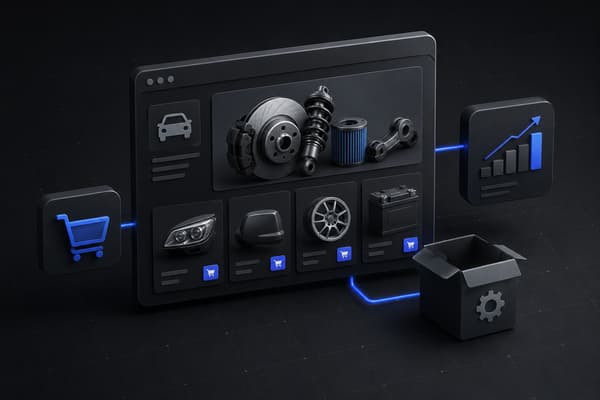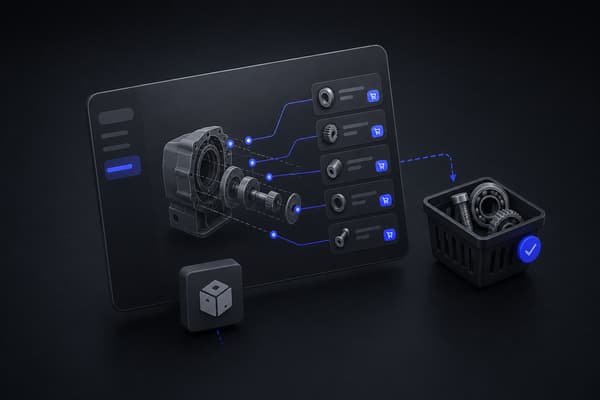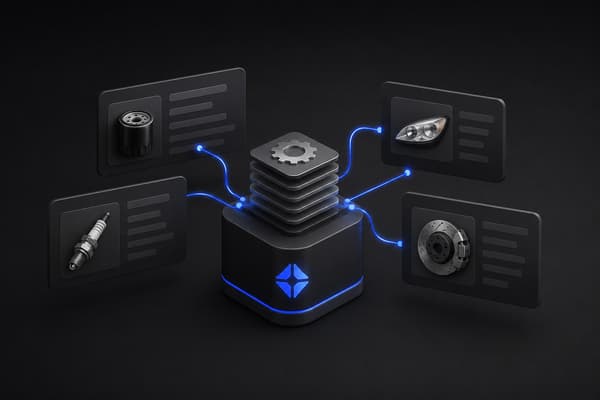


Running an automotive business on Shopify means running a lot more than a storefront. There is a catalog that has to get a shopper to the right part, a shipping rate that has to account for a part heavier than the box it ships in, a support inbox full of the same fitment question asked a hundred different ways, and a customer base that increasingly expects a brand relationship, not just a checkout page. No single app covers all of it.
Quick answer: Automotive sellers running a full operation on Shopify need platforms across six different jobs: vehicle data, shipping logic, mobile engagement, customer support, reviews and loyalty, and email and SMS marketing. Uncap Garage, ShipperHQ, Tapcart, Gorgias, Yotpo, and Dotdigital cover those six.
Here are six platforms automotive and auto parts sellers on Shopify should have in place, each solving a different part of the business rather than competing for the same job.
Quick picks: Uncap Garage is best for Year, Make, Model vehicle data. ShipperHQ is best for pricing freight and oversized items correctly at checkout. Tapcart is best for a branded mobile app. Gorgias is best for unifying customer support. Yotpo is best for reviews and loyalty. Dotdigital is best for email and SMS built around what a customer actually drives.
1. Uncap Garage: vehicle data infrastructure
Every automotive store runs on vehicle data somewhere, whether shoppers see it directly or not. Uncap Garage is a Year, Make, Model selector built natively for Shopify, structured around the ACES and PIES formats that the aftermarket parts industry already uses to describe fitment. Once a shopper picks their vehicle, that choice filters everything they see for the rest of the visit, carries through checkout, and is remembered the next time they come back.
For stores selling to both retail buyers and wholesale accounts, the same vehicle data can carry account-specific pricing with it, so a repair shop logged into a company account sees its negotiated price on the parts confirmed for its vehicle, not a flat retail number.
Best for: Automotive and auto parts sellers who want vehicle data working as structured infrastructure across the store, not a search widget bolted onto one page.
2. ShipperHQ: shipping that reflects what is actually in the box
A store that sells one product line rarely has this problem. An automotive store selling a suspension kit next to a set of wiper blades in the same cart runs into it constantly: one flat shipping rate cannot honestly price both.
ShipperHQ prices shipping at checkout using the real dimensions and weight of what is in the cart instead of a single store-wide rate, and can quote LTL freight for anything too large or heavy for a standard parcel carrier. Rules can also be set by product type, so a store selling items that need special handling, hazardous fluids, oversized panels, anything with carrier restrictions, can route those correctly without a rep manually adjusting the order after the fact.
Best for: Automotive sellers whose catalog spans small parcels and freight-class items, and who need one checkout to price both correctly.
3. Tapcart: a branded mobile app
An automotive customer with a repeat maintenance schedule, oil, filters, wipers, brakes, is exactly the kind of buyer a mobile app is built to retain, and browser-based shopping is a worse fit for that relationship than most stores assume.
Tapcart turns a Shopify storefront into a native iOS and Android app without a development team, using a drag-and-drop editor that syncs product data, pricing, and inventory from Shopify in real time. Push notifications go out for restock alerts, order updates, or a reminder that a customer's usual oil change interval is coming up, landing on a home screen instead of competing with everything else in an inbox.
Best for: Automotive brands with a real repeat-purchase base who want a retention channel that does not depend on email opens or ad spend.
4. Gorgias: one inbox for every support conversation
Fitment questions, order status checks, and warranty claims tend to arrive across email, live chat, and social messages at the same time, and an automotive support team fielding "will this fit my truck" a hundred different ways loses time re-answering the same question in different channels.
Gorgias pulls every customer conversation into a single helpdesk, with an AI agent that can resolve routine tickets (where's my order, what's your return policy, does this fit a specific vehicle if the answer lives in the store's product data) automatically, and hands off anything more complex to a human with the full order and customer history already loaded.
Best for: Automotive stores fielding a high volume of repetitive, fitment-adjacent support questions across more than one channel.
5. Yotpo: reviews and loyalty in one place
A shopper who cannot physically inspect a part before buying leans hard on someone else's confirmation that it worked, and a review that names the buyer's actual vehicle carries more weight in automotive than a star rating on its own.
Yotpo collects photo and video reviews with automated post-delivery requests, displays them across product pages and, on paid plans, Google Shopping listings and search results, and connects into a loyalty program so a customer who reviews, refers, or hits a spend threshold earns points toward their next order. Pricing starts with a free plan for smaller order volumes, with paid tiers as order volume and feature needs grow.
Best for: Automotive stores that want reviews and a repeat-purchase loyalty program running off the same customer data instead of two disconnected tools.
6. Dotdigital: turning vehicle and order data into campaigns that fire on their own
Most of what a Shopify store already knows about a customer, order history, browsing behavior, a saved vehicle, sits unused unless something actively turns it into a message. That is the gap between having the data and getting value from it.
Dotdigital pulls Shopify order and customer data into automated email and SMS journeys, so a purchase, a browse, or a saved vehicle can trigger the next message without a marketer building each send by hand. A brand selling a consumable part can set up a journey that fires automatically around the point a customer is likely due to reorder, instead of relying on them to remember. Segments can be built on real store data too, so a message about a specific vehicle type reaches the customers it is actually relevant to rather than the full list.
Best for: Automotive brands with order and vehicle data already sitting in Shopify that want it driving automated campaigns instead of staying dormant.
7. Recharge: building a paid membership club around repeat buyers
Automotive stores already have some of the most naturally repeat customers in ecommerce: oil, filters, wipers, brakes, the list of things a vehicle needs on a schedule is long. A free points-based loyalty program rewards that behavior after the fact. A paid membership club changes the relationship up front: a customer pays a recurring or one-time fee for real, ongoing perks, which makes them invested in staying rather than just accumulating points they may never redeem.
Recharge is built primarily as a Shopify subscriptions and recurring billing platform, and its Loyalty tools extend that into member-only perks: early access to new parts or restocks, member pricing, discounted or free shipping, and content like maintenance guides available only to members. Structuring one well means picking a pricing model, one-time, recurring, or tiered, and making sure the perks are worth more to the customer than the fee, which is exactly what Recharge's own guide to building a value-driving paid membership program walks through. Uncap has covered the same ground from the B2B side in a breakdown of building a Prime-like membership program, and the same pricing and perk-design principles apply here.
Best for: Automotive brands with a loyal, repeat-purchase base who want to convert that loyalty into recurring membership revenue instead of points that may or may not get redeemed.
Seven Jobs, Not Seven Versions of the Same Tool
None of these seven compete with each other, they sit at different points in the same customer relationship. Garage gets a shopper to parts that fit. ShipperHQ gets the order there in one piece without losing money on freight. Tapcart keeps a repeat buyer coming back through a channel that is not fighting for space in an inbox. Gorgias keeps support fast when the same fitment question arrives five different ways. Yotpo builds the trust a photo cannot on its own. Dotdigital turns everything the first five collect about a customer into a campaign that actually reflects what they drive. Recharge turns the customers already buying on a schedule into a recurring revenue line instead of a one-off sale.
Skip one, and the others end up doing extra work to compensate. A brand with a strong loyalty program but no fitment data still loses orders to returns. A fast support inbox does not fix a shipping rate that was wrong at checkout. A paid membership program built on top of a shaky shipping or support setup turns a perk into a broken promise.
Frequently asked questions
Do I need all seven apps if I am just starting out?
No. Vehicle data and shipping logic matter from day one for any automotive store carrying more than a handful of SKUs, since fitment and freight mistakes are the most expensive to get wrong early. A mobile app, unified support, loyalty, lifecycle marketing, and a paid membership program typically get added as order volume and repeat-purchase behavior justify the investment.
Does Shopify handle freight and dimensional shipping without an app like ShipperHQ?
Not on its own. Out of the box, Shopify's native shipping settings price using standard parcel carrier rates, which covers most retail categories fine but breaks down for anything oversized, heavy, or freight-class. Quoting real LTL freight and applying rules for restricted or bulky automotive items needs a dedicated app like ShipperHQ on top.
How does an AI support agent like Gorgias handle a fitment question it cannot answer?
An AI agent resolves the questions it has reliable data for, order status, return policy, and fitment lookups where the answer lives in the store's own product data, and hands off anything outside that scope to a human agent with the full conversation and order history already attached, rather than making the customer repeat themselves.
What's the difference between a paid membership program and a free loyalty program like Yotpo's?
A free loyalty program rewards customers after they've already bought, with points or perks earned from reviews, referrals, or spend thresholds. A paid membership club asks a customer to pay a fee first, one-time, recurring, or tiered, in exchange for perks defined up front, like early access, member pricing, or free shipping. The two aren't competitors: a store can run a free rewards program for its broad customer base and a paid membership tier for its most committed repeat buyers.