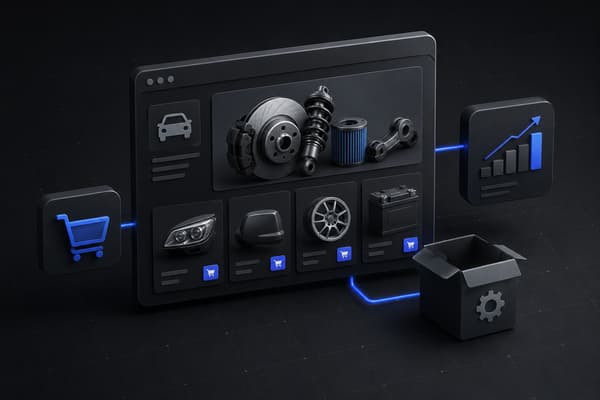


There is a reason every OEM dealer portal on earth is built around exploded parts diagrams: that is how people who fix machines actually think. A tech replacing a rear differential seal does not think in part numbers or search terms. They think in the assembly, the diagram in their head of where that seal sits, what it touches, and what else comes off to get to it. A parts store that can meet the buyer inside that mental model, click the part on the drawing, add it to the cart, sells with a certainty no search bar can match.
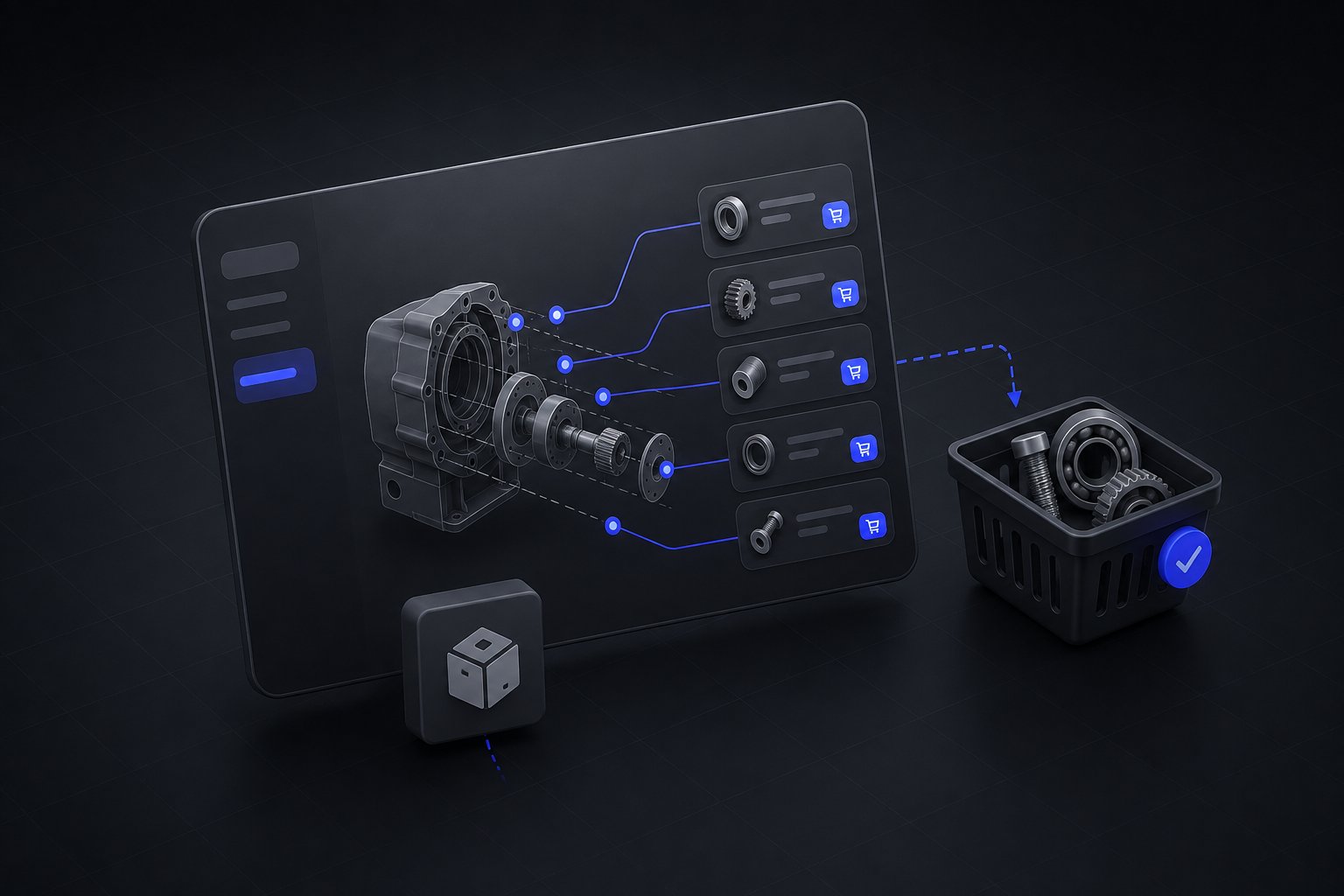
Quick answer: Selling parts by diagram means turning exploded-view drawings into a shoppable surface: each callout on the diagram is a live link to the real SKU, with price, stock, and the buyer's account pricing attached. It is the highest-certainty ordering path in parts ecommerce, because the buyer confirms the part visually, in context, before it is ever in the cart, which is exactly where wrong-part orders and their returns get prevented.
Why Diagrams Beat Search for Assemblies
Search works when the buyer can name what they want. Assemblies break that assumption constantly. A carburetor rebuild involves a dozen small components the buyer cannot name but can point to instantly on a drawing. A transfer case has three visually similar seals with different part numbers, obvious on the diagram, indistinguishable in a search results list.
The exploded view solves the identification problem the way the industry has always solved it: spatially. Every part appears in its position, with its callout number, in relation to its neighbors. The buyer confirms "that one, between the bearing and the housing," and the ambiguity that produces wrong-part orders never enters the transaction.
This is the third buyer state described in the cross-reference data guide: I have no number, only a machine and a broken part. Search cannot serve that buyer. A diagram serves them perfectly.
What Makes a Diagram Actually Shoppable
Plenty of parts sites display exploded views as static images next to a part list. That is a reference, not a selling surface. The difference is in what each callout does.
Every pin is live. Clicking a callout selects the real SKU: current price, real stock, the buyer's account pricing if they are a B2B account. A diagram whose pins go nowhere, or worse, to discontinued numbers, is a beautifully organized way to disappoint people.
The whole repair goes in the cart together. Real repairs need multiple parts from one view: the seal, the gasket behind it, the fasteners that do not get reused. Multi-select from a single diagram, with quantities, turns one screen into a complete order, and the selected set carries through as a proper bill of materials that fulfillment picks exactly as ordered.
Stock states show on the drawing. A grayed-out pin for an unavailable component, a substitute suggested where one exists, tells the buyer the truth at the moment of selection instead of at checkout. That requires the diagram layer to read live inventory, not a snapshot.
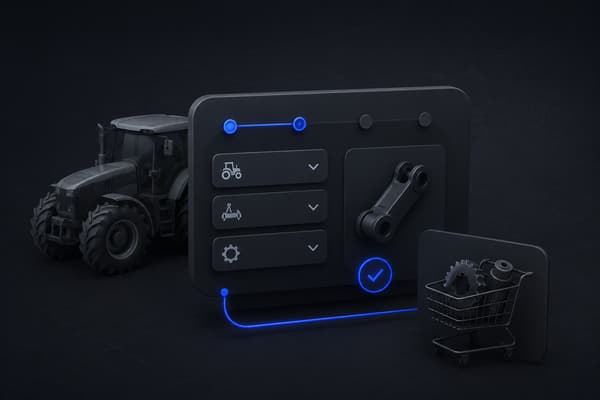
The diagram knows which machine it belongs to. Exploded views are model-specific, and often serial-range-specific. Getting the buyer to the right diagram is its own fitment problem, which is why diagram ordering pairs naturally with vehicle and equipment selection: Uncap Garage narrows to the buyer's machine, and the diagrams presented are the ones true for it.
Uncap Diagrams is built for exactly this: exploded views as a native shopping experience on Shopify, pins mapped to live SKUs, multi-part selection to cart, with account pricing and synced stock underneath.
The Returns Math
Wrong-part returns are the tax every parts seller pays on ambiguity. The buyer guessed from a thumbnail, trusted a vague title, or picked the wrong one of three similar SKUs, and the cost lands on the seller twice: the return itself, and the replacement shipment, often with the customer's patience gone.
Diagram ordering attacks the largest share of that ambiguity, visual misidentification, at the source. A buyer who selected the part by seeing it in its assembly position has done the same verification a counter person does when they turn the screen around and ask "this one?" The order that follows carries dramatically less guesswork. The same logic that makes fitment data a returns problem makes diagrams a returns solution: both move the moment of verification earlier, before the box ships instead of after it comes back.
Where Diagram Data Comes From
The honest operational note: shoppable diagrams are a data project before they are a feature. The exploded views exist, OEMs publish them in parts books, and manufacturers of aftermarket assemblies produce their own, but making them shoppable means mapping every callout to a live SKU, keeping those mappings current through supersessions, and versioning diagrams across model years and serial ranges.
That mapping is the same class of catalog asset as fitment and cross-reference data: it needs an owner and an update cadence, and it compounds in value once built, because no competitor inherits it by installing an app. Sellers who already maintain structured fitment data will recognize the discipline; the diagram layer extends it visually.
Where This Fits
Diagram ordering is one layer of the aftermarket commerce stack, alongside fitment search, cross-references, and B2B accounts, and the complete guide to aftermarket auto parts ecommerce shows how the layers fit together. The same pattern serves any vertical where products live inside assemblies: automotive, powersports, agricultural equipment, industrial machinery.
Uncap has been a Shopify Platinum Partner since 2013, with 380+ storefronts launched on Shopify, and diagram-based ordering for OEM and aftermarket parts is one of the patterns that portfolio was built on. Book a Demo to see an exploded view become an order on a real catalog.
Frequently asked questions
What is diagram-based parts ordering?
An exploded-view drawing where every callout is a live, clickable link to the actual SKU: the buyer finds the part visually in its assembly, selects it, and orders from the diagram, with price, stock, and account pricing attached at the moment of selection.
Do shoppable diagrams reduce wrong-part returns?
Yes, by removing visual misidentification, the largest source of parts-order guesswork. A buyer who confirmed the part in its position on the assembly has verified it the way a counter person would, before purchase rather than after delivery.
Where do exploded parts diagrams come from?
From OEM parts books and manufacturers' own technical documentation. Making them shoppable is a mapping project: every callout linked to a current SKU, maintained through part supersessions, and versioned across model years and serial ranges.
How does diagram ordering work with Year-Make-Model fitment?
Fitment selection comes first: the buyer's vehicle or machine narrows the catalog, and the diagrams shown are the ones that apply to it. The two layers answer different questions, which machine, then which part on it, and work best in sequence.